

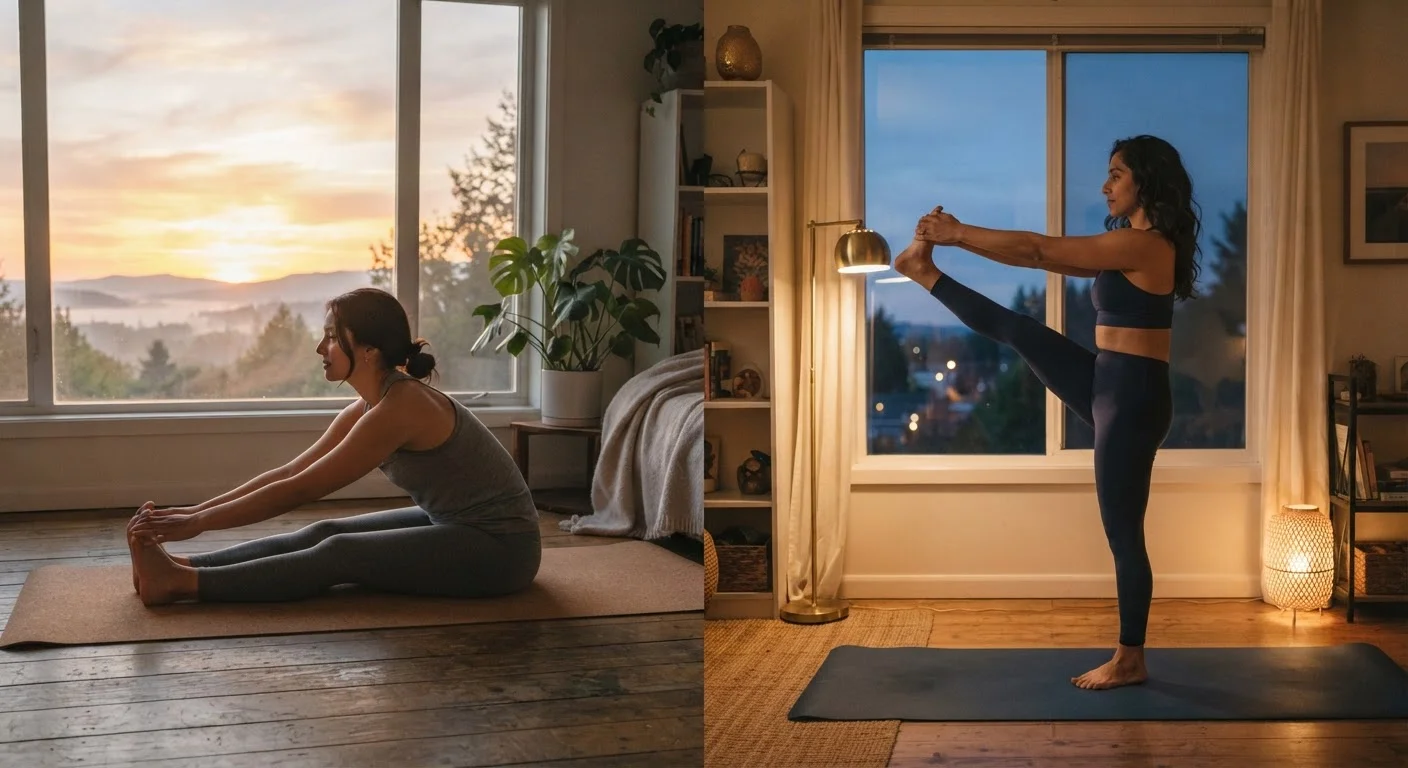
Key Takeaways
Our Verdict
Morning mobility and evening stretching serve fundamentally different physiological purposes, making a direct winner difficult to declare. Morning movement prepares you for an active day; evening stretching helps your body unwind and recover. The best choice is whichever you can realistically commit to — or, ideally, a light version of both.
| Best for | Recommended |
|---|---|
| Those who want to reduce stiffness and set an energetic tone for the day | Morning Mobility |
| Those seeking better sleep quality and post-workout muscle recovery | Evening Stretching |
| People with limited morning time who prefer a calming end-of-day ritual | Evening Stretching |
| Anyone building a new movement habit from scratch | Whichever time slot is most protected in your schedule |
Why Timing Your Movement Actually Matters
Most wellness advice focuses on what you do — not when you do it. But for stretching and mobility work specifically, timing interacts with your body's natural rhythms in ways that affect how much benefit you get. Your core body temperature, joint lubrication, hormone levels, and nervous system arousal all fluctuate throughout the day, which means the same hip-flexor stretch performed at 7 a.m. versus 9 p.m. can feel — and function — quite differently.
This isn't a reason to overthink your routine. It's a reason to understand your options. Whether you have five minutes before coffee or ten minutes before bed, there's a meaningful role for movement in both windows. See our daily movement audit to map where movement already fits in your day.
Morning Mobility: What It Does and How to Do It
Morning mobility refers to intentional joint and muscle movement done shortly after waking — typically dynamic in nature, meaning controlled, flowing motion rather than held static positions. Think gentle hip circles, shoulder rolls, cat-cow movements, or a short walking warm-up. The goal is to transition your body from its overnight resting state to readiness for daily demands.
After several hours of sleep, synovial fluid — the lubricant inside your joints — needs circulation to redistribute. Dynamic mobility work accomplishes this efficiently. Research also suggests that light movement in the morning can support alertness by gently raising core body temperature and activating the sympathetic nervous system without the abruptness of intense exercise.
Keep Morning Mobility Truly Short
You don't need a full routine to get results in the morning. Choosing just three dynamic movements — such as a hip circle, spinal twist, and arm sweep — keeps the commitment under four minutes. Attaching this sequence to an existing cue, like the time your coffee brews, dramatically increases follow-through.
For people who sit for much of the day, morning mobility targeting the hips, thoracic spine, and ankles can help counteract the compressive and postural effects of prolonged sitting before they accumulate. This is particularly relevant if your commute or work setup limits incidental movement. You can explore this idea further through the morning movement primer.
Evening Stretching: What It Does and How to Do It
Evening stretching is typically static or passive in nature — holding positions for 20 to 60 seconds to allow muscles to lengthen gradually. This is a meaningful distinction from morning work. By evening, your muscles are warmer and more pliable from the day's activity, which makes sustained holds more comfortable and potentially more effective at improving long-term flexibility.
There's also a recovery dimension to evening stretching. Gentle, parasympathetic-activating movement — such as supine (lying-down) stretches, forward folds, or supported hip openers — may help lower perceived stress and prepare the nervous system for sleep. This matters because recovery quality directly affects next-day energy and movement capacity. For those interested in the mind-body connection at this time of day, daily mindfulness practices can be woven naturally into an evening routine.
| Morning Mobility | Evening Stretching | |
|---|---|---|
| Primary purpose | Prepare joints and muscles for the day | Aid recovery and promote wind-down |
| Movement type | Dynamic, flowing, controlled | Static, passive, held positions |
| Muscle readiness | Lower — muscles cooler after sleep | Higher — muscles warmer from daily use |
| Effect on energy | Gently activating and alerting | Calming and parasympathetic |
| Sleep benefit | Indirect, through daily readiness | More direct — supports sleep onset |
| Flexibility gains | Moderate — dynamic range of motion | Potentially greater — sustained holds |
| Time required | As little as 3–5 minutes | Typically 10–15 minutes for full effect |
| Common barrier | Rushed morning schedule | Evening fatigue or low motivation |
One common barrier to evening stretching is fatigue — the same tiredness that makes it hard to do anything after a full day. Keeping a mat unrolled in your living space, or pairing stretching with an existing nighttime cue like post-dinner television, can remove friction significantly. This is the core idea behind habit stacking for daily movement.
Choosing What Works for Your Schedule
The science supports both approaches, but the most important variable is adherence. A five-minute morning routine you do consistently will outperform a thirty-minute evening routine you abandon by week two. Consider your schedule honestly: Which window is more protected? Where do you have less decision fatigue?
If mornings are rushed, a short mobility sequence of three to five movements takes under five minutes and requires no equipment. If evenings tend to feel too stimulating for sleep, gentle stretching with slow breathing can shift that pattern over time. It's also worth noting that movement at any time of day is meaningfully better than sustained inactivity — a point well supported by research on sedentary behavior vs. active daily living.
If you're building a habit from the ground up, start with one window and keep the bar low. Once consistency is established, adding a shorter practice at the other end of the day becomes far more realistic. For a realistic look at why these habits sometimes stall, see where daily movement habits break down.
This article is for general informational and educational purposes only and is not a substitute for professional medical advice. Consult a qualified healthcare provider before beginning any new exercise routine, especially if you have existing injuries, chronic conditions, or other health concerns.