

Key Takeaways
Thyroid Gland
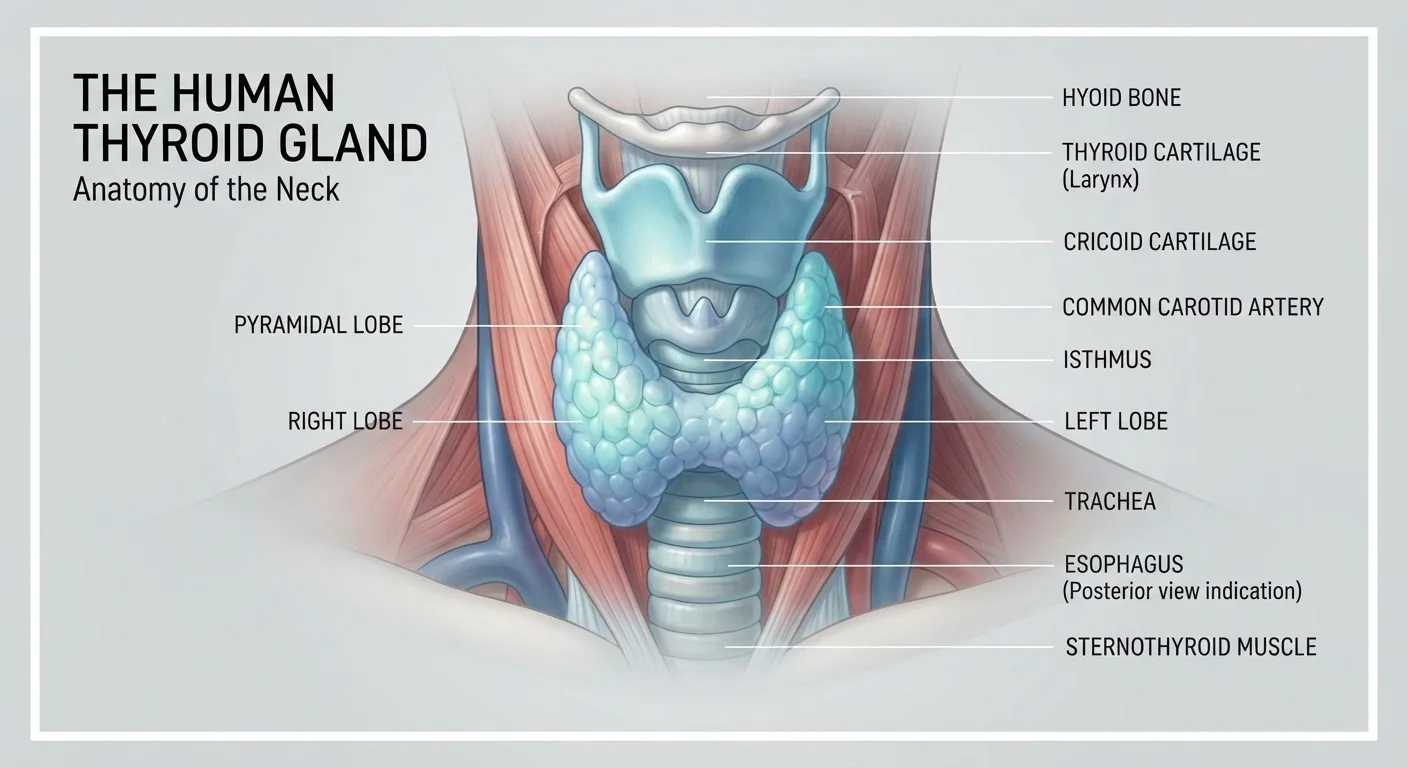
The thyroid is a small, butterfly-shaped gland located at the front of the neck, just below the Adam's apple. It produces hormones — primarily thyroxine (T4) and triiodothyronine (T3) — that regulate how the body uses energy. These hormones influence heart rate, body temperature, metabolism, mood, and more. When the thyroid produces too much or too little hormone, the effects can ripple across virtually every organ system.
Thyroid hormone production is regulated by the hypothalamic-pituitary-thyroid (HPT) axis: the hypothalamus releases TRH, which signals the pituitary to release TSH, which in turn stimulates the thyroid. Abnormal TSH levels in blood testing are typically the first measurable sign of dysfunction.
What the Thyroid Actually Does
Despite its small size — typically weighing less than an ounce — the thyroid gland functions as one of the body's most powerful regulatory centers. By releasing T3 and T4 hormones into the bloodstream, it acts like a throttle for cellular metabolism. Speed it up too much, and the body enters a state of overdrive. Slow it down, and virtually every system begins to underperform.
The gland's reach is broad: it influences resting heart rate, digestive motility, bone density maintenance, cholesterol processing, cognitive function, and even hair follicle cycling. This systemic involvement is precisely why thyroid dysfunction can look so different from person to person — and why it is so frequently mistaken for something else entirely.
20 million
Americans estimated to have thyroid disease
According to the American Thyroid Association, approximately 20 million Americans have some form of thyroid disease, with up to 60% unaware of their condition.
5–8x
Higher thyroid disease risk in women vs. men
The American Thyroid Association reports women are significantly more likely than men to develop a thyroid disorder during their lifetime.
60%
People with thyroid disease who are undiagnosed
The American Thyroid Association estimates that around 60% of people living with thyroid disease are not aware they have it.
Two Main Types of Dysfunction — and Why They're Confused for Other Conditions
Hypothyroidism (an underactive thyroid) occurs when the gland doesn't produce enough hormone. The most common cause in the United States is Hashimoto's thyroiditis, an autoimmune condition in which the immune system mistakenly attacks thyroid tissue. Symptoms — persistent fatigue, unexplained weight gain, depression, brain fog, cold sensitivity, and dry skin — develop gradually and are easy to normalize or attribute to lifestyle factors like poor sleep or stress.
Hyperthyroidism (an overactive thyroid) involves excess hormone production, most commonly due to Graves' disease, another autoimmune disorder. Its signature symptoms include unintended weight loss, anxiety, rapid or irregular heartbeat, trembling hands, and heat intolerance. These presentations can be mistaken for anxiety disorder, cardiac arrhythmia, or perimenopausal changes, especially in women.
The overlap with everyday complaints is what makes thyroid disorders so diagnostically tricky. As explored in this guide to commonly dismissed body signals, symptoms like fatigue and mood changes are among the least likely to prompt urgent medical attention — even when they signal something systemic.
“The thyroid is involved in so many bodily functions that when it malfunctions, the symptoms can be mistaken for dozens of other conditions. Awareness of this overlap is the first step toward getting the right answers.”
— American Thyroid Association, Leading professional society for thyroid disease research and patient education
Why Thyroid Disorders Are So Often Missed
Several factors contribute to delayed diagnosis. First, thyroid symptoms tend to be nonspecific — fatigue and weight changes, for example, rank among the most common complaints in primary care visits overall. Second, symptoms often accumulate slowly, allowing patients and even clinicians to chalk them up to aging, stress, or lifestyle.
Third, there is a documented pattern of symptom minimization, particularly among women, who are disproportionately affected by thyroid disease. Research indicates women are significantly more likely to have their symptoms attributed to anxiety or emotional factors before a physiological cause is investigated. This connects to a broader pattern described in how normalizing persistent symptoms leads to delayed diagnoses.
Finally, subclinical thyroid dysfunction — where TSH levels are mildly abnormal but T3 and T4 remain in range — may not produce dramatic symptoms, yet can still affect quality of life and may progress without monitoring.
The Hormonal Context: Why Thyroid Health Fits Into a Bigger Picture
The thyroid does not operate in isolation. It is part of an interconnected hormonal network that includes the adrenal glands, reproductive hormones, and insulin regulation. Thyroid dysfunction can influence menstrual cycle regularity, fertility, and mood stability — which is why thyroid evaluation is often recommended when broader hormonal symptoms arise.
If you are experiencing unexplained fatigue, irregular cycles, mood shifts, or unexplained weight changes, understanding broader hormonal imbalance signals can help frame when to seek evaluation. Thyroid testing is typically a standard component of any hormonal workup.
Pregnancy represents a particular inflection point: thyroid demands increase significantly during gestation, and unmanaged dysfunction carries meaningful risks for both the pregnant person and the developing fetus. Anyone who is pregnant or planning to become pregnant should discuss thyroid screening with their care team explicitly.
When to Talk to a Healthcare Provider
No article can substitute for clinical evaluation — and thyroid conditions, in particular, require laboratory confirmation before any conclusions can be drawn. If you have been experiencing several of the symptoms described above for more than a few weeks, raising thyroid function as a topic with your primary care provider is a reasonable and low-barrier step. A TSH blood test is widely available and typically covered by standard insurance.
Early identification matters. Well-managed thyroid conditions are associated with significantly better outcomes across cardiovascular health, bone density, mood stability, and metabolic function. The goal is not alarm — it is informed, proactive engagement with your own health.
This article is for general informational and educational purposes only and does not constitute medical advice. Always consult a qualified healthcare professional for evaluation, diagnosis, and treatment of any health condition.