

Key Takeaways
Migraine
A migraine is a complex neurological disorder characterized by recurring attacks of moderate-to-severe head pain, often accompanied by nausea, light sensitivity, and sensory disturbances. Unlike a typical tension headache, a migraine involves a cascade of coordinated changes in brain chemistry, electrical activity, and blood flow. These changes can affect multiple systems in the body simultaneously, explaining why attacks feel so profoundly disabling.
Migraines are classified by the International Headache Society into subtypes including migraine with aura and migraine without aura, with distinct neurological signatures for each.
The Four Phases of a Migraine Attack
Most people think of a migraine as a headache. In reality, a full migraine attack progresses through up to four distinct phases, each with its own neurological signature.
Prodrome occurs hours or even days before head pain begins. The hypothalamus — a brain region regulating sleep, hunger, and mood — becomes dysregulated. This explains the classic warning signs: fatigue, food cravings, mood shifts, and neck stiffness. Many people later recognize these as reliable early signals.
Aura affects roughly one-third of people with migraine. It typically appears 20 to 60 minutes before head pain and involves transient neurological symptoms — most commonly visual disturbances such as zigzag lines or blind spots, but sometimes tingling in the face or hands, or temporary speech difficulty.
The headache phase is what most people associate with the word migraine. Pain is usually throbbing, often one-sided, and worsens with routine physical activity. Nausea, vomiting, and extreme sensitivity to light and sound are common companions.
Postdrome — sometimes called the migraine hangover — can persist for up to 24 hours after pain resolves. Brain fog, fatigue, and mild head tenderness are typical. The brain is essentially recovering from a significant physiological event.
What Is Cortical Spreading Depression?
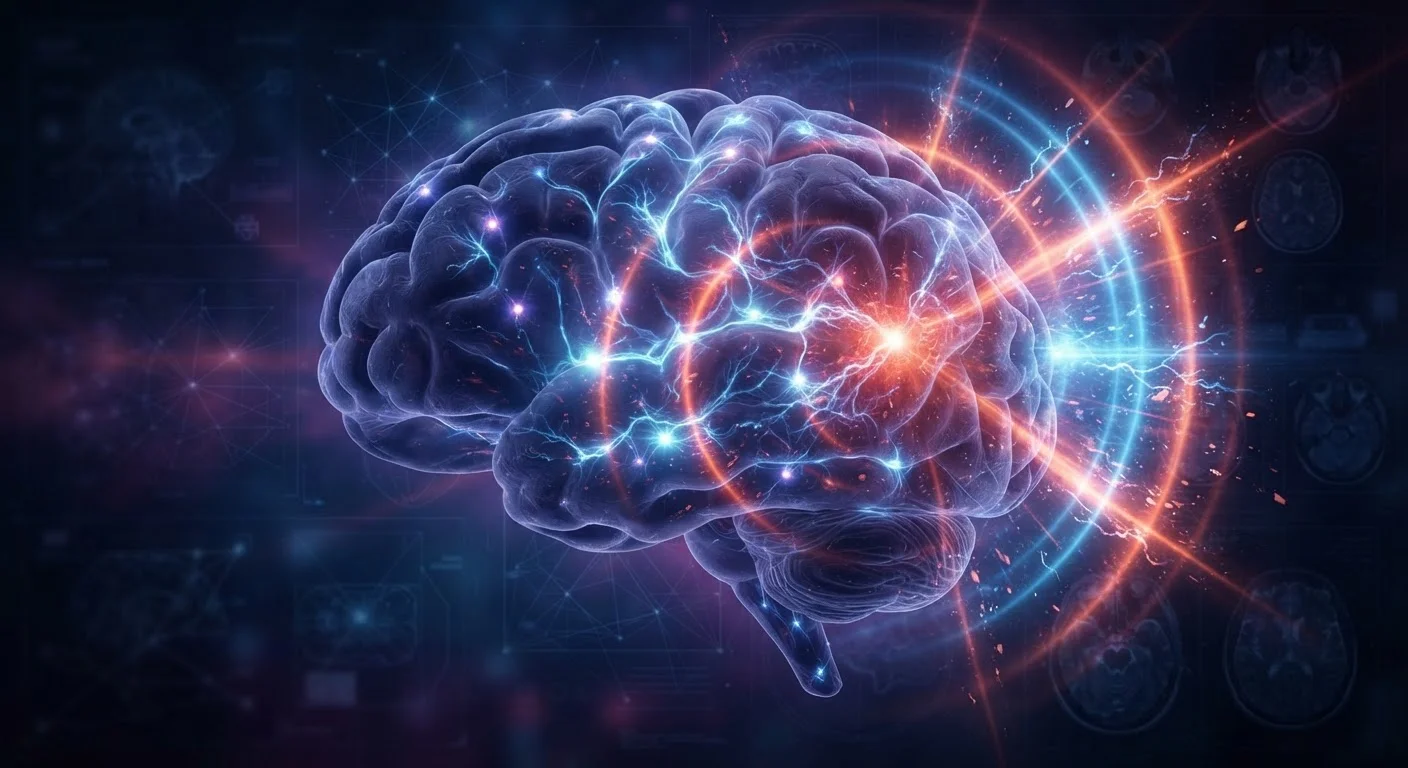
One of the most important discoveries in migraine science is a phenomenon called cortical spreading depression (CSD) — a slow wave of intense neuronal firing followed by a period of electrical suppression that moves across the brain's outer layer, the cortex, at roughly 3 to 5 millimeters per minute.
CSD is believed to be the neurological mechanism behind migraine aura. As the wave advances through the visual cortex, it temporarily disrupts normal processing, producing the marching visual disturbances many people report. The wave then activates pain-sensing trigeminal nerve endings surrounding the brain's blood vessels — essentially triggering the alarm system that generates head pain.
Aura Without Headache Is Possible
Some people experience the neurological symptoms of aura — visual disturbances, tingling, or speech changes — without any subsequent head pain. This is known as a silent or acephalgic migraine. These episodes can be alarming and are sometimes mistaken for stroke symptoms. Any new or sudden neurological symptoms should always be evaluated promptly by a medical professional.
CSD is also accompanied by shifts in blood flow: an initial brief increase followed by a prolonged reduction. This contributes to the feeling that even gentle movement makes pain worse, as the brain's vascular environment is actively destabilized during the attack.
The Trigeminal Nerve: The Pain Amplifier
The trigeminal nerve is the brain's primary sensory highway for the face and head. During a migraine, this nerve becomes central to the pain experience through a process researchers call trigeminovascular activation.
When CSD and other triggers stimulate the trigeminal system, nerve endings release inflammatory signaling molecules — including a peptide called calcitonin gene-related peptide (CGRP) — onto blood vessel walls surrounding the brain. This causes the vessels to dilate and become inflamed, which the trigeminal nerve interprets as intense pain and reports back to the brain's pain-processing centers.
~15%
U.S. adults affected by migraine
According to the Migraine Research Foundation, approximately 39 million Americans experience migraines, representing roughly 15% of the population.
1 in 3
Migraine sufferers who experience aura
The American Migraine Foundation estimates that approximately one-third of people with migraine experience aura symptoms at least occasionally.
CGRP
Key inflammatory peptide in migraine pain
Calcitonin gene-related peptide (CGRP) has been identified in peer-reviewed research as a primary mediator of trigeminovascular inflammation during migraine attacks.
Prolonged activation creates a state called central sensitization, where pain pathways become so heightened that even light touch on the scalp can feel painful — a symptom known as allodynia. This explains why combing your hair or wearing glasses can be genuinely unbearable during a severe migraine. It is not an exaggeration; it is a documented neurological state.
Understanding this biology helps contextualize why migraines are classified as a serious neurological disorder, not a character flaw or low pain tolerance. If you experience frequent or particularly disabling attacks, speaking with a neurologist is an important step. You may also find our article on when a headache is more than just a headache helpful for understanding which symptoms warrant urgent attention.
This article is for informational purposes only and is not a substitute for professional medical advice, diagnosis, or treatment. Always consult a qualified healthcare provider with questions about your health.