

Key Takeaways
Diaphragmatic Breathing
Diaphragmatic breathing — also called belly breathing or abdominal breathing — is a breathing technique that fully engages the diaphragm, a dome-shaped muscle located just below the lungs. When you breathe this way, your belly visibly rises and falls rather than your chest. It is the body's most mechanically efficient breathing pattern and the default mode for healthy infants and sleeping adults.
The diaphragm contracts and flattens downward during inhalation, creating negative intrathoracic pressure that draws air into the lungs' lower lobes, which have the highest concentration of oxygen-absorbing alveoli.
Chest Breathing vs. Diaphragmatic Breathing
Watch a sleeping baby breathe and you will notice the belly rising and falling in a slow, rolling wave. That is diaphragmatic breathing in its natural state. Somewhere between infancy and adulthood, most people transition to a shallower pattern — breathing from the chest — often driven by prolonged sitting, chronic stress, or simply habit.
Chest breathing relies primarily on the neck and shoulder muscles to lift the ribcage. It is faster, shallower, and less efficient because it draws air mainly into the upper thirds of the lungs, where fewer alveoli — the tiny sacs where oxygen enters the bloodstream — are located. By contrast, diaphragmatic breathing expands the lower lobes of the lungs, maximising the surface area available for gas exchange.
The mechanical difference has a direct downstream effect on the nervous system. Shallow, rapid chest breathing activates the sympathetic nervous system — the body's fight-or-flight branch. Slower, deeper diaphragmatic breathing does the opposite: it stimulates the vagus nerve and engages the parasympathetic branch, sometimes called the "rest and digest" system. This is why a few slow belly breaths can shift your felt sense of calm almost immediately. For a detailed look at the physiology involved, see the science behind deep breathing and why it calms you.
Why the Distinction Matters for Daily Life
Because breathing is automatic, most people never examine how they breathe. Yet the pattern you default to shapes your energy, focus, and stress baseline throughout the day. Chronic chest breathing keeps the body in a mild, sustained state of physiological arousal — elevated cortisol, tighter muscles, and a slightly faster resting heart rate — even when there is no actual threat present.
~80%
Adults who primarily chest-breathe at rest
Respiratory health researchers and clinicians broadly estimate the majority of adults have adopted shallow chest-dominant breathing patterns as their default.
4–8 weeks
Typical study length showing anxiety reduction
Multiple peer-reviewed trials on structured diaphragmatic breathing programs report measurable reductions in anxiety scores within this timeframe.
↑ HRV
Heart rate variability improvement with practice
Diaphragmatic breathing is associated with increased heart rate variability, a key indicator of autonomic nervous system flexibility and stress resilience.
Diaphragmatic breathing interrupts this cycle. Studies on structured breathwork — including practices taught in yoga, meditation, and clinical respiratory therapy — consistently show reductions in self-reported anxiety, improved heart rate variability (a marker of autonomic nervous system flexibility), and better perceived energy levels among regular practitioners. It is worth noting that most research uses short intervention periods of four to eight weeks, and results vary by individual and context.
Beyond stress reduction, breathing efficiency matters for physical performance. Athletes, singers, and wind instrument musicians have long trained diaphragmatic breathing because it improves breath endurance and oxygen delivery. For everyday adults, the payoff is simpler: less tension in the neck and shoulders, slower cognitive fatigue, and a more grounded baseline to work from. You can explore common misconceptions about what breathwork does and does not do in our article on breathwork myths that may be holding you back.
How to Practice: A Starting Point
Diaphragmatic breathing requires no equipment and only a few minutes. Here is a straightforward approach used widely in respiratory therapy and mindfulness instruction:
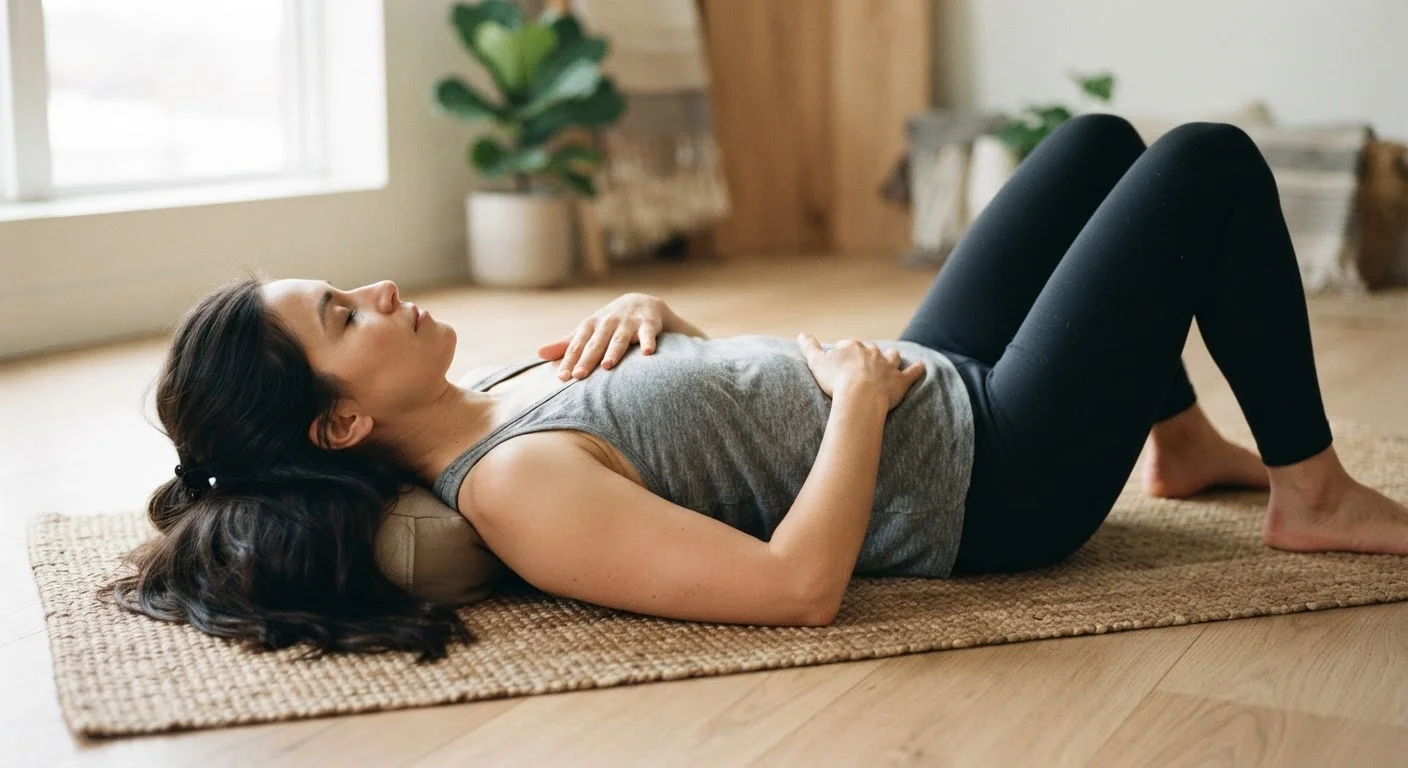
- Find a comfortable position. Lying on your back with knees bent is easiest for beginners. Once familiar, you can practice seated or standing.
- Place your hands as guides. Rest one hand lightly on your chest and the other on your belly, just below the ribcage.
- Inhale slowly through your nose for a count of four. Focus on letting the belly-hand rise while the chest-hand stays relatively still. You are not forcing the belly out — you are simply allowing the diaphragm to descend and create space.
- Exhale slowly through pursed lips or the nose for a count of six. Feel the belly gently fall as the diaphragm relaxes upward.
- Repeat for five to ten cycles. Notice any shift in tension or heart rate.
Start With Lying Down Practice
If you are new to diaphragmatic breathing, begin in a supine (lying face up) position. Gravity assists the belly's rise and fall, making it much easier to feel the distinction from chest breathing. Once the pattern feels natural lying down, gradually transfer it to seated and standing positions throughout your day.
Consistency matters more than duration. Even five minutes practiced daily — upon waking, before a meeting, or at the end of the day — builds the pattern over time. For those curious about how breath holding interacts with breathwork more broadly, our piece on breath retention physiology provides useful context.
This article is for general informational purposes only and does not constitute medical advice. If you experience unexplained shortness of breath, dizziness, or other respiratory symptoms, please consult a qualified healthcare professional.