

Key Takeaways
Why Your Environment Shapes Whether You Sit
Behavioral science consistently shows that our surroundings influence habit formation more than motivation does. When your meditation space requires no setup effort and provides clear contextual cues — a particular cushion, a dim corner, a familiar scent — your brain begins to associate that location with the settled, inward state you're cultivating. Over time, simply arriving in that spot can start to shift your nervous system toward readiness.
This doesn't mean you need a perfect room or expensive equipment. It means your environment should make sitting down the path of least resistance. As part of building a daily mindfulness practice from scratch, the space you choose is one of the most practical levers you can adjust immediately.
What you will need
What You Actually Need (and What You Don't)
The barrier to entry is lower than most people expect. Silence is not required — moderate, consistent background sound (a fan, soft ambient noise) is far less disruptive than unpredictable interruptions. A dedicated room is not required either. A corner of a bedroom, a spot on the couch you designate only for practice, or even a specific chair in a shared living area can serve the same purpose as long as you return to it consistently.
What does matter:
- Comfort without collapse. You want to be alert, not sleepy. A firm cushion, folded blanket, or supportive chair helps maintain posture.
- Low visual clutter. A busy visual field keeps the mind busy. Face a wall or a simple surface when possible.
- Accessible, not hidden. If your cushion is at the back of a closet, you'll skip sessions on hard mornings. Keep it visible.
For guidance on what to do once your space is ready, the pre-meditation readiness checklist walks through posture, timing, and intention before each session.
Meditation cushion or folded blanket
Provides a stable, comfortable base that supports upright posture during seated practice.
Timer or meditation app
Frees you from clock-watching so you can stay inward for the full session.
Eye mask or blackout curtain
Reduces visual stimulation in brighter rooms, helping ease inward focus.
White noise machine or fan
Creates consistent ambient sound that masks unpredictable household noise.
Scented candle or essential oil diffuser
Provides a consistent olfactory anchor that your nervous system associates with practice over time.
Setting Up Your Space: Step by Step
The steps below apply whether you're carving out a corner in a studio apartment or organizing a spare room. Work through them once; then maintaining the space takes almost no ongoing effort.
Choose a single, consistent location
Pick one spot and commit to it for at least two weeks. Consistency of location is more valuable than the quality of the location. A corner, a chair, or a spot on a rug all work — what matters is that your brain starts to map that place to the practice.
Set up your sitting surface
Place your cushion, blanket, or chair so it's ready to use without any rearranging. Test it now: sit for two minutes and notice whether you feel alert or are straining. Adjust height or firmness until your hips are at or slightly above knee level, which reduces lower-back tension.
Clear the immediate visual field
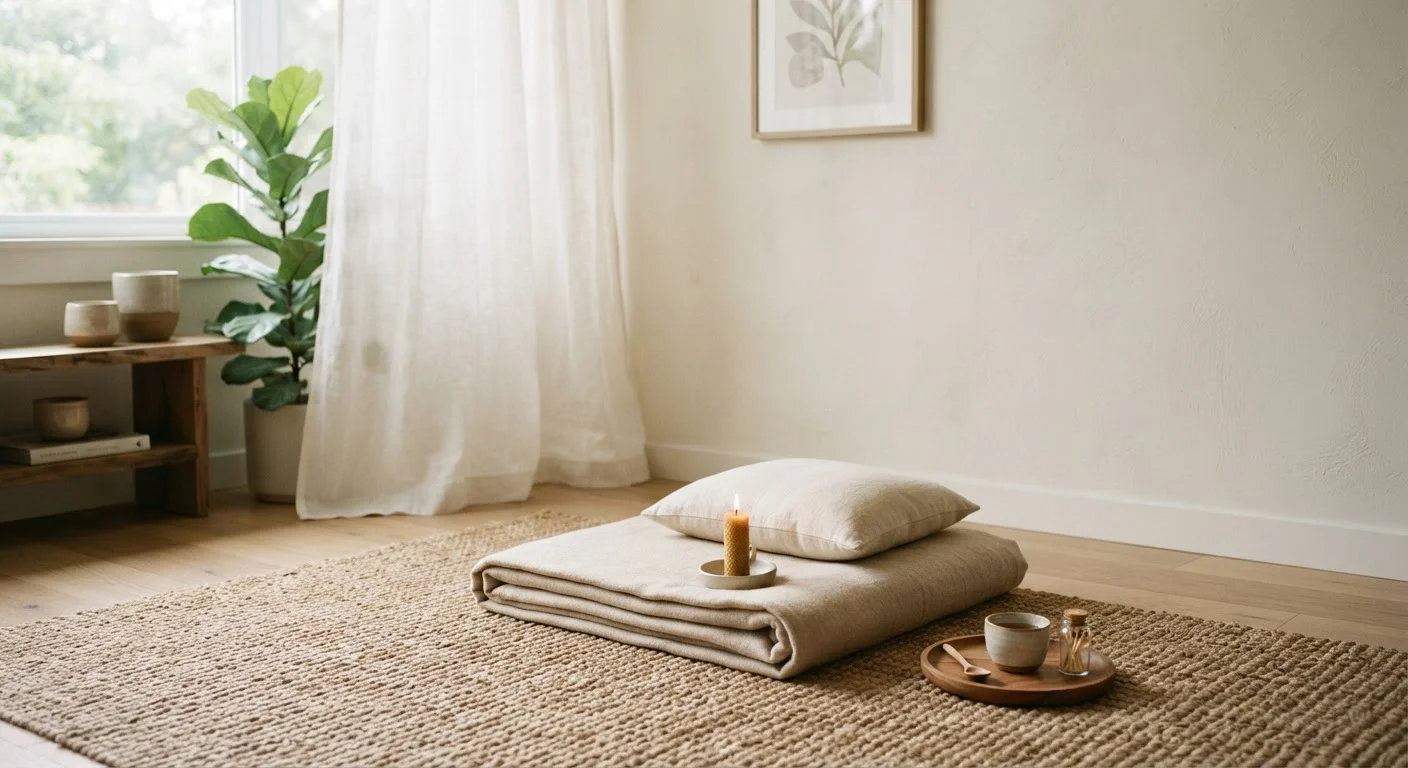
You don't need to redecorate. Simply remove or turn away objects in your direct line of sight that demand attention — screens, to-do lists, clutter. A neutral surface or a single simple object (a plant, a candle, a stone) gives the eyes somewhere to rest without engaging the planning mind.
Address sound proactively
Silence is rarely achievable and not necessary. What disrupts practice most is unpredictable sound. Inform household members of your session window, silence phone notifications, and if ambient noise is variable, consider a fan or white noise source to create a consistent sonic background.
Add one simple sensory anchor (optional)
A consistent, mild sensory cue — the same scent, a specific light setting, or a small ritual like lighting a candle — can accelerate the environmental association your brain builds. This is not superstition; it's classical conditioning applied practically. Keep it simple: one cue, used every session.
Create a brief setup ritual
Spend 60–90 seconds arranging your space the same way each time: place your cushion, set your timer, take three slow breaths. This micro-ritual acts as a behavioral on-ramp — it signals transition from doing-mode to being-mode before the formal session begins. Over weeks, the ritual itself becomes a cue for settling.
Adapting When the Ideal Setup Isn't Available
Life is unpredictable. Travel, family demands, or a changing home layout may disrupt your usual spot. A useful mindset shift: your space cues are partly portable. A specific blanket you bring, a brief breath-settling ritual, or a pair of headphones with familiar ambient sound can carry the associative signal with you.
If you're working with a formal sitting practice and wondering whether shorter, improvised sessions still count, five minutes or fifty covers the honest trade-offs. And if your practice is woven into morning routines, morning rituals that anchor the rest of your day offers complementary anchoring habits that reinforce consistency without requiring a perfect setup every time.
This article is for informational purposes only and is not a substitute for professional medical or mental health advice. If you have concerns about your physical or mental health, please consult a qualified healthcare professional.