

Key Takeaways
Start here
What to Expect in Your First Week
Set up
Before You Begin: A Few Simple Foundations
Practice
Days 1–3: Getting Comfortable with Stillness
Deepen
Days 4–5: Working with Thoughts
Consolidate
Days 6–7: Extending and Reflecting
Keep going
After the First Week: What Comes Next
What to Expect in Your First Week
The first week of meditation is less about achieving calm and more about getting acquainted with your own mind. Most beginners report a mix of mild restlessness, fleeting relaxation, and surprise at how busy their inner world actually is. All of that is normal and productive. For a deeper look at why the early days can feel uncomfortable, see why meditation feels hard at first.
The goal this week is simple: sit down, pay attention, and show up again the next day. Duration and technique matter far less than repetition at this stage.
Breath awareness
The practice of deliberately directing attention to the physical sensations of breathing, used as a stable anchor point during meditation.
Mind-wandering
The natural tendency of the mind to drift from the intended focus to unrelated thoughts, memories, or plans. It is universal and not a sign of failure.
Labeling
A simple meditation technique where you silently name a thought or distraction (e.g., 'thinking' or 'planning') to create distance from it before returning to your focal point.
Attention regulation
The trained ability to notice where your attention has gone and intentionally redirect it — the core skill strengthened by regular meditation practice.
Open monitoring
A meditation style where instead of focusing on one anchor like the breath, you observe whatever arises in awareness — sounds, sensations, thoughts — without selecting or resisting any of it.
Before You Begin: A Few Simple Foundations
Before Day 1, make three small decisions that will lower friction throughout the week:
- Choose a consistent time. Morning, lunch break, or evening — pick one slot and protect it. Tying it to an existing habit (coffee, teeth brushing) dramatically improves follow-through.
- Pick a spot. Any quiet corner works. You don't need a dedicated room — just somewhere you can sit undisturbed for five to ten minutes.
- Set a timer. Using a timer removes the urge to peek at a clock, which is one of the most common sources of distraction for new meditators.
For a broader look at building sustainable daily habits around mindfulness, the guide to building a daily mindfulness practice from scratch covers the structural principles in more depth.
Habit stacking makes consistency easier
Attaching your meditation session to an existing daily habit — such as right after making morning coffee or immediately before brushing teeth at night — reduces the mental effort of remembering to do it. Over time, the existing habit acts as an automatic cue. Start with just one reliable anchor habit and build from there.
Days 1–3: Getting Comfortable with Stillness
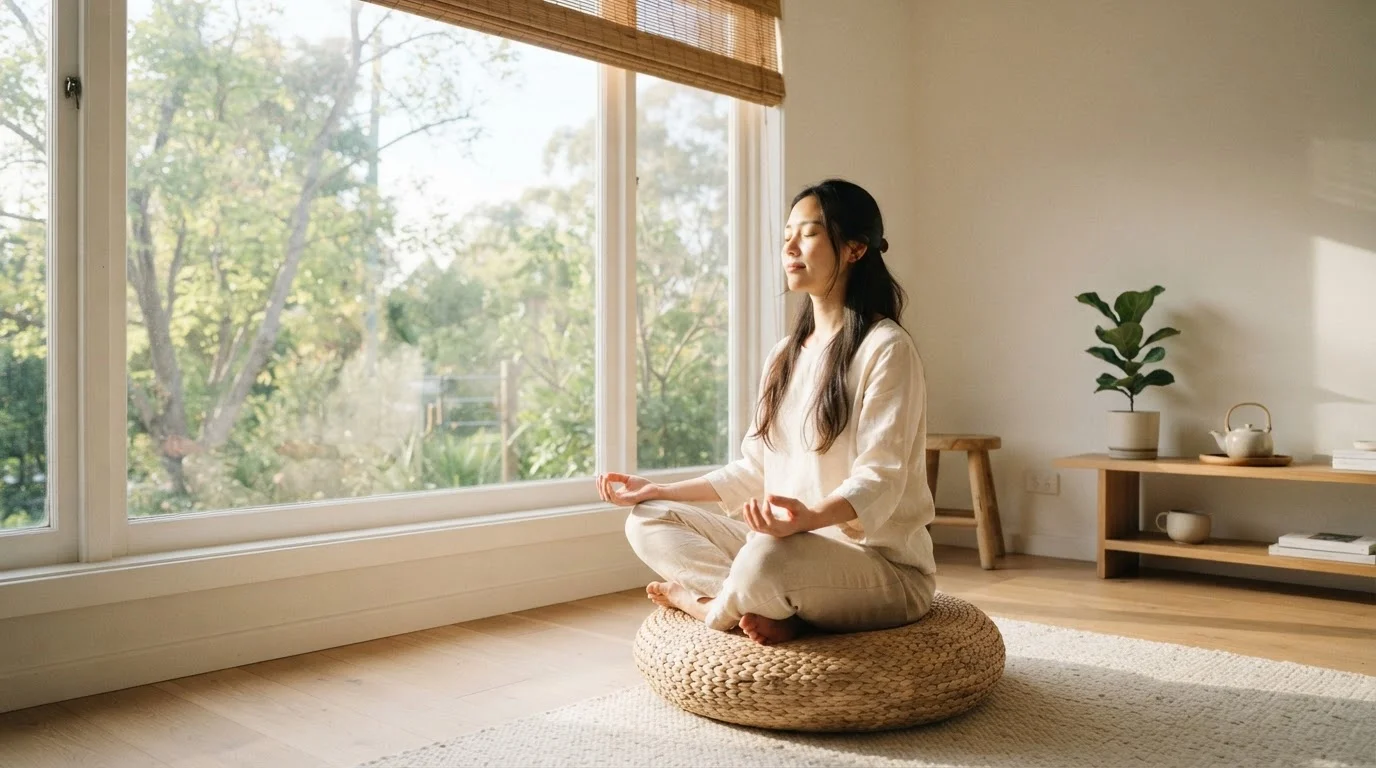
Set a timer for five minutes. Sit in a comfortable, upright position — chair, cushion, or floor, whatever is available. Close your eyes or soften your gaze downward.
Direct your attention to the physical sensation of breathing: the slight rise of your chest or belly, the feeling of air passing through your nostrils. You are not trying to control the breath — just observe it as it happens naturally.
When you notice your mind has wandered (and it will, repeatedly), gently return attention to the breath without frustration. That moment of noticing and returning is the practice. Each session for these three days, add no more than one minute to your timer if the previous session felt manageable.
After each sit, take thirty seconds to note one observation: what was easy, what pulled your attention away. This brief reflection builds self-awareness faster than practice alone.
Days 4–5: Working with Thoughts
By Day 4, most beginners have noticed that the mind does not go quiet — it narrates, plans, and replays. Days 4 and 5 introduce a simple technique for handling this: labeling.
When a thought arises, mentally tag it with a neutral word — thinking, planning, or remembering — then return to the breath. The label creates a small but useful gap between you and the thought, making it easier to release without getting drawn in.
Aim for seven to eight minutes per session. If that feels like a stretch, staying at five minutes is perfectly fine. Pushing through discomfort has its place, but fatigue or irritability after sessions is a signal to ease back rather than push harder.
Breathwork can complement this stage well — controlled breathing patterns help anchor attention before and during seated practice. The breathwork starting point guide offers foundational techniques suited to beginners.
Days 6–7: Extending and Reflecting
For the final two days, extend your session to eight to ten minutes if you feel ready, or consolidate the skills from Days 1–5 at whatever length has been sustainable. Experiment with where you place your attention: try resting awareness on sounds in the room rather than the breath, or on the physical sensations of your hands resting in your lap.
On Day 7, spend an extra two minutes at the end writing three short answers: What felt different this week compared to Day 1? What time of day worked best? What will I change next week? This reflection converts a seven-day experiment into the beginning of a real practice.
Meditation is not recommended as a crisis tool
If you are in acute emotional distress, experiencing a mental health crisis, or have a history of trauma, sitting quietly with your thoughts can sometimes intensify difficult feelings rather than ease them. In those circumstances, please reach out to a mental health professional or crisis line before beginning or continuing a meditation practice.
After the First Week: What Comes Next
Completing seven consecutive days is a meaningful achievement — not because the practice is difficult, but because consistency requires intention. From here, the path forward involves gradually extending session length, exploring different techniques (body scan, loving-kindness, open monitoring), and understanding more about what is actually happening in the mind during meditation.
The comprehensive guide to meditation techniques and science is a natural next step for readers who want to understand the research behind what they have just experienced and explore the full range of approaches available.
Above all, remember that meditation is a skill developed over time, not a performance measured session by session. Some sits will feel focused; others will feel scattered. Both are part of the process.
This article is for general informational and educational purposes only and does not constitute medical or mental health advice. If you have concerns about your physical or mental health, please consult a qualified healthcare professional.