

Key Takeaways
Why Food Habits Shape Emotional Wellbeing
The connection between what we eat and how we feel is not simply motivational — it has measurable biological underpinnings. The gut-brain axis, a bidirectional communication network linking the gastrointestinal tract to the central nervous system, means that gut health influences neurotransmitter activity, including serotonin, a compound central to mood regulation. Approximately 90% of the body's serotonin is produced in the gut, according to current physiological understanding, making dietary choices that support the gut microbiome directly relevant to emotional health.
Blood sugar regulation is equally important. When meals are high in refined carbohydrates and low in protein or fiber, blood glucose rises quickly and falls sharply — a pattern that can contribute to irritability, fatigue, and difficulty concentrating. Building a routine around foods that produce a steadier glycemic response is one of the most practical dietary levers available for supporting day-to-day emotional balance.
This does not mean food is a treatment for mood disorders. Rather, consistent, nourishing eating habits create a more stable physiological environment in which emotional resilience is better supported. For readers interested in how emotional awareness can complement dietary choices, mindful eating principles offer a well-grounded starting point.
This Is General Nutrition Information
The guidance in this article is educational in nature and is not a substitute for personalized medical or mental health advice. If you are experiencing significant mood disruption, depression, anxiety, or disordered eating patterns, please consult a qualified healthcare professional. Nutrition supports overall wellbeing but does not treat clinical conditions.
What You Need Before Starting
Building this kind of routine doesn't require a complete dietary overhaul. As explored in building healthier eating habits from the ground up, sustainable dietary change works best when layered gradually onto existing patterns rather than replacing them all at once.
What you will need
Food and Mood Journal
Track what you eat alongside your energy and emotional state to identify patterns over time.
Weekly Meal Planner Template
Map out meals in advance to reduce decision fatigue and ensure nutritional consistency across the week.
Reusable Water Bottle
Supports consistent hydration throughout the day, which is directly linked to concentration and mood stability.
With these basics in place, you're ready to follow the steps below to construct a routine tailored to your daily rhythms.
Step-by-Step: Constructing Your Routine
The following steps move from observation to structure to refinement. Each builds on the last, and most can be introduced over one to two weeks rather than all at once. For additional context on eating for sustained energy throughout the day, that resource complements these steps with practical meal composition guidance.
Audit Your Current Eating Patterns
Before making changes, spend three to five days observing what, when, and why you eat. Note meal timing, food choices, and your mood or energy levels before and after eating. You don't need a detailed food diary — even brief notes help reveal patterns, such as afternoon energy crashes after high-sugar lunches or irritability on days when meals are skipped.
Establish Regular Meal Timing
Irregular eating contributes to blood sugar fluctuations that can amplify mood instability and fatigue. Aim to eat at consistent times each day, spacing meals roughly three to five hours apart. This doesn't require rigid scheduling — it means avoiding long gaps where you arrive at a meal extremely hungry, which tends to drive reactive eating choices that undermine stable energy.
Anchor Each Meal With Protein and Fiber
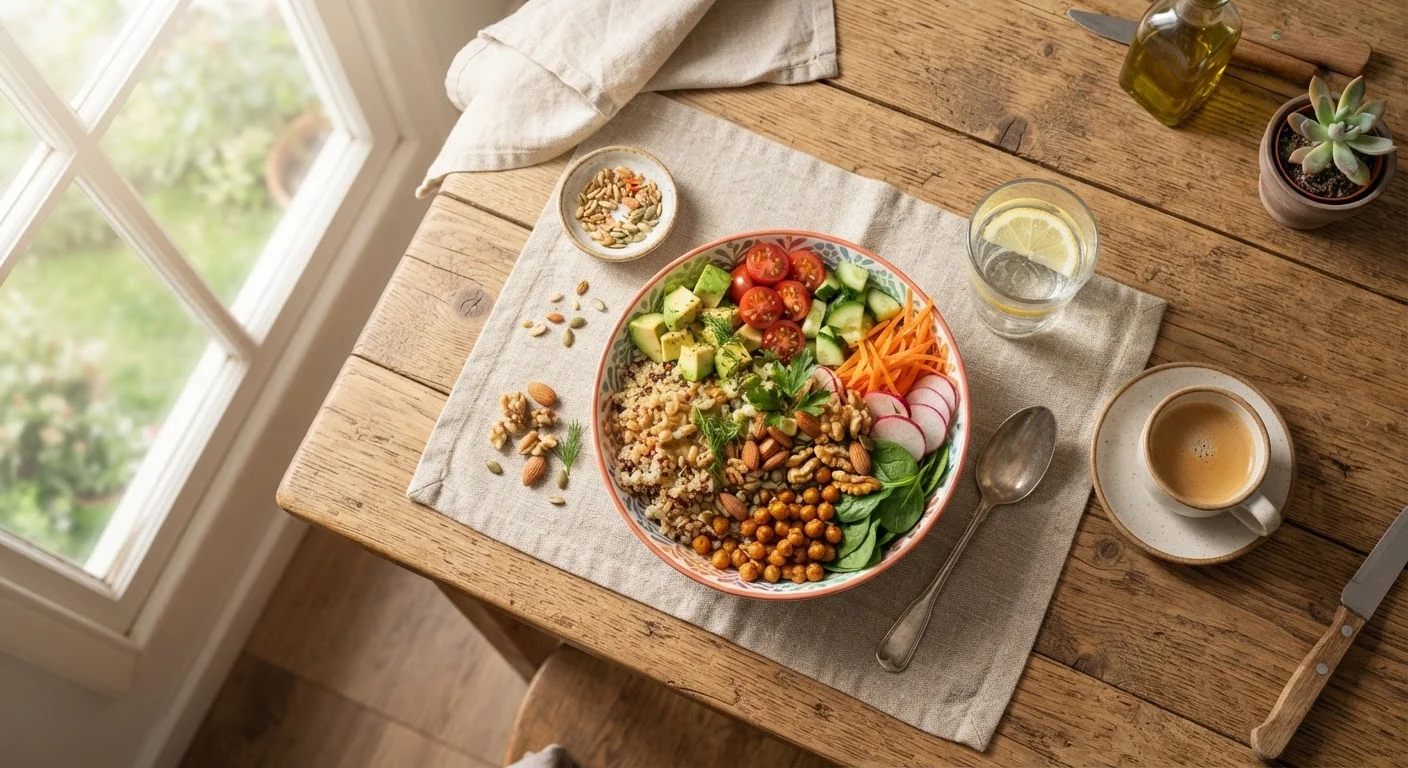
Protein slows digestion and blunts blood sugar spikes, while dietary fiber supports the gut microbiome — a system increasingly linked to serotonin production and emotional regulation. Practical anchors include legumes, eggs, whole grains, leafy greens, nuts, and seeds. These don't need to dominate the plate; even modest amounts shift the meal's metabolic profile meaningfully.
Increase Dietary Diversity, Especially Plants
A diverse plant-based diet feeds a wider range of beneficial gut bacteria, which emerging research associates with improved mood outcomes. Aim to include a variety of vegetables, fruits, legumes, and whole grains across the week rather than rotating the same few foods daily. Small additions — a handful of mixed greens, a different grain, a new vegetable — accumulate meaningful diversity without requiring a major cooking overhaul.
Address Hydration as a Non-Negotiable
Even mild dehydration is associated with reduced concentration, increased fatigue, and heightened perception of difficulty — all of which affect emotional resilience. Water needs vary by individual, but consistent fluid intake throughout the day is more effective than compensating with large amounts at once. Start meals with water and keep a bottle visible as a simple behavioral cue.
Plan for Low-Energy Days in Advance
Mood-supportive eating is hardest to maintain precisely when it matters most — on low-energy or high-stress days. Having simple, pre-planned options available (such as batch-cooked grains, canned legumes, or frozen vegetables) removes the barrier of decision-making when motivation is low. For days when everything feels effortful, see self-care practices for low-energy days that complement nutritional support with minimal effort.
Monitor and Adjust Based on Observable Signals
After two to three weeks, revisit your early observations. Are energy levels steadier across the day? Is mood less reactive around mealtimes? These are the signals that indicate your routine is taking effect. For a structured reflection framework, signs that an eating pattern is working for you offers practical checkpoints to guide honest assessment and adjustment.
Consistency Matters More Than Perfection
A mood-supportive eating routine doesn't require flawless food choices every meal. Repeated, sustainable patterns over days and weeks have far more influence on emotional wellbeing than any single 'perfect' meal. Focus on building reliable habits rather than eliminating all dietary missteps.
Sustaining the Routine Over Time
A mood-supportive eating routine is not a fixed plan — it's a flexible framework that evolves with your life circumstances, energy demands, and seasonal food availability. The behaviors most likely to persist are those that feel manageable rather than effortful. Principles that support long-term dietary adherence can help reinforce the habits you've started building here.
If you are considering a more structured dietary framework — such as a time-restricted eating window or a specific macronutrient approach — starting a new eating pattern without upending your life provides a careful, gradual approach that reduces the risk of abandoning changes under pressure.
This article is for general informational and educational purposes only and does not constitute medical or mental health advice. Always consult a qualified healthcare professional before making significant changes to your diet, particularly if you have an existing health condition or are experiencing mood-related concerns.