

Key Takeaways
Why Budget Eating Gets a Bad Reputation
The idea that eating well costs more is widespread — and partially understandable. Premium health products, specialty superfoods, and organic lines are genuinely more expensive. But the equation shifts dramatically when you separate marketing-driven nutrition from evidence-based nutrition. The foods most consistently associated with good health outcomes — vegetables, legumes, whole grains, and eggs — are also among the least expensive items in any grocery store.
The real cost driver in most food budgets isn't quality; it's convenience, waste, and unplanned purchasing. Addressing those three factors, without changing which foods you value nutritionally, is where lasting budget gains are made. For a broader look at building a solid dietary foundation, our companion piece provides a useful reference.
Core Practices for Eating Well Without Overspending
The following practices are grounded in basic nutrition science and practical household economics. None requires specialized knowledge or expensive equipment — just consistency and a willingness to plan slightly ahead.
Build meals around whole, minimally processed staple foods.
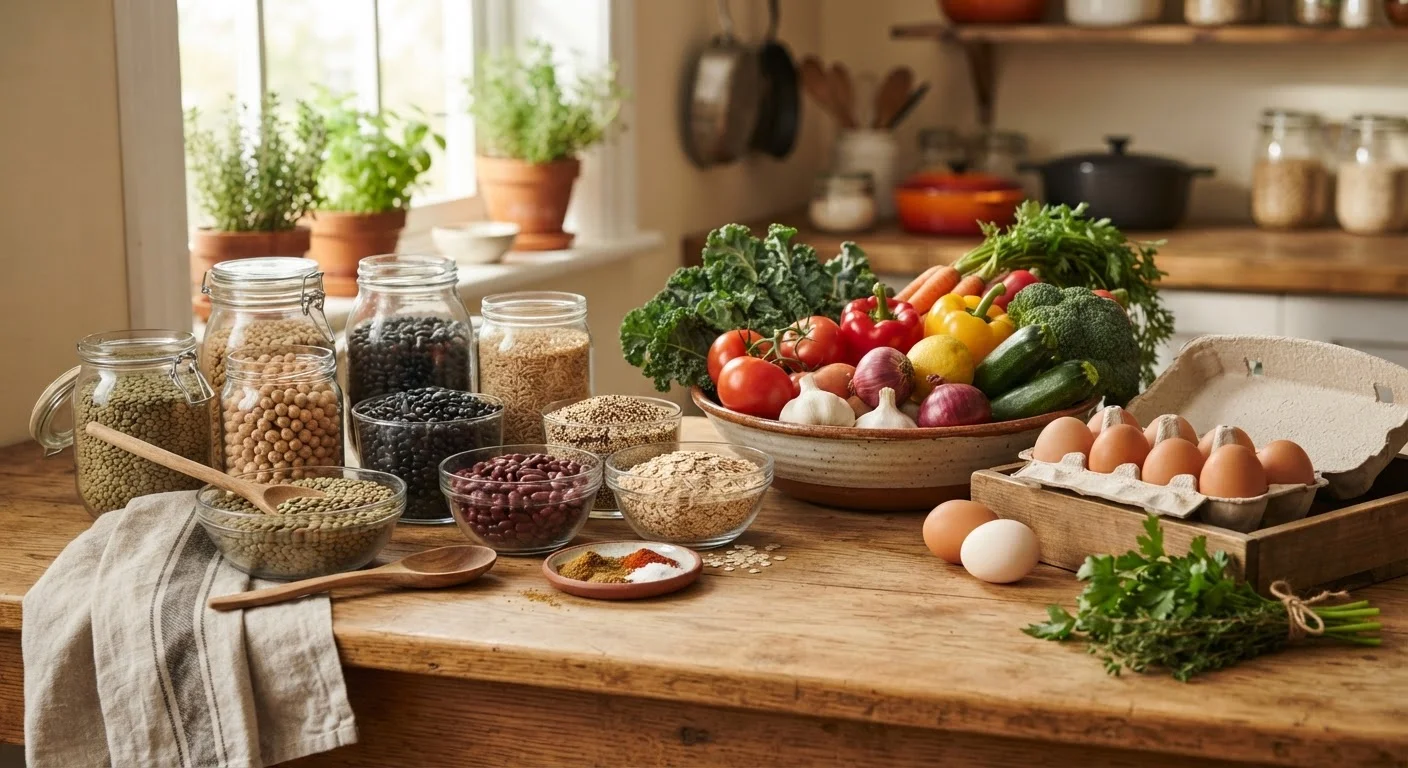
Staple foods such as dried legumes, whole grains, oats, and eggs consistently offer the highest nutritional return per dollar spent. They provide fiber, protein, and essential micronutrients without the price premium attached to packaged or ultra-processed convenience products. Relying on them as a dietary foundation creates a naturally nutrient-dense eating pattern.
Plan your weekly meals before you shop, not after.
Unplanned shopping leads to impulse purchases, duplicated items, and food that expires before it's used. A basic weekly meal plan allows you to buy only what you need, batch ingredients across multiple meals, and significantly cut waste — which is itself a hidden drain on food budgets.
Choose frozen and canned vegetables without hesitation.
Frozen vegetables are typically processed at peak ripeness, preserving most of their vitamins and minerals. Canned varieties — particularly those with no added salt or sugar — are equally viable. Both formats are less expensive than fresh, have longer shelf lives, and reduce the waste that comes from fresh produce spoiling before use.
Treat plant proteins as primary, not supplementary.
Dried lentils, chickpeas, black beans, tofu, and edamame are among the most affordable protein sources available. They also supply fiber and beneficial plant compounds absent from many animal proteins. Shifting even two or three meals per week toward plant-based protein meaningfully reduces grocery spend without sacrificing nutritional quality.
Buy seasonal produce and adjust your recipes accordingly.
In-season fruits and vegetables are less expensive because supply is high and transport distance is shorter. Eating seasonally also introduces natural dietary variety across the year, which supports a broader intake of micronutrients. Letting produce availability guide your cooking — rather than the reverse — is a practical, flexible strategy.
Batch cook once or twice a week to reduce waste and effort.
Cooking larger quantities of grains, legumes, or roasted vegetables in a single session means you always have ready components on hand. This reduces reliance on takeout during busy weekdays and ensures ingredients bought in bulk actually get eaten before they spoil.
These habits work together. Meal planning shapes your grocery list; your grocery list directs you toward seasonal staples; batch cooking ensures those staples get used. Each reinforces the others over time.
Quick Actions to Start This Week
Overhauling a diet all at once rarely sticks. Introducing one or two targeted changes and building from there is far more effective — a principle explored in more depth in our guide to starting a new eating pattern sustainably. The following actions are entry points, not a comprehensive overhaul.
A Note on Individual Dietary Needs
The principles outlined here are general healthy-eating guidance intended for otherwise healthy adults. If you have a chronic health condition, food allergy, or specific nutritional requirement, consult a registered dietitian before making significant changes to your diet. Certain populations — including pregnant individuals, older adults, and children — have distinct nutritional needs that general guidance may not fully address.
If you find that cost isn't the only factor affecting how you eat — that emotions, habits, or stress also shape your choices — mindful eating principles offer a complementary lens worth exploring.
This article provides general nutrition information for educational purposes only and does not constitute medical advice. Consult a qualified healthcare professional or registered dietitian for guidance tailored to your individual health needs.