

Key Takeaways
Option A
The Beauty Routine
The efficient, task-driven approach to daily self-care.
Best for: People who prioritize consistency and efficiency in maintaining basic grooming and skincare habits.
Option B
The Beauty Ritual
The intentional, meaning-centered practice of self-care.
Best for: People seeking emotional grounding, confidence reinforcement, and a mindful relationship with their body and wellbeing.
If you struggle with low motivation or disconnection from your self-care habits
The Beauty Ritual
Embedding intention and personal meaning into daily acts transforms them from chores into confidence-affirming anchors, making them far easier to sustain.
If your priority is building a consistent skincare foundation quickly
The Beauty Routine
A streamlined, repeatable routine establishes the physiological benefits of regular skin care without requiring emotional bandwidth every day.
If you want both skin results and emotional resilience
The Beauty Ritual
Rituals deliver all the skin health benefits of a routine while also building self-awareness, self-respect, and a positive relationship with your own reflection.
What Actually Separates a Routine From a Ritual?
On the surface, a beauty routine and a beauty ritual can look identical. Same cleanser, same moisturizer, same sequence of steps each morning. The difference isn't in the products — it's in the relationship you bring to the act itself.
A routine is fundamentally transactional. It answers a functional need: cleanse skin, apply SPF, get out the door. There's real value in that efficiency — consistent routines are the backbone of skin health — but the primary orientation is completion. The task gets done; the mind moves on.
A ritual, by contrast, is deliberate and meaning-laden. It treats the same physical steps as an opportunity to connect with yourself — to signal, consciously, that this time and this body matter. Anthropologist and behavioral scientist research suggests that rituals reduce anxiety and improve performance partly because they impose structure and a sense of personal agency on the moments that contain them. When you treat moisturizing as a mindful act of care rather than a checkbox, the neurological and emotional landscape of that moment shifts.
The science linking intentional self-care to self-esteem explores exactly how this psychological mechanism works — and why the payoff is measurable, not just anecdotal.
Head-to-Head: How Routines and Rituals Compare
Understanding the practical distinctions between a routine and a ritual helps clarify which elements to preserve and which to deepen in your own practice.
| Criterion | Beauty Routine | Beauty Ritual |
|---|---|---|
| Primary orientation | Task completion | Intentional presence |
| Emotional engagement | Minimal — autopilot | Active — mindful attention |
| Time required | Efficient, often rushed | Same duration, slower pace |
| Skin health benefit | Yes, with consistency | Yes, with consistency |
| Confidence benefit | Indirect, through results | Direct, through the act itself |
| Stress response | Neutral to slightly elevated | Associated with reduced anxiety |
| Sustainability when stressed | Often first habit dropped | More resilient — emotionally reinforcing |
Notice that neither approach is inherently superior for skin physiology — both can deliver hydration, protection, and consistency. The divergence lies in the emotional architecture surrounding those acts. A ritual doesn't require more time; it requires more presence.
Why Intention Is the Active Ingredient
Intention isn't a vague concept here — it's a behavioral and psychological mechanism. When you set a deliberate purpose before beginning a self-care practice (even something as simple as silently acknowledging "this is time I'm taking for myself"), you shift your nervous system's orientation toward the experience. Research on mindfulness and self-compassion consistently shows that this kind of present-moment attention reduces cortisol reactivity and increases feelings of self-worth.
~25%
Reduction in pre-performance anxiety
Studies on ritualized behavior suggest self-defined rituals can reduce anxiety by approximately 25% before high-stakes tasks, per research published in Psychological Science.
3x
Greater habit consistency with meaning-attached cues
Behavioral research indicates habits tied to personal values and identity are roughly three times more likely to be maintained long-term than purely functional habits.
The practical implication: slowing down to notice how a facial oil feels, or pausing before applying sunscreen to take one deep breath, isn't indulgent — it's the mechanism by which self-care earns its emotional ROI. Without that intentional layer, even the most sophisticated skincare routine remains a hygiene task. With it, the same routine becomes what researchers call a "behavioral anchor" — a daily act that reinforces identity and emotional stability.
Reframing beauty routines as emotional anchors is a useful companion perspective on exactly this principle.
Upgrading Your Routine: Practical Shifts Toward Ritual
You don't need to overhaul your medicine cabinet or add thirty minutes to your morning. Transitioning from routine to ritual is about redirecting attention, not accumulating steps.
- Name your intention: Before beginning, state — even internally — what this time is for. "This is five minutes of care for my body." Simple, but psychologically powerful.
- Reduce multitasking: Avoid scrolling or watching content while going through your skincare steps. Sensory presence — noticing texture, scent, warmth — is the raw material of a ritual.
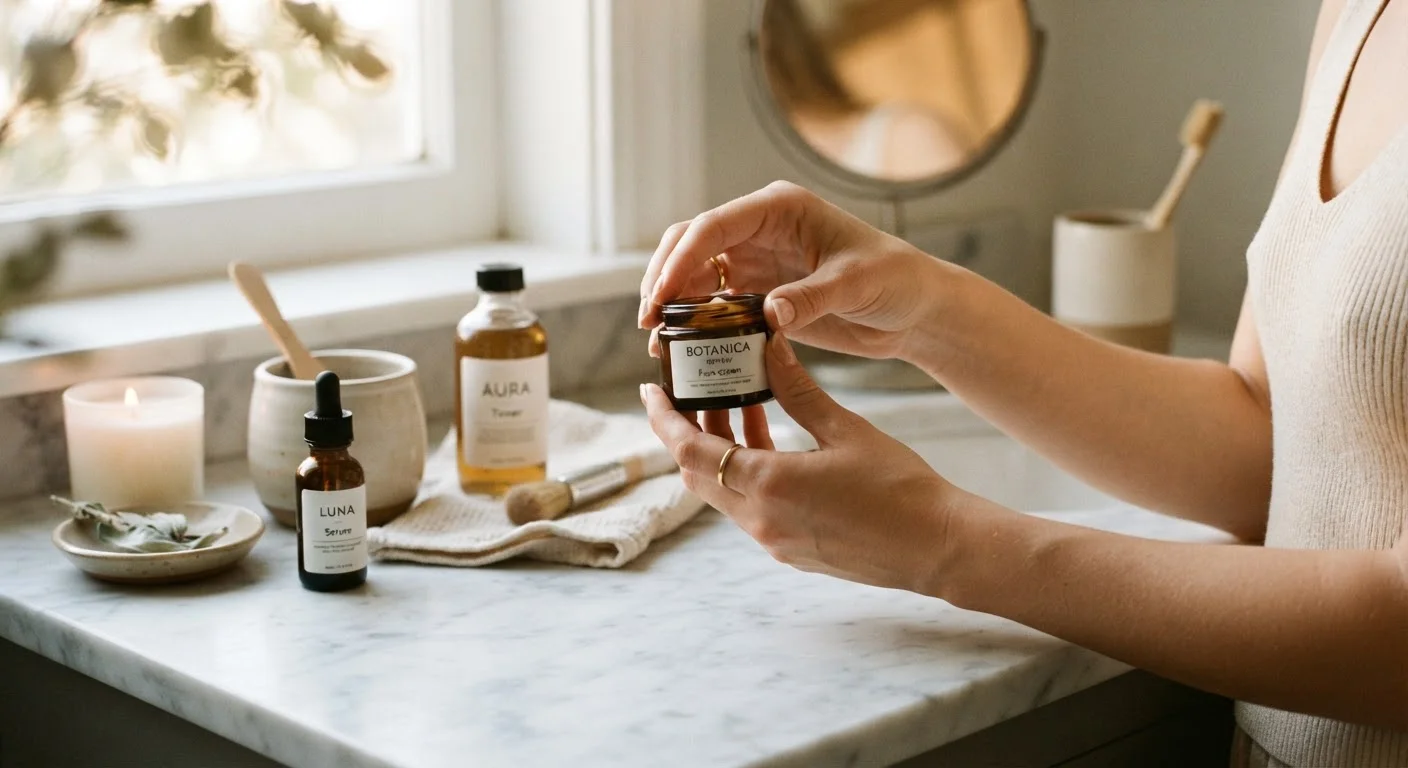
- Create environmental cues: A specific playlist, a candle, or simply using your non-dominant hand for one step can interrupt autopilot and signal that this moment is distinct.
- Close the loop: End with a brief moment of acknowledgment — even a glance in the mirror with neutral, non-critical attention. This completes the ritual and reinforces its emotional purpose.
These shifts are accessible regardless of your routine's complexity. How grooming habits interact with mood and identity offers further context on why these micro-moments carry outsized psychological weight.
For anyone building these habits from the ground up, foundational skincare routines provide the structural starting point — the ritual layer can be added as confidence and consistency grow.
This article is for informational purposes only and does not constitute medical or psychological advice. Consult a qualified healthcare professional for any personal health concerns.