

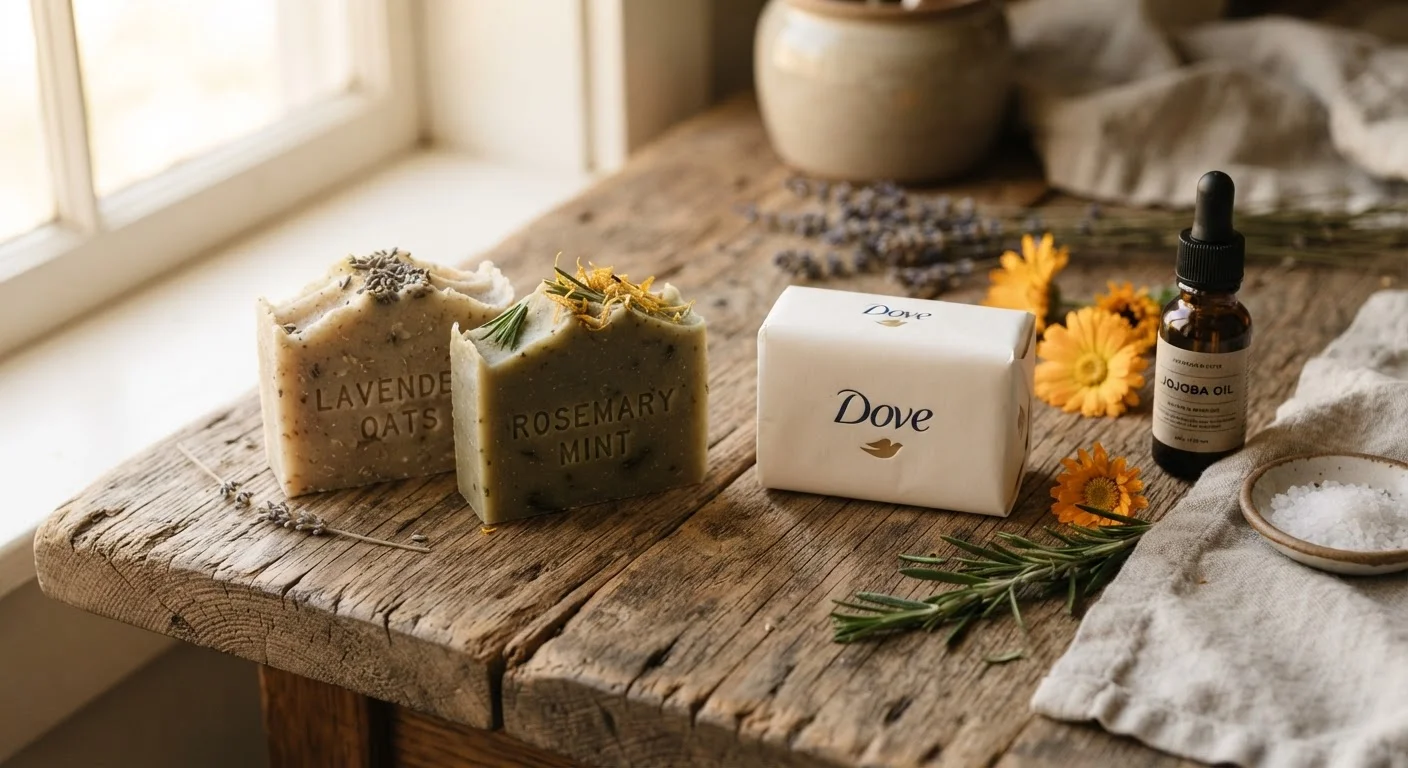
Key Takeaways
Option A
Cold-Process Soap
The traditional, minimally processed handmade bar.
Best for: Those seeking simple, recognizable ingredients and a gentler cleansing experience.
Option B
Commercially Made Bar
The mass-produced, standardized cleansing product.
Best for: Consumers who prioritize convenience, consistent lathering, and wide availability.
If you have sensitive or dry skin prone to irritation
Cold-Process Soap
Retained glycerin and a shorter, recognizable ingredient list may be less likely to trigger sensitivity, though individual reactions vary and patch testing is always wise.
If you need reliable, widely available cleansing on a budget
Commercially Made Bar
Commercial bars are consistent, affordable, and readily available, making them practical for daily use when specific ingredient preferences aren't a priority.
If you're focused on low-toxin, whole-body wellness routines
Cold-Process Soap
Handmade cold-process soaps typically rely on plant-based oils and simple botanicals, aligning well with a natural-ingredient skincare philosophy.
If lather performance and standardized fragrance are important to you
Commercially Made Bar
Commercial formulations are engineered for consistent foam, scent stability, and longevity that handmade bars don't always replicate.
How Each Bar Is Made
Cold-process soap is produced by combining oils or butters — such as olive, coconut, or shea — with an alkali solution (sodium hydroxide, or lye) at room temperature. The mixture undergoes saponification, a chemical reaction that transforms fats into soap and glycerin. No external heat is applied after blending, which preserves the integrity of certain oils and leaves glycerin in the final bar.
Commercial soap manufacturing, by contrast, typically involves heat and pressure in large-scale reactors. Crucially, most manufacturers extract the glycerin produced during saponification and redirect it to higher-margin industries like cosmetics and pharmaceuticals. The resulting bar is then supplemented with synthetic detergents, lather-enhancing surfactants, and stabilizers to restore performance properties.
Some commercial products labeled "beauty bars" or "cleansing bars" are not legally classified as soap at all — they're primarily synthetic detergent (syndet) formulations governed by cosmetics regulations rather than the traditional soap definition. This distinction matters when you're evaluating what's actually touching your skin.
What's Inside: Ingredients Side by Side
Ingredient transparency is one of the clearest differences between these two bar types.
| Criterion | Cold-Process Soap | Commercially Made Bar |
|---|---|---|
| Manufacturing method | Room-temperature saponification | Heat/pressure industrial process |
| Glycerin content | Retained naturally in bar | Typically extracted and sold |
| Typical ingredients | Plant oils, lye, botanicals | Surfactants, preservatives, synthetic fragrance |
| Ingredient list length | Usually short (5–10 items) | Often long (10–20+ items) |
| Lather consistency | Varies by oil blend | Engineered for consistent foam |
| Bar hardness/durability | Softer; dissolves faster | Harder; longer-lasting in shower |
| Regulation category | Soap (FDA exempt) | Cosmetic or syndet bar |
Cold-process makers typically list only the oils used and any added botanicals or fragrance. Because glycerin remains in the bar, it acts as a natural humectant — drawing moisture to the skin's surface during and after washing. Commercial bars, while subject to strict labeling regulations, often contain longer ingredient lists including synthetic fragrances (sometimes listed simply as "fragrance" or "parfum"), preservatives like parabens or phenoxyethanol, and chelating agents such as tetrasodium EDTA.
The analogy to food processing is instructive. Just as whole foods differ meaningfully from ultra-processed products, soap made from a short list of recognizable oils differs from a product engineered with multiple synthetic additives — though neither category is inherently unsafe.
Not All Synthetic Ingredients Are Harmful
The presence of synthetic ingredients does not automatically make a commercial bar unsafe. Many synthetics used in soap manufacturing have extensive safety records and are approved by regulatory bodies. Conversely, natural ingredients can cause allergic reactions in some individuals — essential oils and botanical extracts are common sensitizers. Evaluating a product on its full ingredient profile rather than the "natural vs. synthetic" label alone gives you a more accurate picture.
Skin Experience and Practical Considerations
Glycerin retention gives cold-process soap a reputation for leaving skin feeling softer and less stripped after washing. This is a real functional difference — glycerin's humectant properties are well established in dermatological research. However, handmade soaps vary significantly depending on the oil blend, superfat percentage (excess oil left unreacted), and curing time used by the maker.
Commercial bars deliver consistency: every bar from the same manufacturer performs identically. They're also engineered to produce abundant, stable lather — which many consumers equate with cleansing efficacy, though lather volume and cleaning effectiveness are not directly correlated.
~67%
US consumers who check product ingredient labels
According to NielsenIQ consumer research, ingredient transparency has become a leading purchase driver for personal care products in the US.
3–6 weeks
Typical cold-process soap cure time
Soap makers recommend allowing bars to cure this long so excess water evaporates and the bar hardens for a more durable, milder final product.
Durability is another practical gap. Cold-process bars tend to soften faster in humid bathrooms and may dissolve more quickly than commercial bars formulated with hardening agents. Storing them on a well-draining soap dish and allowing them to dry between uses extends their lifespan considerably.
This article is for general informational purposes only and does not constitute medical or dermatological advice. If you have a skin condition, allergy, or specific sensitivity concern, consult a qualified dermatologist or healthcare provider before changing your skincare routine.