

Key Takeaways
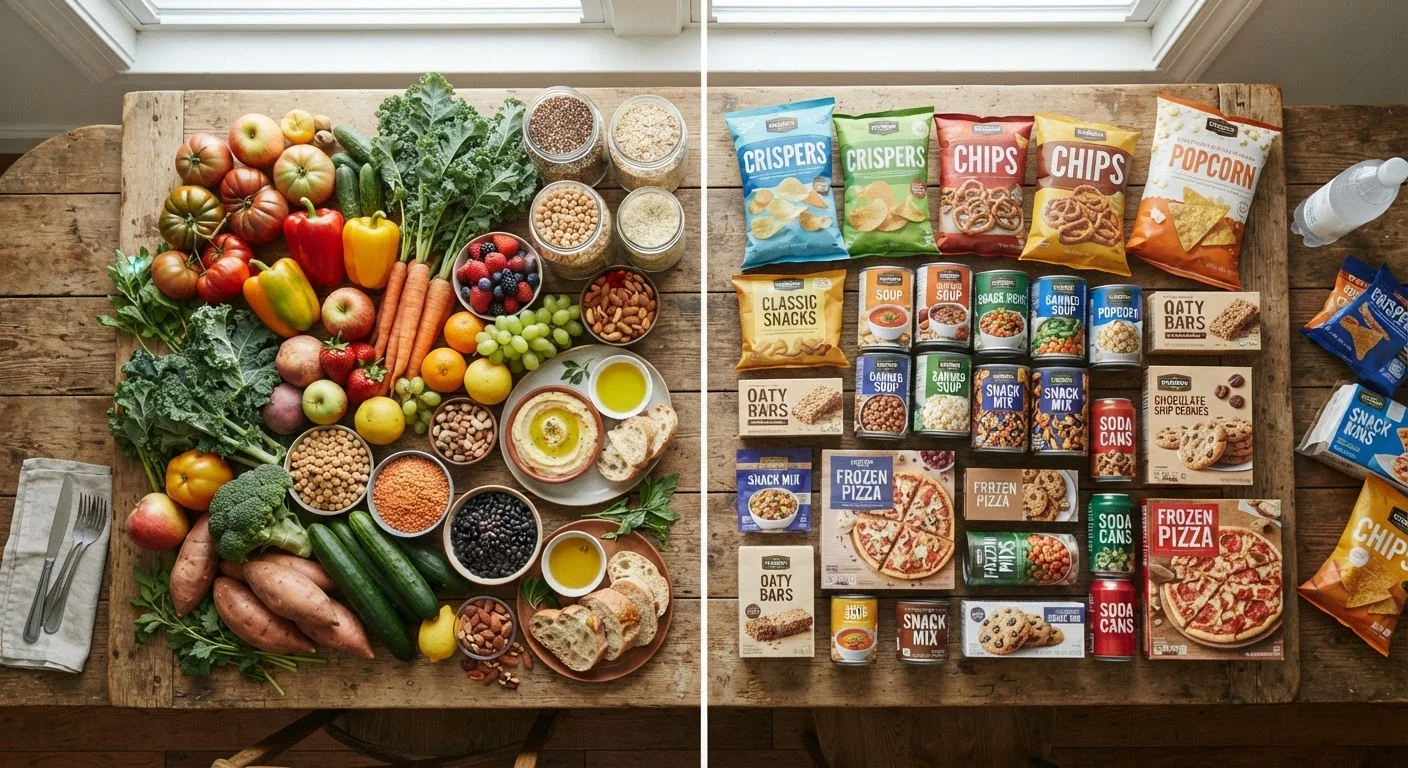
Option A
Whole Foods
The minimally altered, nutrient-intact original.
Best for: People seeking to maximize nutrient density and reduce reliance on additives in their everyday eating patterns.
Option B
Processed Foods
A broad spectrum — from lightly altered to heavily engineered.
Best for: Understanding which processed options fit into a balanced diet and which are worth limiting.
If your primary goal is maximizing nutrient density
Whole Foods
Whole foods deliver fiber, vitamins, minerals, and phytonutrients in their most intact form, with no additives diluting their nutritional profile.
If convenience is a non-negotiable part of your routine
Processed Foods
Minimally processed options like canned legumes, frozen vegetables, and plain yogurt offer genuine nutritional value with meaningful time savings.
If you want to support better mood and mental clarity
Whole Foods
Diets higher in whole, minimally processed foods are consistently associated with more stable energy and improved wellbeing in observational research.
If you're managing a busy household on a practical budget
Processed Foods
Strategically chosen minimally processed staples — oats, frozen produce, tinned fish — balance affordability and nutrition effectively.
Defining the Terms: What Does 'Processed' Actually Mean?
The word processed is one of the most misunderstood in everyday nutrition conversations. In its broadest sense, any food that has been altered from its raw state has undergone some form of processing — including washing, freezing, cooking, or fermentation. That means calling all processed food unhealthy is an oversimplification that can lead to unnecessary dietary anxiety.
A more useful framework comes from the NOVA classification system, developed by researchers at the University of São Paulo. NOVA divides foods into four groups based on the extent and purpose of processing:
- Unprocessed or minimally processed foods: fruits, vegetables, plain meats, eggs, legumes, and nuts — foods in their natural state or lightly altered (dried, frozen, pasteurized) without added substances.
- Processed culinary ingredients: oils, butter, flour, sugar, and salt — extracted from natural sources and used in home cooking.
- Processed foods: items made by adding salt, sugar, or oil to Group 1 foods — such as canned vegetables, cheese, cured meats, or freshly baked bread.
- Ultra-processed foods (UPFs): industrially formulated products containing ingredients rarely found in a home kitchen — emulsifiers, flavor enhancers, artificial colors, and hydrogenated oils. Examples include packaged snacks, sugary beverages, instant noodles, and many ready meals.
Understanding this spectrum helps shift the conversation from a binary "good vs. bad" framing toward a more nuanced, practical approach to food selection.
What Whole Foods Bring to the Table
Whole foods — think fresh produce, whole grains, legumes, nuts, seeds, and plain animal proteins — are nutritionally valuable largely because of what they retain. Their natural fiber slows digestion and supports blood sugar stability. Their vitamins and minerals remain largely intact. And their phytonutrients (plant compounds with antioxidant and anti-inflammatory properties) are present in forms that the body can readily utilize.
Dietary fiber is worth highlighting specifically. Found abundantly in whole plant foods, fiber supports gut microbiome diversity, promotes satiety, and is associated with reduced risk of several chronic conditions in large-scale epidemiological studies. Most Americans consume well below the recommended daily intake for fiber — a gap that a greater emphasis on whole foods can help address.
| Criterion | Whole Foods | Ultra-Processed Foods |
|---|---|---|
| Fiber content | Naturally high | Typically very low |
| Added sugars | None or negligible | Often significant |
| Sodium levels | Naturally low | Frequently high |
| Micronutrient density | High and intact | Reduced or fortified artificially |
| Ingredient list length | Minimal (1–3 items) | Long, with additives |
| Satiety per calorie | Generally higher | Often lower |
| Convenience | Varies; often requires prep | High; ready to consume |
Whole foods also tend to be lower in sodium and added sugars, and they rarely contain synthetic additives. For readers interested in how food choices connect to cognitive performance and mood, dietary patterns and mental clarity is a valuable area to explore further.
Where Processed Foods Fall on the Spectrum
Labeling all processed food as harmful overlooks an important reality: some of the most nutritious everyday staples are processed. Plain canned tomatoes, frozen peas, pasteurized milk, and rolled oats all undergo processing — yet they retain strong nutritional profiles and make balanced eating more accessible for most households.
The concern in nutrition research centers primarily on ultra-processed foods. Several large observational studies, including work published in journals such as The BMJ and JAMA Internal Medicine, have found associations between high UPF consumption and outcomes including excess caloric intake, poor diet quality, and elevated markers for certain chronic conditions. It's important to note these are associations, not confirmed causal relationships — but the patterns are consistent enough to inform practical guidance.
57%
Share of US calories from ultra-processed foods
Research published in BMJ Open estimated that ultra-processed foods account for roughly 57% of total daily caloric intake in US adults.
~15g/day
Average US daily fiber intake
The average American consumes approximately 15 grams of fiber daily, well below the recommended 25–38 grams, according to dietary intake surveys.
Ultra-processed foods tend to be engineered for palatability — high in salt, refined sugar, and fat combinations that can override natural appetite signals. They're also typically low in fiber and micronutrients relative to their caloric content. Understanding added versus naturally occurring sugars is another useful lens here; see sugar in everyday foods for a clear breakdown.
For a related perspective on how these food categories interact with emotional wellbeing, whole foods vs. ultra-processed foods and mood examines the evidence in more depth.
Practical Navigation: Building a More Whole-Food Diet
Shifting toward more whole foods doesn't require eliminating all processed items — a goal that would be impractical for most people. Instead, a more realistic and sustainable approach focuses on proportionality: anchoring meals around whole or minimally processed ingredients and treating ultra-processed products as occasional rather than habitual choices.
A few practical strategies supported by nutrition research:
- Read ingredient lists, not just nutrition facts panels. A shorter list with recognizable ingredients generally signals less processing. The presence of additives like carrageenan, sodium benzoate, or partially hydrogenated oils typically indicates a more heavily processed product.
- Embrace the freezer aisle selectively. Plain frozen vegetables and fruits are nutritionally comparable to fresh — often picked and frozen at peak ripeness, preserving their nutrient content effectively.
- Use minimally processed staples as a base. Oats, lentils, eggs, canned legumes (rinsed to reduce sodium), and plain dairy products bridge convenience and nutritional quality.
- Cook more meals from recognizable ingredients. Home preparation naturally increases whole-food consumption and reduces exposure to additives, even when cooking times are short.
If you're interested in how these principles connect to broader eating approaches, evidence-supported dietary patterns offers a helpful comparison of structured frameworks that emphasize whole foods. And for those exploring plant-forward eating, plant-based vs. whole-food plant-based diets clarifies an important distinction often overlooked in popular discussion.
This article is for general informational purposes only and does not constitute medical or dietary advice. Individual nutritional needs vary. Consult a qualified healthcare professional or registered dietitian before making significant changes to your diet.