

Key Takeaways
Option A
Naturally Occurring Sugar
The sugar that comes packaged with nutrients.
Best for: Understanding why whole fruits, dairy, and vegetables can be part of a balanced diet despite containing sugar.
Option B
Added Sugar
The sugar introduced during manufacturing or preparation.
Best for: Recognizing hidden sources of excess sweeteners in everyday packaged and restaurant foods.
If you want to satisfy a sweet craving with nutritional benefit
Naturally Occurring Sugar
Whole fruits and plain dairy deliver sweetness alongside fiber, vitamins, and minerals that support overall health — making them a more nutrient-dense choice.
If you are monitoring intake to support metabolic health
Naturally Occurring Sugar
Reducing added sugars — rather than avoiding all sugars — is the dietary strategy supported by current nutrition guidelines for managing blood glucose and weight.
If you are trying to read food labels more accurately
Added Sugar
Focusing specifically on the 'Added Sugars' line of the Nutrition Facts panel gives a clearer picture of discretionary sugar intake than total sugar alone.
Defining the Two Types of Sugar
Sugar is a carbohydrate, and it appears in food in two fundamentally different ways. Naturally occurring sugars are inherent to a food's biological structure. Fructose in an apple, lactose in milk, and glucose in carrots all fall into this category — they exist before any human processing takes place. Added sugars, by contrast, are sweeteners incorporated into foods during manufacturing, cooking, or preparation. Table sugar stirred into yogurt, high-fructose corn syrup in a soft drink, and honey drizzled onto granola are all forms of added sugar.
The molecular structures of these sugars may be chemically similar, but the nutritional context surrounding them is very different. Naturally occurring sugars arrive in food alongside fiber, water, protein, vitamins, and minerals that affect how the body absorbs and uses that energy. Added sugars typically arrive alone — contributing calories without additional nutritional value.
| Criterion | Naturally Occurring Sugar | Added Sugar |
|---|---|---|
| Origin | Inherent to the food's biology | Added during processing or preparation |
| Common food sources | Fruit, plain dairy, vegetables | Sodas, packaged snacks, sauces, pastries |
| Nutrient companions | Fiber, vitamins, minerals, protein | Few to none in most cases |
| Appears on labels as | Counted in "Total Sugars" | Listed separately as "Added Sugars" |
| Dietary guideline focus | Not specifically limited in guidelines | Recommended below 10% of daily calories |
| Typical absorption rate | Often slower due to fiber matrix | Often faster, fewer buffering nutrients |
Where Each Type Commonly Appears
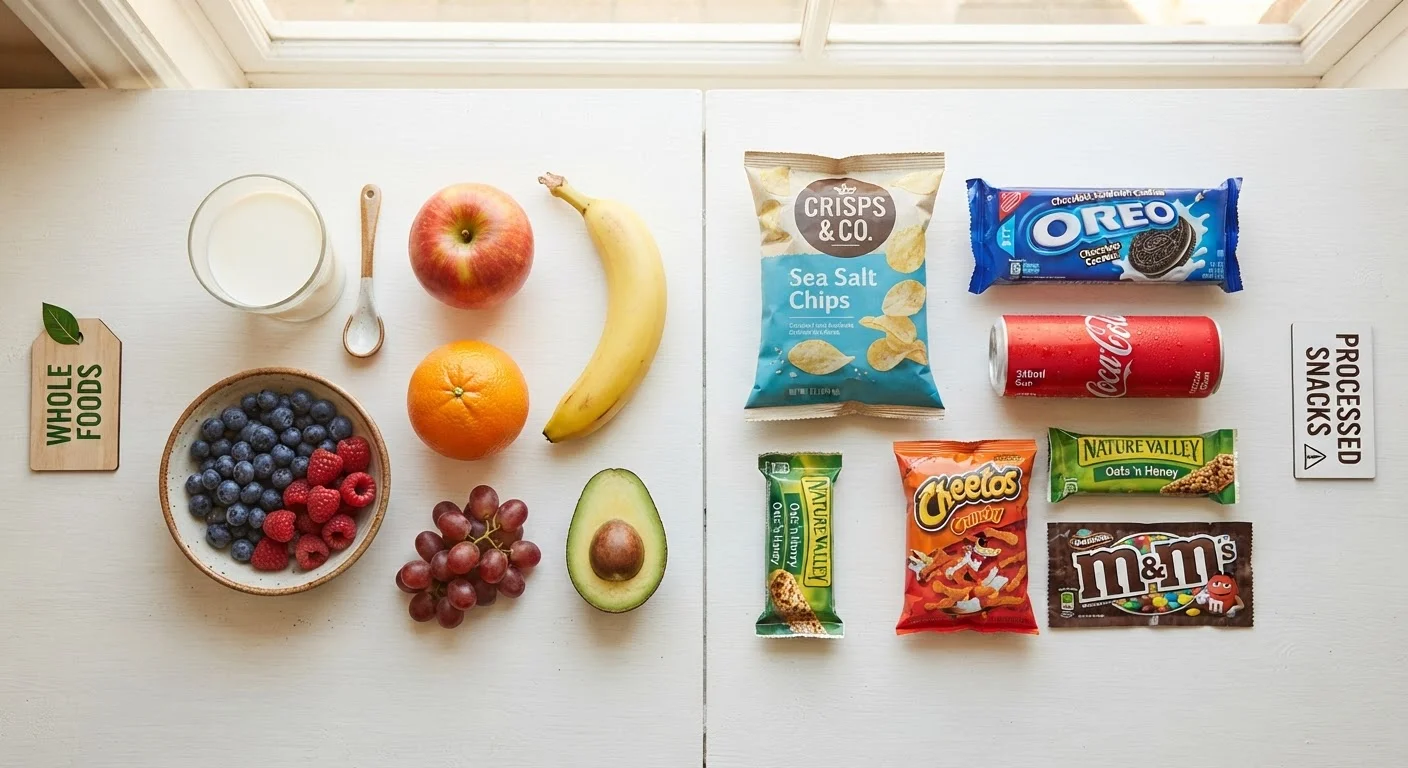
Naturally occurring sugars are found in fresh and minimally processed whole foods: fruits, vegetables, plain dairy products, and legumes. Because these foods retain their original structure, their sugars are often absorbed more gradually. For example, the fiber in a whole apple slows digestion compared with drinking an equivalent amount of apple juice, even if the juice contains no added sweeteners.
Added sugars appear in a far wider range of products than most people expect. Obvious sources include sodas, candy, pastries, and sweetened cereals. Less obvious sources include flavored yogurt, salad dressings, pasta sauces, protein bars, and many "health-positioned" packaged snacks. Understanding the spectrum from whole to ultra-processed foods is a useful first step in identifying where added sugars are most likely to concentrate.
17 tsp
Average daily added sugar intake in U.S. adults
According to the Centers for Disease Control and Prevention, U.S. adults consume roughly 17 teaspoons of added sugar per day — well above the recommended limit.
~35%
Share of added sugar from beverages
Research published in nutrition surveillance data indicates that sugary drinks — including sodas, energy drinks, and sweetened coffees — account for a substantial portion of U.S. added sugar intake.
10%
Recommended daily calorie cap for added sugars
The Dietary Guidelines for Americans recommend that added sugars make up less than 10% of total daily calories for adults and children over age two.
On a Nutrition Facts label, the "Total Sugars" line includes both types. The "Added Sugars" sub-line, which became mandatory in the U.S. in 2020, isolates only what was incorporated during production — making it the most actionable number for monitoring discretionary intake.
Why the Distinction Matters for Everyday Eating
Treating all sugar as equally problematic can lead to unnecessary avoidance of nutritious whole foods. Plain dairy and fresh fruit contain sugars, but decades of nutrition research support their role in a healthy diet. The concern that public health guidance consistently highlights is excess added sugar, not sugar as a universal category.
The Dietary Guidelines for Americans advise keeping added sugars below 10% of total daily calories. For a standard 2,000-calorie diet, that translates to roughly 50 grams — an amount that a single large sweetened beverage can easily exceed on its own. Being able to distinguish added from naturally occurring sugar helps make that guidance actionable rather than abstract.
It is also worth noting that even naturally occurring sugars deserve some awareness in certain health contexts. People managing blood glucose or specific metabolic conditions may need to monitor total carbohydrate and sugar intake across all food types. If that applies to you, a registered dietitian or your healthcare provider is the right resource for personalized guidance. For a related look at how sugar perception affects the brain, see common myths about sugar and mental fog.
This article is for general informational purposes only and does not constitute medical or dietary advice. Consult a qualified healthcare professional before making significant changes to your diet, especially if you have an existing health condition.