

Key Takeaways
Our Verdict
Mediterranean, DASH, and whole-food dietary patterns each offer meaningful, evidence-grounded frameworks for healthier eating. They share a strong emphasis on minimally processed foods but differ in structure, specific restrictions, and the health goals they've been most studied for. Choosing between them depends on personal health priorities, lifestyle, and what can realistically be sustained long term.
| Best for | Recommended |
|---|---|
| Those seeking a flexible, culturally rich pattern with broad health research support | Mediterranean pattern |
| Adults focused on blood pressure management or cardiovascular risk reduction | DASH pattern |
| Those wanting maximum flexibility without strict macronutrient or food group rules | Whole-food approach |
| People managing multiple dietary goals simultaneously | Mediterranean or DASH pattern (consult a registered dietitian) |
What These Three Patterns Have in Common
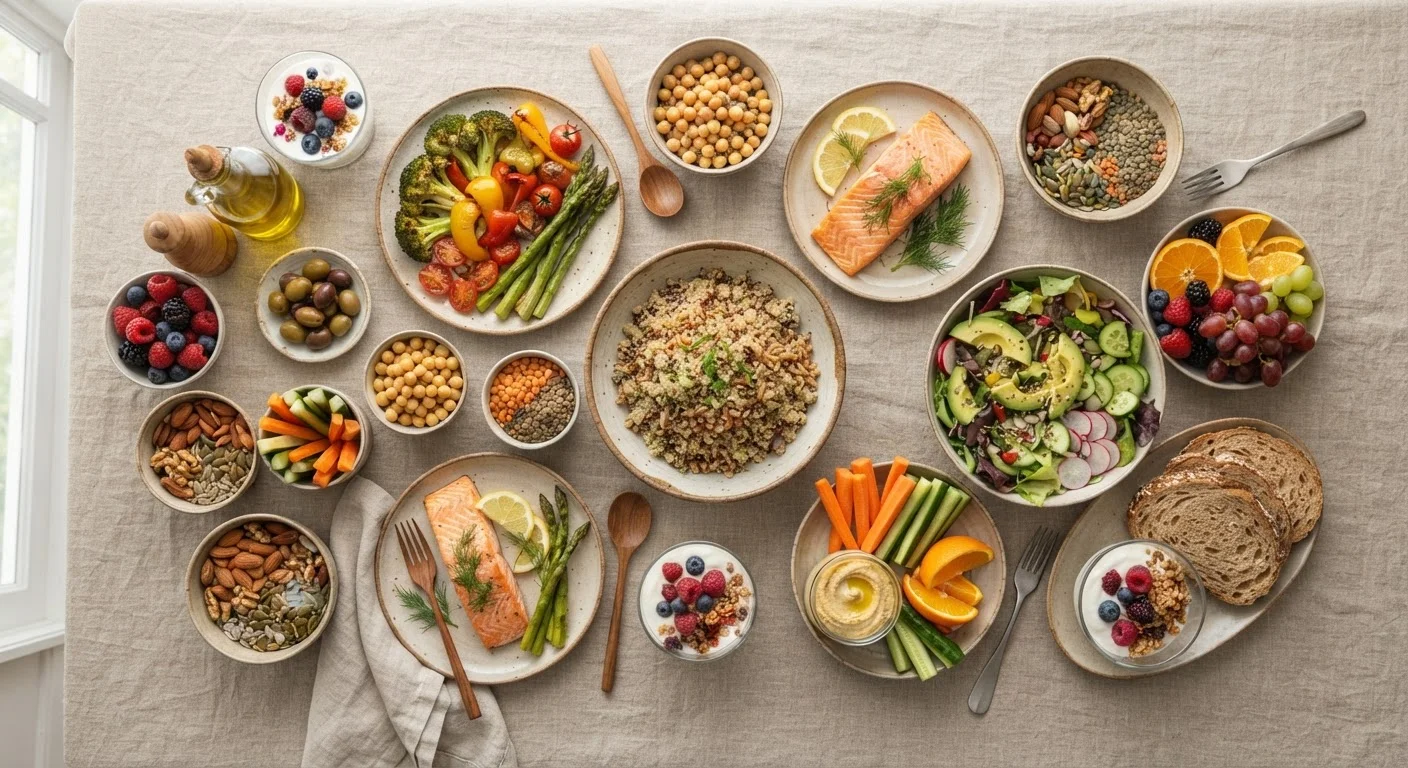
Despite their distinct identities, the Mediterranean, DASH (Dietary Approaches to Stop Hypertension), and whole-food dietary patterns converge on a core principle: prioritize foods that are as close to their natural state as possible. Vegetables, fruits, whole grains, legumes, nuts, and seeds form the backbone of all three. Ultra-processed foods, added sugars, and excess sodium are discouraged across the board.
This shared foundation is not coincidental. The evidence base supporting these patterns points consistently to the same dietary behaviors as beneficial — high fiber intake, a diverse array of plant foods, adequate unsaturated fats, and limited processed food consumption. For a visual breakdown of how proportions translate to an actual plate, see what a balanced plate looks like.
Understanding these overlaps helps clarify that the choice between these patterns is less about radical difference and more about emphasis, structure, and individual fit.
The Mediterranean Pattern: Flexibility Rooted in Evidence
The Mediterranean dietary pattern draws from the traditional eating habits of countries bordering the Mediterranean Sea. It is characterized by abundant plant foods, olive oil as the primary fat source, moderate fish and seafood consumption, limited red meat, and moderate dairy — typically yogurt and cheese rather than milk. Moderate wine consumption is often cited in descriptions, though this element is not universally recommended given the established risks associated with alcohol.
This pattern has one of the most extensive research profiles of any dietary framework, with associations reported across cardiovascular health, metabolic markers, and emerging areas like cognitive function. For a deeper look at the evidence, including where the science is still developing, see the Mediterranean diet and mental wellbeing.
Its relative flexibility — there is no strict calorie counting or rigid meal timing — makes it accessible for many adults. Mediterranean eating goes beyond olive oil; its cultural and social dimensions are considered part of the pattern itself.
Getting Started Without Overhauling Everything
Dietary research consistently shows that gradual, sustainable changes outperform rapid overhauls in the long run. If one of these patterns appeals to you, consider starting with a single meal or food group — replacing refined grains with whole grains, or increasing vegetable variety at one meal per day. Small shifts, consistently practiced, tend to compound over time. A registered dietitian can help you adapt any of these frameworks to your personal health context.
The DASH Pattern: Structure With a Specific Purpose
DASH was developed specifically to help manage blood pressure, and its structure reflects that origin. It places explicit emphasis on potassium, calcium, and magnesium — nutrients associated with blood pressure regulation — while setting clear limits on sodium. The pattern prioritizes fruits, vegetables, whole grains, low-fat dairy, and lean proteins, while limiting saturated fats, red meat, sweets, and sugary beverages.
What sets DASH apart from the Mediterranean pattern is its degree of specificity. Recommended daily and weekly serving ranges are defined for each food group, making it one of the more structured approaches among mainstream dietary frameworks. This structure can be helpful for people working toward defined clinical targets, but may feel more restrictive for those seeking a looser framework.
Research into DASH extends beyond blood pressure. Associations have been reported with reduced risk of cardiovascular disease, improved insulin sensitivity, and favorable effects on cholesterol. See the DASH approach in full detail for a more thorough breakdown of its principles and evidence base. For context on how dietary patterns intersect with metabolic health more broadly, structured eating patterns and metabolic health offers useful perspective.
| Mediterranean | DASH | Whole-Food Approach | |
|---|---|---|---|
| Primary focus | Overall wellness, heart health | Blood pressure, cardiovascular health | Minimally processed eating |
| Structure level | Moderate — general guidelines | High — defined serving targets | Low — principle-based only |
| Fat guidance | Olive oil emphasized; moderate fat | Low saturated fat; lean proteins | No specific fat targets |
| Sodium restriction | Not formally restricted | Explicitly limited | Discouraged but not quantified |
| Dairy inclusion | Moderate; mainly yogurt and cheese | Low-fat dairy encouraged | Depends on individual approach |
| Research depth | Extensive, multi-decade evidence | Strong, especially for blood pressure | Growing; less protocol-specific |
| Ease of adoption | Relatively easy; culturally familiar | Moderate; requires meal planning | Easy to start; hard to self-audit |
The Whole-Food Approach: Principles Without a Protocol
Unlike Mediterranean and DASH, a whole-food dietary approach is not a defined protocol with specific serving targets. Instead, it is a guiding philosophy: eat foods that are minimally processed and as close to their natural form as possible. Whole grains rather than refined flour. Beans rather than protein isolates. Whole fruit rather than juice.
This flexibility is both its strength and its limitation. Without structural guidance, it can be difficult to know whether one's overall intake is genuinely balanced in terms of macronutrients, micronutrients, or specific health goals. It is also important to note that "whole food" and "plant-based" are not synonymous terms — the distinction between plant-based and whole-food plant-based is worth understanding before conflating the two.
For individuals who find rigid frameworks difficult to sustain, a whole-food lens may serve as a practical starting point. It aligns well with the foundational principles shared by both Mediterranean and DASH patterns while allowing greater dietary autonomy. Those curious about how any eating pattern is working for them over time may find it useful to review signs that an eating pattern is working.
This article is for general informational and educational purposes only and does not constitute medical or dietary advice. Speak with a registered dietitian or qualified healthcare professional before making significant changes to your diet, particularly if you have an existing health condition or take medication.