

Key Takeaways
Start here
Why a Morning Routine Matters for Skin Health
Next
The Core Steps Every Beginner Needs
Then
The Right Order to Apply Your Products
Watch out for
Common Beginner Mistakes to Avoid
Keep going
Building the Habit Over Time
Why a Morning Routine Matters for Skin Health
Skin is your body's largest organ and its primary physical barrier against environmental stressors — UV radiation, pollution, temperature shifts, and pathogens. A consistent morning skincare routine isn't a cosmetic luxury; it's a daily act of maintenance that supports this barrier's function. Just as brushing your teeth protects against gradual damage, a brief morning ritual helps your skin do its protective job more effectively throughout the day.
Morning is also the moment when your skin transitions from its overnight repair mode into active exposure. Overnight, skin increases cell turnover and moisture retention. By morning, that work is largely done — and your skin is about to face the day's environmental load. Applying a few targeted products at this transition point can meaningfully support how well your skin holds up.
If you're working toward a more intentional daily wellness practice, skincare pairs naturally with other morning anchors. See our guide to morning rituals that anchor the rest of your day for complementary habits worth pairing with this routine.
The Core Steps Every Beginner Needs
Skin barrier
The outermost layer of skin that acts as a protective wall, keeping moisture in and irritants, pollutants, and pathogens out. When this barrier is healthy, skin feels comfortable and resilient.
Broad-spectrum SPF
A sunscreen rating that indicates protection against both UVA rays (which contribute to skin aging) and UVB rays (which cause sunburn). Broad-spectrum coverage is considered the standard for daily protection.
Sebum
The natural oil produced by skin glands that lubricates and waterproofs the skin's surface. In balanced amounts it's beneficial; excess sebum can contribute to clogged pores.
Non-comedogenic
A label indicating a product is formulated to avoid blocking pores. It's a useful marker for people prone to breakouts, though the term is not officially regulated.
pH-balanced cleanser
A facial cleanser formulated to match the skin's natural slightly acidic pH (around 4.5–5.5), reducing the risk of disrupting the skin barrier compared to alkaline soaps.
A beginner's morning skincare routine requires only three foundational steps. Everything else — serums, toners, essences — builds on this base, but is optional until you're comfortable with the basics.
- Cleanse: A gentle, pH-balanced cleanser removes overnight sebum, dead skin cells, and any residue from nighttime products. The goal is a clean canvas, not squeaky-clean tightness — that feeling signals the skin barrier has been over-stripped.
- Moisturize: Moisturizers work by sealing water into the skin and supporting the lipid barrier. Even a simple, unfragranced moisturizer reinforces the skin's ability to stay hydrated and resilient throughout the day.
- Protect (SPF): Broad-spectrum sunscreen is the most evidence-backed step in any daytime routine. UV exposure is the leading environmental contributor to premature skin aging and skin cancer risk. Daily SPF 30 or higher is the consistent recommendation of dermatology organizations.
For a deeper look at the science behind each classic step, our breakdown of what cleansing, toning, and moisturizing actually do is a useful companion read.
The Right Order to Apply Your Products
Order matters in skincare because products need to reach the skin layers where they're most effective. The general rule is to apply from thinnest to thickest consistency, finishing with sunscreen as the outermost layer.
- Cleanser — rinse off, pat dry with a clean cloth
- Serum (optional) — lightweight, targeted treatments go on clean skin before heavier layers
- Moisturizer — applies over any serum to lock in hydration
- Sunscreen — always the final step; applying anything over SPF dilutes its protection
If you choose to add a vitamin C serum — a popular antioxidant step that may support brightening and photoprotection — it belongs between cleansing and moisturizing. Allow it a moment to absorb before moving to the next step.
Make SPF the Last Thing You Apply
Sunscreen is most effective when it sits directly on the skin's surface as the outermost layer. Apply it after moisturizer has absorbed and, if you wear makeup, before foundation. For body areas exposed to sun, extend application to the neck, ears, and backs of hands.
Applying sunscreen as the very last step is non-negotiable. Any product applied over it forms a physical barrier that reduces UV-filter efficacy. If you wear makeup with SPF, it doesn't replace a dedicated sunscreen — coverage is rarely even or sufficient.
Common Beginner Mistakes to Avoid
Patch Test New Products Before Full Use
Before applying any new product to your entire face, apply a small amount to the inner forearm or behind the ear for two to three days. This helps identify potential sensitivities before wider exposure. If redness, itching, or burning occurs, discontinue use and consult a dermatologist if symptoms persist.
Starting a routine is straightforward, but a few common errors can slow progress or irritate skin unnecessarily.
- Overloading products at once: Introducing multiple new products simultaneously makes it impossible to identify what caused a reaction. Add one new product at a time, spaced at least one to two weeks apart.
- Using too much product: A pea-sized amount of moisturizer and a nickel-sized amount of sunscreen for the face are typical guidelines. More product doesn't mean better results, and excess can clog pores or waste product.
- Skipping SPF on cloudy days: Up to 80% of UV rays penetrate cloud cover, according to public health sources. Daily SPF use is a year-round habit, not a summer-only precaution.
- Choosing products based on marketing claims alone: Words like 'natural,' 'clean,' or 'dermatologist-tested' are not regulated terms with universal definitions. Focus on ingredient lists and whether a formula suits your skin type.
If you're interested in making thoughtful, ingredient-conscious choices, starting a low-toxin beauty routine without overhauling everything at once offers a grounded approach.
Building the Habit Over Time
Consistency is the active ingredient that no product can replace. Skin responds to routine, not to occasional effort. A simple three-step practice done every morning will outperform an elaborate routine used sporadically.
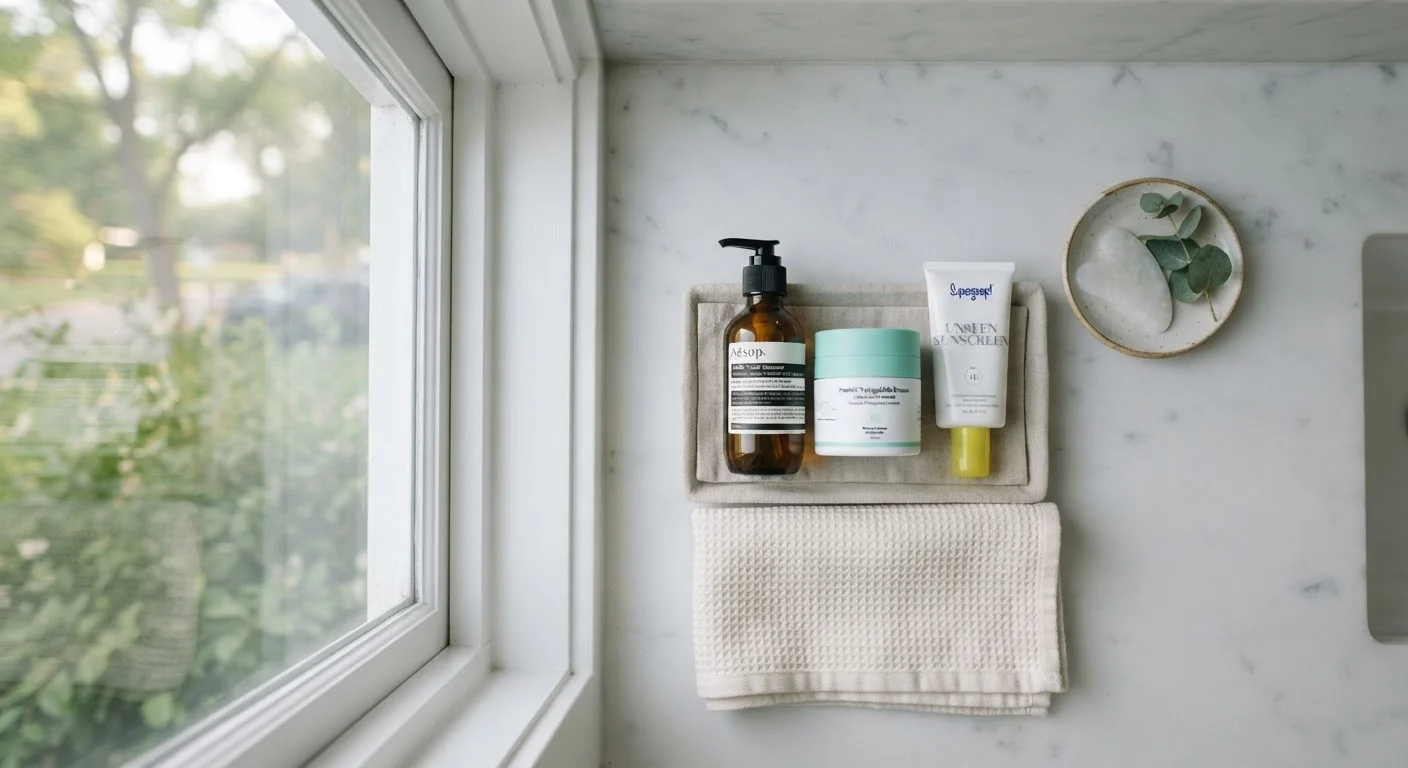
Habit research consistently shows that attaching a new behavior to an existing anchor — such as a morning coffee or brushing your teeth — improves follow-through. Keep your three products visible and within easy reach. The less friction involved, the more likely you are to complete the routine even on low-energy mornings.
As consistency builds, you may begin to notice patterns: how your skin behaves in different seasons, which textures feel right, what a healthy baseline looks like for you. This self-knowledge is genuinely useful and guides smarter decisions as your routine evolves over time.
Skincare is one piece of a broader wellness picture. If you're working on other health habits alongside this one, our guide to building a personal preventive health routine from scratch offers a practical framework that includes sleep, nutrition, and stress management.
This article is for general informational purposes only and does not constitute medical or dermatological advice. If you have a skin condition, allergy, or other health concern, consult a qualified healthcare professional before making changes to your skincare routine.