

| Ideal skin pH range | 4.5–5.5 (mildly acidic) (Broadly cited in dermatological literature) |
| Primary function of cleansing | Remove sebum, pollutants, sweat, and product residue |
| Primary function of toning | Restore pH balance and deliver initial hydration |
| Primary function of moisturising | Hydrate and reduce transepidermal water loss (TEWL) |
| Recommended cleansing frequency | Up to twice daily (morning and evening) for most skin types (General dermatological guidance) |
| Three moisturiser ingredient types | Humectants, emollients, and occlusives |
Why Three Steps? The Logic Behind the Routine
The cleanse-tone-moisturise sequence has endured in skincare for decades — not out of tradition alone, but because each step addresses a distinct physiological need. Understanding what each stage actually accomplishes helps you apply products more deliberately and avoid the guesswork that often leads to common routine mistakes.
Skin is a living barrier organ. Its outermost layer, the stratum corneum, works constantly to keep moisture in and environmental aggressors out. The three-step routine supports — rather than strips — this function when performed correctly.
| Ideal skin pH range | 4.5–5.5 (mildly acidic) (Broadly cited in dermatological literature) |
| Primary function of cleansing | Remove sebum, pollutants, sweat, and product residue |
| Primary function of toning | Restore pH balance and deliver initial hydration |
| Primary function of moisturising | Hydrate and reduce transepidermal water loss (TEWL) |
| Recommended cleansing frequency | Up to twice daily (morning and evening) for most skin types (General dermatological guidance) |
| Three moisturiser ingredient types | Humectants, emollients, and occlusives |
Step 1: Cleansing — Resetting the Surface
Cleansing removes the accumulated layer of sebum (the skin's natural oil), sweat, dead skin cells, environmental pollutants, and — when worn — makeup or SPF. This isn't purely cosmetic housekeeping. When these substances remain on skin for extended periods, they can clog pores, disrupt the skin's natural pH, and create an environment that favours certain bacteria linked to breakouts.
The goal of a cleanser is selective removal: lifting unwanted debris while leaving the skin's protective lipid barrier largely intact. Surfactants — the cleansing agents in most formulas — vary significantly in strength. Harsher surfactants can strip the barrier, causing temporary tightness, dryness, or increased sensitivity. Milder options (often labelled as gentle or low-foaming) are generally better suited to daily use for most skin types.
A common misstep is over-cleansing. Washing more than twice daily, or using water that is too hot, can compromise barrier function over time. For a deeper look at how routine errors accumulate, see habits that quietly undermine your skincare.
Stratum Corneum
The outermost layer of the epidermis, made up of flattened, dead skin cells (corneocytes) held together by lipids. It acts as the primary physical and chemical barrier between the body and the environment.
Surfactant
A surface-active agent that reduces surface tension between water and oils, allowing cleansers to lift and rinse away sebum, dirt, and other residues. Strength varies widely between formulations.
Humectant
An ingredient that attracts and retains water molecules from the surrounding environment or deeper skin layers. Common examples include glycerin, hyaluronic acid, and urea.
Transepidermal Water Loss (TEWL)
The passive diffusion of water through the skin's surface to the atmosphere. Elevated TEWL is a marker of a compromised skin barrier and is associated with dryness and sensitivity.
Occlusive
An ingredient that forms a physical seal on the skin surface to reduce moisture evaporation. Examples include petrolatum, dimethicone, and certain plant-based waxes.
Emollient
An ingredient that smooths and softens the skin by filling in microscopic gaps between skin cells. Emollients improve texture and help maintain a healthy skin barrier.
Step 2: Toning — More Than Just Prep
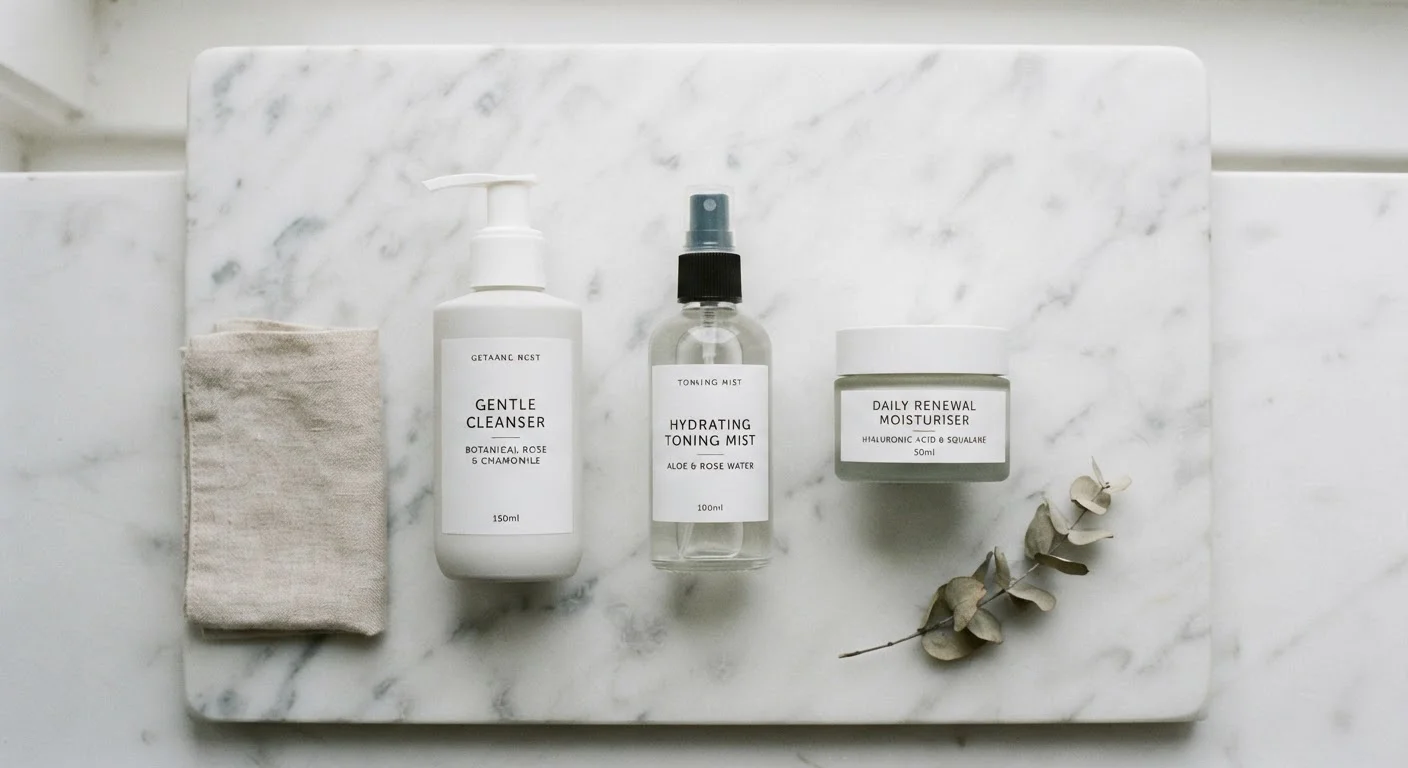
Toners have evolved considerably from their astringent, alcohol-heavy predecessors. Contemporary formulations typically serve one or more of the following functions: restoring pH balance after cleansing, delivering a first layer of hydration, and priming skin to absorb subsequent products more effectively.
Skin's ideal pH sits in a mildly acidic range (roughly 4.5–5.5). Some cleansers, particularly those with higher pH formulas, can temporarily shift skin toward alkalinity, which may disrupt enzyme activity in the skin barrier. A well-formulated toner can help nudge pH back toward its natural zone.
Modern toners often contain humectants (such as glycerin or hyaluronic acid) that draw water into the outer skin layers, or mild exfoliating acids (like lactic or mandelic acid) that encourage cell turnover. This means the toning step can serve different functions depending on what a formula contains — making ingredient awareness genuinely useful. The guide to reading beauty ingredient labels offers practical guidance on decoding product formulas.
Step 3: Moisturising — Locking In Balance
Moisturisers perform two complementary roles: delivering water or water-attracting ingredients to the skin, and forming a layer that slows transepidermal water loss (TEWL) — the passive evaporation of moisture through the skin. Even oily skin types benefit from moisturising, as dehydration can trigger excess sebum production.
Most moisturisers combine ingredients across three functional categories: humectants attract and bind water; emollients smooth and soften by filling gaps between skin cells; and occlusives create a physical film that reduces water evaporation. The specific balance of these ingredients determines the texture and best use-case of any given formula.
Applied as the final step — after active ingredients have been absorbed — a moisturiser also helps buffer any potential irritation from toning acids or other actives, supporting overall skin tolerance. If you're ready to put all three steps into a structured morning approach, the morning skincare routine guide walks through sequencing in practical detail.
It's also worth noting that a consistent skincare routine carries value beyond surface-level results — the ritual itself can serve as a grounding, intentional act. Reframing skincare as self-respect explores this dimension thoughtfully.
This article is for general informational purposes only and does not constitute medical or dermatological advice. If you have a skin condition or persistent concerns, consult a qualified healthcare or skincare professional.