

Key Takeaways
Skin Barrier
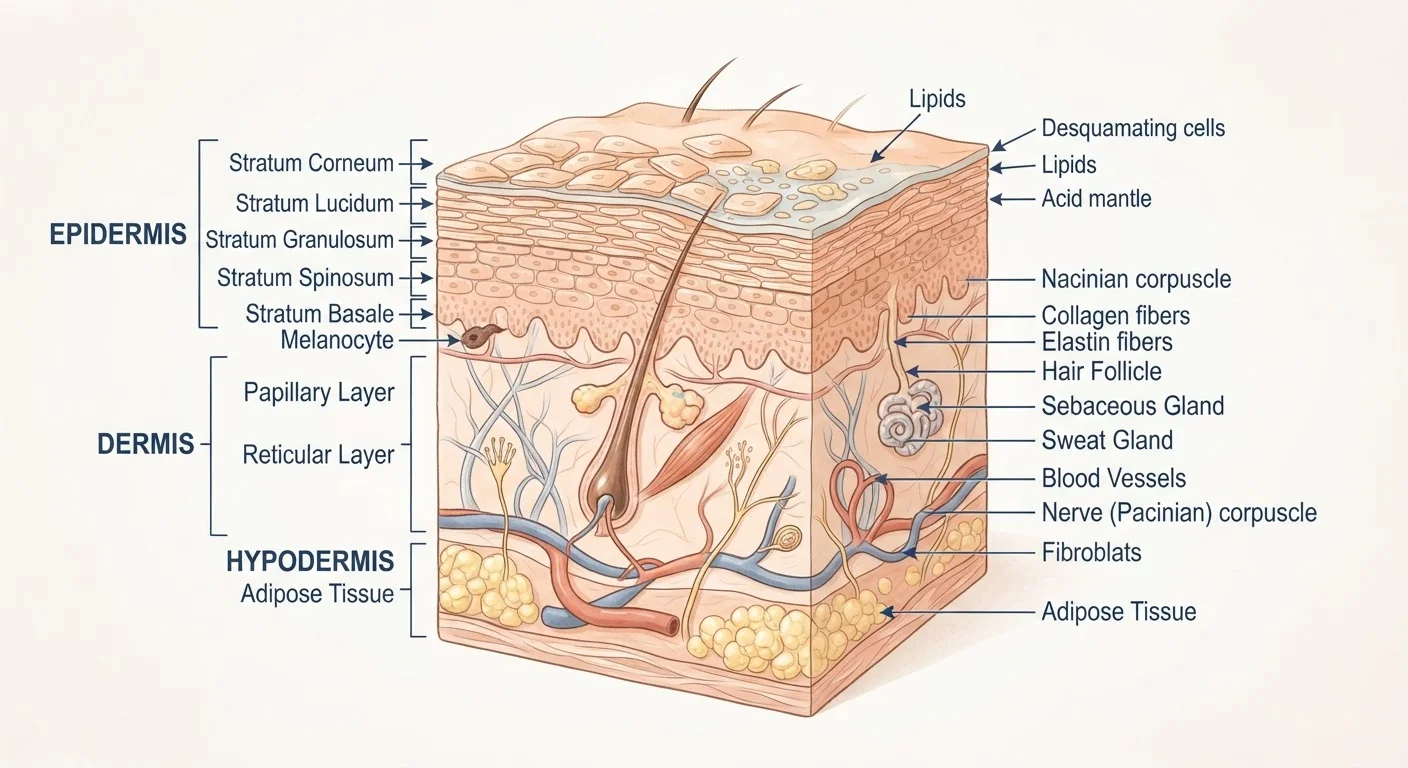
The skin barrier — formally called the stratum corneum — is the outermost layer of your skin. It acts as a two-way shield: keeping moisture locked in and blocking external threats like bacteria, allergens, and pollutants from getting through. Think of it as a brick wall where skin cells are the bricks and lipids (fats) are the mortar holding everything together.
The stratum corneum is composed primarily of corneocytes (flattened, protein-rich dead skin cells) embedded in a lipid matrix containing ceramides, cholesterol, and fatty acids. Disruption of this lipid ratio is a key factor in barrier dysfunction.
What the Skin Barrier Actually Is
The skin barrier sits at the intersection of biology and everyday experience. It is the topmost layer of the epidermis — the stratum corneum — and it is made up of approximately 15 to 20 layers of flattened, protein-filled cells called corneocytes. These cells are surrounded and connected by a structured lipid matrix primarily composed of three molecules: ceramides, cholesterol, and free fatty acids.
This architecture follows what dermatologists often call the 'brick-and-mortar' model. The corneocytes are the bricks; the lipid blend is the mortar. Both components are necessary. When either is disrupted, the wall develops gaps — and that is when problems begin.
The barrier also maintains a slightly acidic surface pH, typically between 4.5 and 5.5. This 'acid mantle' discourages harmful microorganisms and supports the enzyme activity needed to regulate natural skin cell turnover. Shifts in pH — from harsh cleansers or certain actives — can compromise this protective environment before any visible irritation appears.
pH Matters More Than You Think
The skin's natural surface is mildly acidic — a condition maintained partly by natural lipid metabolism and partly by the microbiome. Many bar soaps and some foaming cleansers have a pH of 9–10, which significantly disrupts this balance. Choosing a cleanser formulated close to skin's natural pH is one of the simplest protective steps you can take. This is general guidance; individual skin types vary, and a dermatologist can offer personalised recommendations.
Why the Barrier Breaks Down
Barrier disruption is rarely caused by a single event. It tends to accumulate from a combination of intrinsic and extrinsic factors — many of which are common features of modern skincare habits and environments.
Over-cleansing is one of the most frequent contributors. Surfactants — the cleansing agents in face washes — remove dirt and oil, but aggressive or repeated use strips the lipid mortar alongside them. The same applies to physical exfoliation: regular scrubbing accelerates the removal of surface cells faster than the skin can replace them.
Active ingredient overload is another significant factor. Retinoids, acids (AHAs, BHAs), and vitamin C are effective and evidence-supported, but combining too many at once, or applying them too frequently, increases barrier stress. Understanding what each ingredient does — and how to layer them thoughtfully — is essential. Our guide to reading skincare ingredient lists can help you make sense of what you're applying.
Environmental factors compound internal stressors. Low humidity draws moisture out of the skin, UV radiation degrades structural proteins, and pollution generates free radicals that degrade lipids. Emerging research also points to the gut-skin axis — suggesting that digestive health may influence inflammatory skin responses. The connection between gut health and skin clarity explores what the current science says.
~50%
Ceramide proportion in healthy skin's lipid matrix
Research published in dermatology literature consistently identifies ceramides as the dominant lipid class in the stratum corneum, underscoring their central role in barrier function.
4.5–5.5
Optimal surface pH range for skin barrier health
Studies have shown that deviations above pH 6 significantly impair barrier enzyme activity and increase susceptibility to bacterial colonisation and inflammation.
2–4 weeks
Typical barrier recovery timeline with consistent care
Dermatological research suggests that with appropriate barrier-supportive routines, measurable improvements in transepidermal water loss can be observed within two to four weeks.
How to Support Barrier Health
Barrier support is not about adding more products — it is about removing what harms it and replenishing what it needs. The most effective approach starts with simplification.
A gentle, pH-appropriate cleanser used once or twice daily preserves the acid mantle. Lukewarm water is preferable to hot, which accelerates lipid loss. Patting rather than rubbing the skin dry after washing reduces unnecessary mechanical stress.
Moisturisers formulated with ceramides, fatty acids, and occlusives — substances that physically seal the surface to reduce water loss — closely mirror the skin's own lipid structure and are widely supported by dermatological research for barrier repair. Applying them while the skin is still slightly damp enhances moisture retention.
When reintroducing active ingredients after a period of disruption, doing so one at a time — and at lower frequencies — allows the barrier to adapt without compounding stress. The skin barrier and ingredient-conscious routines article expands on how to prioritise barrier health when building or adjusting a skincare regimen.
Start with Less, Not More
If your skin feels reactive or irritated, resist the impulse to add a new product. Stripping your routine back to a gentle cleanser and a simple moisturiser for one to two weeks often does more to restore barrier function than introducing additional actives. Once the barrier stabilises, you can reintroduce products gradually, one at a time.
This article is for general informational and educational purposes only and is not a substitute for professional medical or dermatological advice. If you are experiencing persistent or severe skin symptoms, please consult a qualified healthcare provider.