

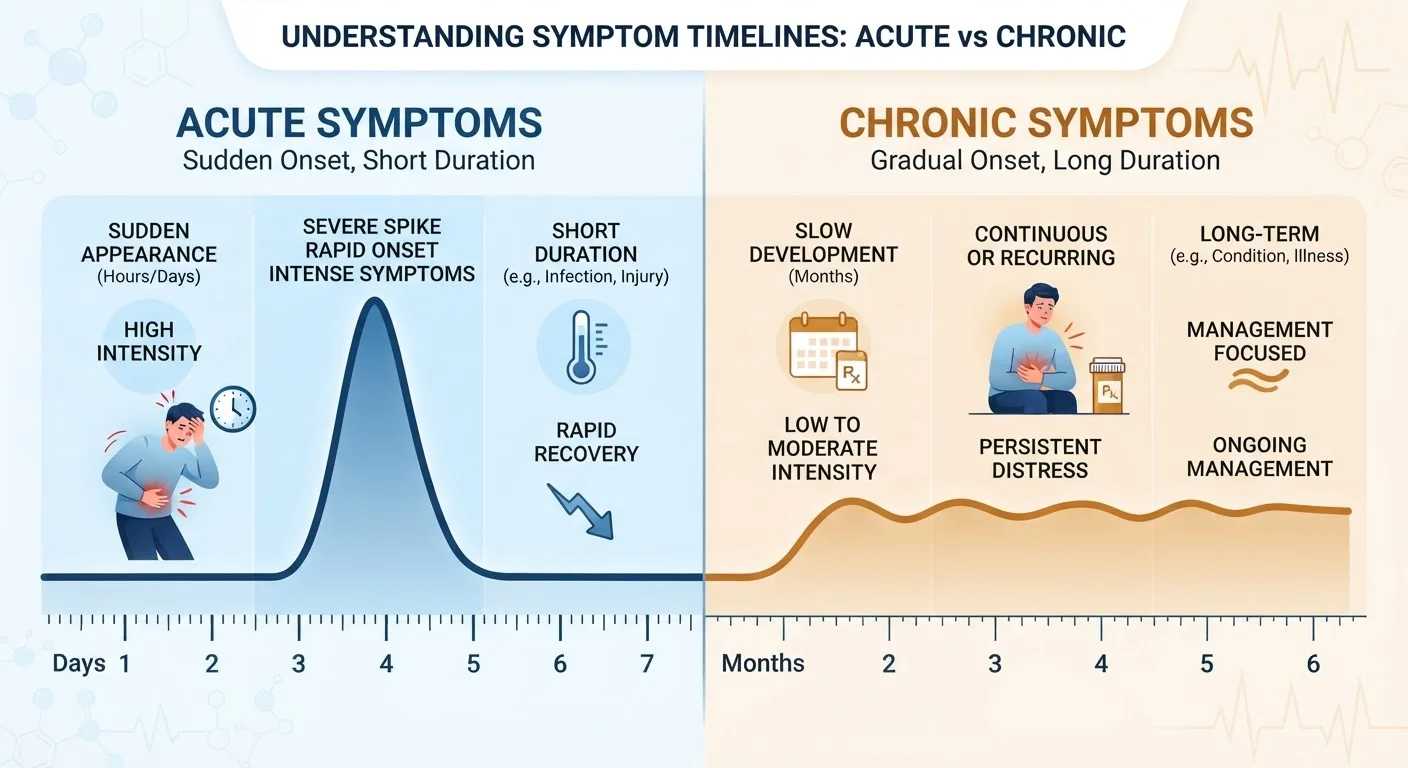
Key Takeaways
Option A
Acute Symptoms
The sudden, short-lived signal your body sends.
Best for: Recognizing urgent or time-sensitive health changes that require prompt evaluation.
Option B
Chronic Symptoms
The persistent pattern that warrants ongoing medical attention.
Best for: Identifying long-term health trends that may indicate an underlying condition requiring management.
If you experience a sudden, intense symptom you've never had before
Acute Symptoms
Sudden-onset symptoms — especially severe pain, difficulty breathing, or neurological changes — warrant immediate medical evaluation. Don't wait to see if they pass.
If you've been managing the same recurring symptom for months
Chronic Symptoms
Persistent symptoms lasting three months or more need a structured care plan, not just repeated short-term fixes. A provider can help identify root causes.
If you want to describe your symptoms accurately to a doctor
Acute Symptoms
Knowing whether your symptom is new and sudden helps clinicians narrow their differential diagnosis quickly and order the most relevant tests.
If you're tracking a condition like diabetes, arthritis, or hypertension
Chronic Symptoms
Chronic symptom monitoring supports long-term disease management and helps providers adjust treatment plans based on real patterns over time.
What Defines an Acute Symptom
The word acute in medical language refers to a symptom or condition that comes on suddenly and is typically short in duration. Acute symptoms often feel intense — a sharp pain, a high fever, sudden shortness of breath — and tend to resolve within hours, days, or a few weeks, either naturally or with treatment.
Acute doesn't automatically mean severe, though some acute symptoms do signal emergencies. A sprained ankle is an acute injury. So is a bout of food poisoning. What they share is a clear onset point and a defined trajectory toward resolution. Clinicians use onset timing and progression rate as key diagnostic signals — which is why being able to describe when a symptom started matters so much.
If you're unsure how to interpret new physical signals, the introductory guide to common symptoms offers useful context on how symptoms work and why timing clues are so valuable.
What Makes a Symptom Chronic
A symptom is generally classified as chronic when it persists for three months or longer. This threshold is widely used in clinical settings, though some conditions have their own definitions. Chronic symptoms may be constant or intermittent, mild or debilitating — but what unites them is their staying power and the likelihood that they reflect an ongoing underlying process rather than a temporary disruption.
Common examples include persistent fatigue, recurring headaches, long-term joint pain, or ongoing digestive discomfort. These symptoms often get normalized over time, particularly when they develop gradually. That normalization is one of the most common reasons health conditions are caught later than they should be — a pattern explored in depth in our article on why dismissing persistent symptoms leads to delayed diagnoses.
| Criterion | Acute Symptoms | Chronic Symptoms |
|---|---|---|
| Onset | Sudden, identifiable start | Gradual or insidious onset |
| Duration | Hours to weeks | Three months or longer |
| Typical cause | Infection, injury, acute illness | Ongoing condition or systemic process |
| Clinical urgency | May require immediate evaluation | Requires structured, ongoing management |
| Resolution pattern | Usually resolves fully | May persist, fluctuate, or progress |
| Examples | Sprain, fever, food poisoning | Arthritis pain, migraines, fatigue |
Chronic symptoms frequently involve inflammation as a contributing mechanism. Understanding how chronic inflammation differs from its acute counterpart can help put many long-term symptom patterns into broader biological context.
Why the Distinction Matters in Practice
Knowing whether a symptom is acute or chronic isn't just semantic — it shapes how clinicians approach diagnosis, how urgently care is needed, and how treatment is structured. Acute presentations often prompt rapid investigation to rule out emergencies. Chronic presentations call for a longer diagnostic timeline, detailed history-taking, and often a coordinated care approach.
60%
US adults living with a chronic condition
According to the CDC, approximately 6 in 10 US adults have at least one chronic disease, many of which involve persistent symptom burdens.
3+ months
Standard threshold for chronic classification
Most clinical guidelines define a symptom or condition as chronic when it has been present continuously or recurrently for at least three months.
For patients, this distinction is equally practical. If you can tell your provider that a symptom appeared suddenly two days ago versus that it has fluctuated for the past six months, you're giving them substantially different — and more useful — information. The language clinicians use to describe symptoms builds on this foundation, explaining terms like prodrome, episodic, and idiopathic that appear frequently in medical conversations.
It's also worth noting that symptoms don't always fit neatly into one category. An acute event — like a heart attack or stroke — can leave behind chronic residual symptoms. And some chronic conditions produce acute flare-ups. Recognizing both layers helps you and your care team build a more complete picture. Symptom presentation can also vary by biological sex; current research on gender differences in symptom presentation highlights why this variability matters for accurate diagnosis.
This article is for general informational purposes only and is not a substitute for professional medical advice, diagnosis, or treatment. Always consult a qualified healthcare provider with questions about your health or any symptoms you are experiencing.