

Key Takeaways
Our Verdict
Biological sex shapes how conditions present in ways that standard health education often underrepresents. Whether you are concerned about cardiovascular symptoms or mood changes, knowing that your experience may not match the textbook picture is a meaningful step toward getting the right care sooner. Neither set of symptom patterns is inherently more serious — both deserve clinical attention.
| Best for | Recommended |
|---|---|
| Women noticing fatigue, nausea, or jaw discomfort without obvious chest pain | Seek prompt cardiovascular evaluation — atypical presentations are still medical emergencies |
| Men experiencing persistent irritability, physical complaints, or withdrawal | Consider a mental health consultation — these can be signs of depression or chronic stress |
| Anyone whose symptoms do not match widely described patterns | Advocate clearly with a healthcare provider and reference sex-based symptom research |
Why Biological Sex Affects Symptom Presentation
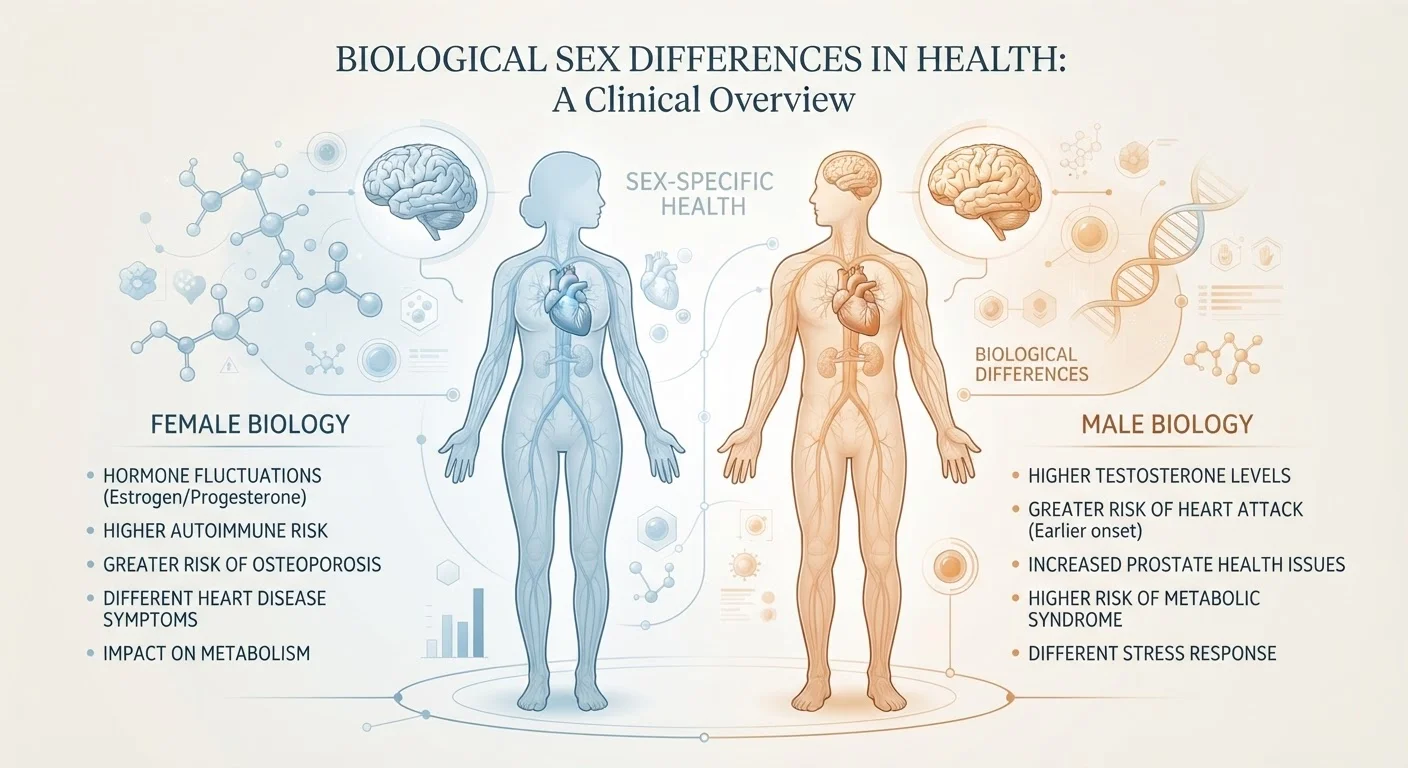
Medical research has historically centered male physiology as the default, leaving significant gaps in how symptoms are described and recognized in women. Over the past few decades, growing evidence has established that biological sex — influenced by hormones, genetics, and body composition — plays a meaningful role in how the same condition can feel and look across different bodies.
This is not simply about having different organs. Hormonal environments, immune responses, and pain processing pathways all vary in ways that affect symptom expression. Understanding these differences is not about reinforcing stereotypes; it is about giving every person the knowledge to recognize when something needs medical attention, even if their experience does not match the most commonly described version of a symptom. See our guide to acute vs. chronic symptoms for more on how symptom patterns can help you communicate clearly with your provider.
Heart Disease: A Study in Contrasting Presentations
Heart disease remains the leading cause of death in both men and women in the United States, yet the two groups often experience its warning signs differently. The classic image of a heart attack — sudden, crushing chest pain radiating down the left arm — reflects findings from studies that for decades enrolled predominantly male participants.
Women are significantly more likely to experience what clinicians call atypical or non-classic symptoms during a cardiac event. These can include:
- Unusual fatigue, sometimes days before a cardiac event
- Shortness of breath without prominent chest pain
- Nausea or vomiting
- Jaw, neck, or upper back discomfort
- Light-headedness or dizziness
Research published in journals such as Circulation has found that women are more likely to delay seeking emergency care and more likely to be initially misdiagnosed, partly because their symptoms are less recognized. For a deeper look at the evidence base, our article on cardiovascular risk in men explores how risk factors and presentations differ by sex.
| Condition | More Common in Men | More Common in Women | |
|---|---|---|---|
| Heart Attack Symptoms | Chest pain, left arm radiation | Fatigue, nausea, jaw/back discomfort | |
| Depression Presentation | Irritability, withdrawal, risk-taking | Sadness, tearfulness, low energy | |
| Autoimmune Disease Risk | Lower overall prevalence | ~80% of US autoimmune diagnoses | |
| Pain Reporting Patterns | Tendency to underreport due to social norms | More widespread pain; greater clinical skepticism | |
| Mental Health Help-Seeking | Significantly less likely to seek support | More likely to seek and receive diagnosis |
This article is for general health information only. If you suspect a cardiac emergency, call 911 immediately — do not attempt to self-diagnose.
Depression and Mental Health: When Presentation Diverges
Depression is frequently described through a lens of persistent sadness, tearfulness, and low mood — a presentation more commonly reported by women. Men, however, are more likely to experience and express depression through a different cluster of symptoms, which contributes to widespread underdiagnosis in male populations.
In men, depression may appear as:
- Increased irritability or anger
- Risk-taking behavior or substance use
- Physical complaints such as headaches or digestive problems
- Social withdrawal and emotional numbness
- Difficulty concentrating or declining work performance
These presentations often do not trigger recognition — in the individual or those around them — as mental health symptoms. Cultural factors compound this: research consistently shows men are less likely to seek mental health support, a pattern explored in our article on mental health and masculinity. The downstream consequences are serious; men die by suicide at significantly higher rates than women in the US.
Stress, too, can manifest differently. Men often channel chronic stress into physical symptoms or behavioral changes rather than emotional language — a gap discussed in our piece on why men's stress manifests differently.
Advocate for Yourself at Appointments
If your symptoms do not match what you have read online or were told to expect, say so explicitly to your provider. Describing your experience in detail — including its pattern, duration, and what makes it better or worse — gives clinicians the clearest picture. Awareness of sex-based differences in symptom presentation is growing within medicine, but self-advocacy remains one of the most effective tools for timely diagnosis.
Autoimmune Conditions, Pain, and Hormonal Influences
Autoimmune diseases — including lupus, rheumatoid arthritis, and multiple sclerosis — occur far more frequently in women, with estimates suggesting roughly 80% of autoimmune diagnoses in the US are in female patients. Hormonal fluctuations across the menstrual cycle, pregnancy, and menopause appear to modulate immune activity, contributing to both disease prevalence and symptom variability.
Pain perception is another area where research documents consistent sex-based differences. Studies suggest women may experience more widespread, longer-lasting pain and report higher pain sensitivity across several conditions, while also facing greater skepticism from clinicians — a documented disparity in care equity. Men, conversely, may underreport pain due to social conditioning around stoicism, potentially delaying appropriate evaluation.
Hormonal health conditions like PMDD illustrate how sex-specific physiology can produce symptoms that are often dismissed or minimized. Understanding the distinction between common premenstrual experience and diagnosable conditions — as covered in our article on why PMS and PMDD are not the same thing — is one example of how awareness directly supports better care.
Recognizing these patterns can help reduce the risk of delayed diagnosis — a problem detailed in our piece on dismissing symptoms too quickly.
This content is for informational purposes only and does not constitute medical advice. Always consult a qualified healthcare professional regarding any symptoms or health concerns.