

Key Takeaways
Testosterone Across the Lifespan
Testosterone is the primary male sex hormone produced mainly in the testes, with small amounts made by the adrenal glands. It influences muscle mass, bone density, libido, mood, and energy. Levels rise sharply during puberty, peak in early adulthood, and then decline gradually with age — a pattern that is normal and expected.
Testosterone circulates in the blood in two main forms: bound (attached to proteins like SHBG) and free (unattached and biologically active). Clinicians often measure both total and free testosterone when evaluating hormonal health.
The Hormonal Arc: From Puberty to Old Age
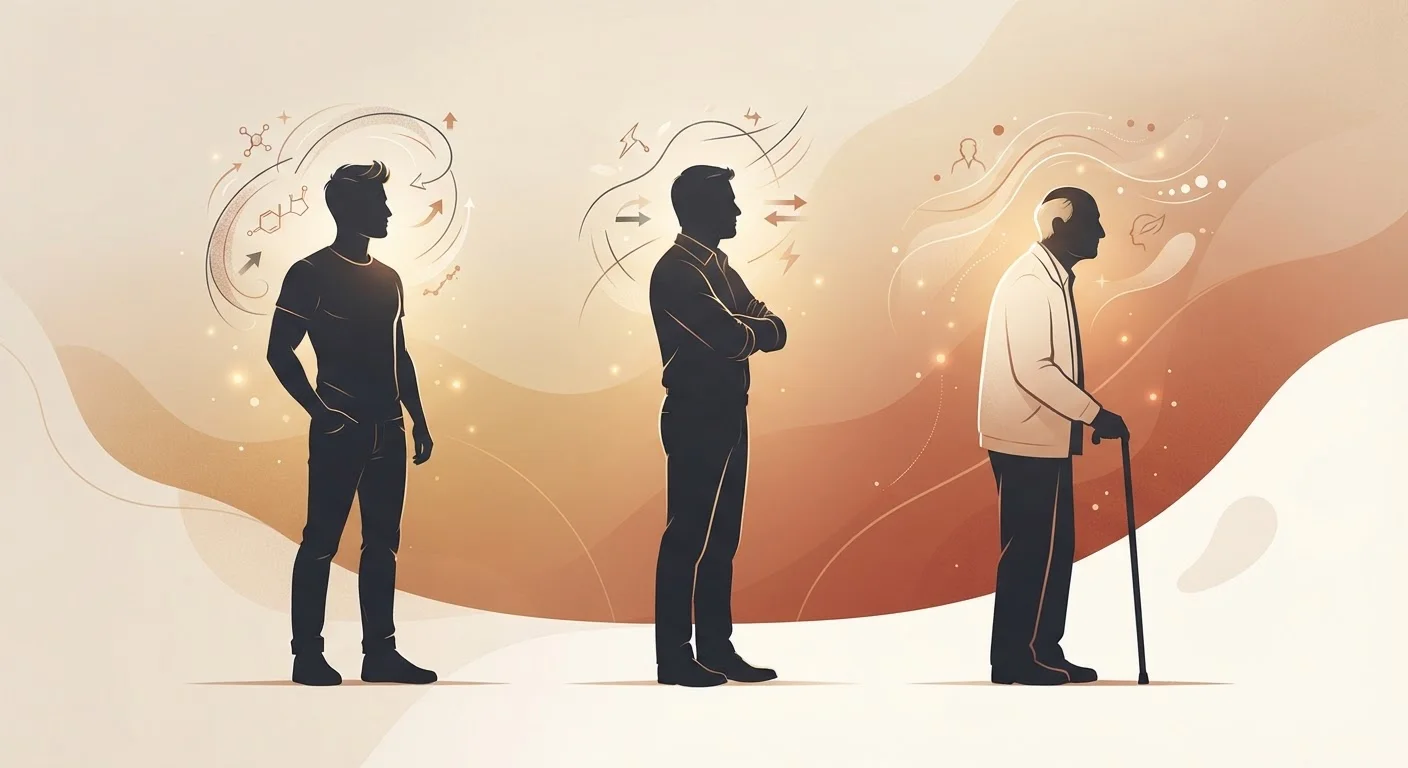
Testosterone does not follow a straight line — it traces a distinct arc across a man's life. During fetal development, a surge of testosterone shapes male anatomy. Levels then remain relatively low through childhood until puberty, when production accelerates dramatically. This surge drives the physical changes most men recognise: increased muscle mass, deepening voice, facial hair growth, and the development of reproductive capacity.
Levels typically reach their peak in the late teens and remain elevated through the mid-twenties. After approximately age 30, a slow and steady decline begins. Research consistently places this decline at around 1–2% per year on average, though individual variation is substantial. By the time a man reaches his 60s or 70s, total testosterone may be noticeably lower than it was in his prime — yet many men in this bracket remain well within a functional range.
It is worth distinguishing this normal aging trajectory from pathological decline. The gradual reduction associated with aging differs meaningfully from hypogonadism — a clinical condition where the testes produce abnormally low testosterone regardless of age, often requiring medical assessment and management. For context on how this hormonal arc compares with women's experience, see our guide to hormonal health across a woman's life.
What Falling Testosterone Actually Means for Health
Declining testosterone affects several body systems simultaneously, though not always in ways that are immediately obvious. The most commonly reported changes include reduced muscle mass and strength, increased body fat (particularly around the abdomen), lower libido, decreased bone density, and shifts in mood and cognitive sharpness. Fatigue is frequently cited, though it is often difficult to attribute directly to testosterone alone.
~1–2%
Annual testosterone decline after age 30
According to research published in endocrinology literature, average total testosterone falls gradually from the third decade onward, though individual variation is significant.
~20–40%
Men affected by low testosterone by age 70–80
Estimates from population-based studies suggest a meaningful proportion of older men have testosterone levels below clinically defined thresholds, though symptoms vary widely.
10–15%
Testosterone drop linked to obesity
Research indicates that excess adiposity is associated with meaningfully lower testosterone levels compared with men of healthy body weight, independent of age.
Bone health is an area that deserves particular attention. Testosterone contributes to bone mineral density in men, and lower levels over time are associated with a higher risk of osteoporosis — a condition more often discussed in the context of women but by no means exclusive to them.
Mood and mental health are also intertwined with hormonal status. Some men with lower testosterone report symptoms consistent with depression or reduced motivation, though the causal relationship is not straightforward and other factors — including sleep, social connection, and chronic illness — play significant roles. Men concerned about these changes should speak with their doctor rather than assume a hormonal cause.
Because sleep is one of the most underappreciated influences on testosterone production, it's worth understanding this connection more deeply. Our article on sleep and men's hormones covers how poor rest disrupts the body's hormonal balance in ways that extend well beyond feeling tired.
Lifestyle Factors That Influence Testosterone
While aging-related testosterone decline cannot be stopped, a growing body of evidence indicates that several modifiable lifestyle factors can meaningfully influence where a man's levels sit within the normal range at any given age.
Prioritise Sleep for Hormonal Support
The majority of daily testosterone production occurs during sleep, particularly during REM and deep slow-wave stages. Men who consistently sleep fewer than six hours a night show measurably lower testosterone levels in research studies. Aiming for seven to nine hours of quality sleep per night is one of the most evidence-supported steps for hormonal health. Learn more in our article on sleep and men's hormones.
Exercise, particularly resistance training, is one of the most consistently supported influences. Studies show that regular strength work is associated with higher testosterone levels compared with a sedentary lifestyle — and the benefits extend well into older age. For men over 40 who are adapting their fitness approach, our guide to strength training after 40 offers evidence-based strategies.
Body composition also matters. Excess body fat — especially visceral fat around the abdomen — is associated with higher levels of the enzyme aromatase, which converts testosterone into oestrogen. Maintaining a healthy weight is therefore relevant to hormonal balance, not just cardiovascular risk.
Chronic stress elevates cortisol, a hormone that can suppress testosterone production when persistently elevated. Managing stress through structured relaxation, adequate social support, and professional help where needed is relevant to hormonal as well as psychological health.
Finally, alcohol consumption at higher levels has been associated with reduced testosterone in research studies. Moderate intake, as defined by current public health guidance, appears to carry lower risk, though individual responses vary.
When to Talk to a Doctor — and What to Expect
Not every man who feels tired or notices reduced libido has low testosterone. These symptoms are common and frequently explained by other causes — disrupted sleep, poor nutrition, depression, cardiovascular conditions, or thyroid dysfunction among them. This is precisely why self-diagnosis and self-treatment are inadvisable.
A healthcare provider can order a blood test measuring total and free testosterone, typically done in the morning when levels are naturally highest. If results fall below established clinical thresholds and symptoms are consistent, a diagnosis of hypogonadism may be made — and a range of treatment options can be discussed in that context.
Testosterone replacement therapy (TRT) is one such option for men with confirmed clinical deficiency, but it carries potential risks and is not appropriate for everyone. These include effects on red blood cell count, cardiovascular health, fertility, and prostate health. It is a decision that requires thorough evaluation, not a lifestyle upgrade for men with age-normal levels.
For men who want a broader picture of their hormonal and overall health, a scheduled review with their physician is the most reliable starting point. Our annual health checks guide for men outlines the screenings and blood markers worth discussing at different life stages.
This article is for general informational purposes only and does not constitute medical advice. Always consult a qualified healthcare professional for personalised guidance about your health.