

Key Takeaways
Endometriosis
Endometriosis is a chronic inflammatory condition in which tissue similar to the lining of the uterus (the endometrium) grows outside the uterus — most commonly on the ovaries, fallopian tubes, and pelvic tissues. Like the uterine lining, this tissue responds to hormonal cycles, thickening and breaking down each month, but has no way to leave the body. The result is inflammation, scarring, and often significant pain.
Endometriotic lesions are histologically similar to, but not identical to, endometrial tissue; they express estrogen receptors and may drive local neuroangiogenesis, which is thought to contribute to the condition's characteristic pain.
What Endometriosis Actually Is
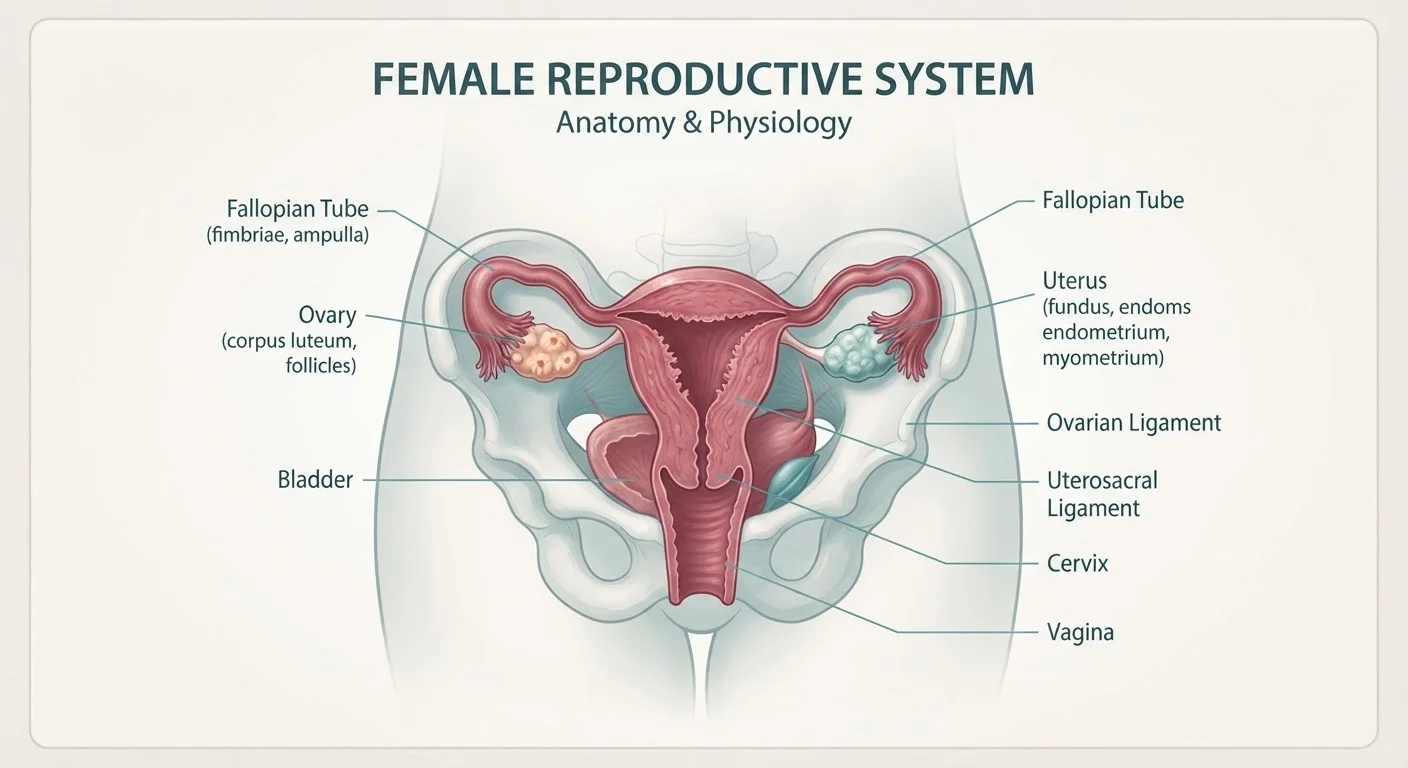
Each month, the uterine lining builds up and sheds during menstruation. In endometriosis, similar tissue establishes itself outside the uterus — on ovaries, the fallopian tubes, the bladder, bowel, or the lining of the pelvis — and follows the same hormonal script. Because this tissue cannot exit the body, it causes localized inflammation, the formation of cysts (called endometriomas on the ovaries), and over time, the development of scar tissue and adhesions that can distort pelvic anatomy.
The condition is classified into four stages (I through IV) based on the location, depth, and extent of lesions, though staging correlates poorly with symptom severity. A woman with stage I disease may experience debilitating pain; another with stage IV may have minimal symptoms. This unpredictability is part of what makes endometriosis so difficult to recognize and manage.
Endometriosis is not a cancer, and the vast majority of lesions are benign. A rare subtype called endometriosis-associated ovarian cancer exists but represents a small minority of cases. Researchers continue to investigate the condition's underlying mechanisms, including the role of genetics, immune dysfunction, and retrograde menstruation — where menstrual blood flows backward through the fallopian tubes into the pelvic cavity.
Who Is Affected and How Common Is It
Endometriosis is estimated to affect approximately 10% of women of reproductive age worldwide — roughly 190 million people globally, according to the World Health Organization. In the United States alone, prevalence estimates range from 6 to 10 million individuals. The condition is most commonly diagnosed in the reproductive years (ages 15 to 49), though adolescents can be affected, and symptoms may persist or emerge around perimenopause.
1 in 10
Women of reproductive age affected globally
The World Health Organization estimates endometriosis affects approximately 190 million women worldwide.
7–10 years
Average diagnostic delay in the United States
Multiple studies have documented a consistent multi-year gap between first symptom onset and confirmed endometriosis diagnosis.
~40%
Of infertility cases linked to endometriosis
Research suggests endometriosis may be a contributing factor in approximately 30–40% of female infertility cases, according to reproductive medicine literature.
Certain factors appear to increase risk, including early onset of menstruation, short menstrual cycles, heavy or prolonged periods, a family history of endometriosis, and nulliparity (never having given birth). However, endometriosis occurs across all demographics, and no single risk profile defines who will develop it. People of all races and ethnicities are affected, though research disparities mean some populations remain understudied.
Endometriosis shares symptomatic territory with conditions such as irritable bowel syndrome and polycystic ovary syndrome (PCOS), contributing to misdiagnosis and delayed care.
Why the Diagnostic Gap Persists
One of the most striking — and troubling — features of endometriosis is how long it takes most patients to receive a diagnosis. Research consistently shows an average delay of 7 to 10 years from symptom onset to confirmed diagnosis in the United States and many other countries. Several systemic factors explain this gap.
When to Seek a Specialist Referral
If you experience pelvic pain that disrupts daily activities, pain during sex or bowel movements, or heavy periods that don't improve with standard treatment, ask your primary care provider or gynecologist about endometriosis. Tracking your symptoms — including their timing relative to your menstrual cycle — can help clinicians assess your case more efficiently. You have the right to request a referral to a specialist if your concerns are not being adequately addressed.
Normalized pain. Many patients are told their painful periods are simply a normal part of being female. Severe menstrual pain is common in endometriosis but is not medically normal — it warrants clinical evaluation. This cultural normalization leads patients, and sometimes clinicians, to underestimate symptom significance.
Symptom overlap. Pelvic pain, bloating, bowel changes, and fatigue are shared by multiple conditions. Endometriosis is frequently confused with primary dysmenorrhea, PCOS, pelvic inflammatory disease, or functional gut disorders before the correct diagnosis is reached.
The surgical requirement. Unlike most chronic conditions, endometriosis cannot be definitively confirmed through blood tests or imaging alone. Laparoscopy with biopsy remains the diagnostic standard — a procedural barrier that delays confirmation even when clinical suspicion is high.
Underinvestment in research. Relative to its prevalence and impact, endometriosis has historically received limited research funding, slowing advances in non-invasive diagnostics and disease-modifying treatments.
Advocates and clinicians increasingly call for earlier specialist referral when symptoms are suggestive, rather than waiting years through symptom management trials.
Management Approaches and What to Expect
There is currently no cure for endometriosis, but a range of evidence-based management strategies can reduce symptoms, slow disease progression, and preserve fertility where desired. Treatment is highly individualized and should be guided by a gynecologist, ideally one with expertise in the condition.
Hormonal therapy is a cornerstone of medical management. Combined oral contraceptives, progestins, and GnRH (gonadotropin-releasing hormone) agonists or antagonists can suppress ovarian hormone production, reducing the hormonal stimulation that drives lesion activity. These approaches manage symptoms but do not eliminate existing lesions.
Surgical intervention — typically laparoscopic excision or ablation of lesions — can provide significant symptom relief and improve fertility outcomes in many patients. Evidence generally favors excision over ablation for deeper lesions, though outcomes vary by disease stage and surgeon expertise.
Pain management approaches, including NSAIDs (non-steroidal anti-inflammatory drugs), pelvic floor physical therapy, and multidisciplinary pain programs, are important complements to hormonal or surgical treatment, particularly for those with chronic pain.
Because endometriosis is a complex, systemic condition, the best outcomes are generally achieved through coordinated care that addresses physical symptoms, fertility goals, and psychological wellbeing. Anyone experiencing symptoms consistent with endometriosis should seek evaluation from a qualified healthcare provider rather than managing pain in isolation.
This article is for general informational and educational purposes only and does not constitute medical advice. If you are experiencing symptoms that may be related to endometriosis or any other health condition, please consult a qualified healthcare professional for personalized evaluation and guidance.