

Key Takeaways
The Menstrual Cycle
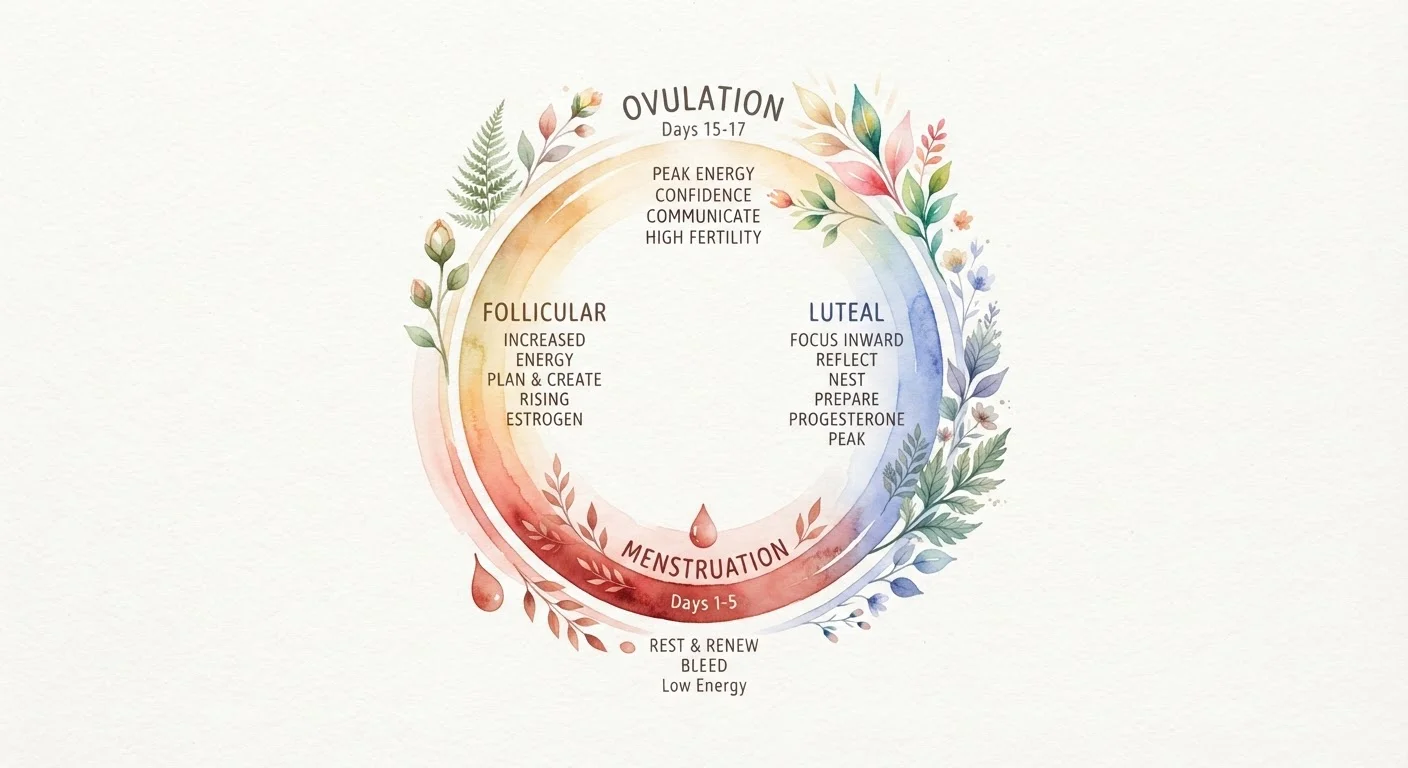
The menstrual cycle is a monthly series of hormonal and physiological changes that prepare the body for potential pregnancy. It typically spans 21 to 35 days and involves four distinct phases: menstrual, follicular, ovulatory, and luteal. Each phase is governed by shifting levels of key reproductive hormones, influencing energy, mood, and physical symptoms throughout the month.
The cycle is regulated by the hypothalamic-pituitary-ovarian (HPO) axis, a hormonal feedback loop involving gonadotropin-releasing hormone (GnRH), follicle-stimulating hormone (FSH), luteinizing hormone (LH), estrogen, and progesterone.
Phase 1: The Menstrual Phase
The cycle begins on the first day of menstruation — the day bleeding starts. When a fertilized egg has not implanted, progesterone and estrogen levels drop sharply, signaling the uterine lining (endometrium) to shed. This shedding produces the menstrual flow, which typically lasts three to seven days.
During this phase, prostaglandins — hormone-like compounds — trigger uterine contractions to expel the lining. These contractions account for the cramping many people experience. Fatigue and lower energy are also common, partly due to blood loss and partly because hormone levels are at their monthly low.
This phase overlaps with the beginning of the follicular phase, as the body simultaneously starts preparing for the next potential ovulation.
Phase 2: The Follicular Phase
The follicular phase begins on day one of menstruation and extends until ovulation. The pituitary gland releases follicle-stimulating hormone (FSH), which prompts several follicles in the ovaries to begin maturing. Each follicle contains an egg, but typically only one becomes dominant.
As the dominant follicle grows, it produces increasing amounts of estrogen. Rising estrogen thickens the uterine lining in preparation for a possible fertilized egg and also feeds back to the brain to suppress FSH — a regulatory loop that prevents multiple eggs from reaching maturity in most cycles.
Many people report rising energy, improved concentration, and a more positive mood during the late follicular phase. This is largely attributed to estrogen's influence on serotonin and dopamine activity in the brain.
21–35 days
Normal menstrual cycle length range
According to the American College of Obstetricians and Gynecologists (ACOG), cycle length varies considerably among individuals and across a person's reproductive years.
~6 days
Fertile window per cycle
Research published in the New England Journal of Medicine identified a six-day fertile window ending on the day of ovulation as the primary period of conception risk.
90%
People who experience at least one PMS symptom
Studies estimate that up to 90% of menstruating individuals report at least one premenstrual symptom, though clinically significant PMS affects a smaller proportion.
Phase 3: The Ovulatory Phase
A sharp surge in luteinizing hormone (LH) — triggered by peak estrogen levels — causes the dominant follicle to rupture and release a mature egg. This is ovulation. The egg travels down the fallopian tube, where it can be fertilized by sperm for approximately 12–24 hours. Because sperm can survive for up to five days, the fertile window spans roughly six days centered on ovulation.
Basal body temperature (BBT) rises slightly — typically 0.2–0.5°C — after ovulation and remains elevated through the luteal phase. Some people also notice mid-cycle pelvic discomfort (mittelschmerz) or a change in cervical mucus, which becomes clearer and more elastic around ovulation.
Understanding ovulation is central to understanding fertility. For more on how cycle length relates to ovulation timing, see what your cycle length is actually telling you.
Phase 4: The Luteal Phase
After ovulation, the ruptured follicle transforms into the corpus luteum, a temporary glandular structure that secretes progesterone — and some estrogen. Progesterone stabilizes and further develops the uterine lining, making it receptive to a fertilized egg.
If fertilization does not occur, the corpus luteum degenerates after about 12–16 days, progesterone and estrogen decline, and the cycle restarts. This hormonal withdrawal in the late luteal phase is the driver of premenstrual symptoms (PMS): bloating, breast tenderness, irritability, and sleep disruption are all commonly reported.
Track Your Cycle to Spot Patterns
Keeping a simple record of your cycle start dates, flow intensity, and notable symptoms over several months can help you identify your personal hormonal patterns. This information is also valuable to share with a healthcare provider if you're discussing cycle irregularities, fertility, or PMS management.
Chronic stress and poor sleep can magnify luteal-phase symptoms by further disrupting the HPO axis. The relationship between these factors is explored in detail in sleep, stress, and the menstrual cycle.
Understanding these hormonal rhythms across a lifetime — from puberty through perimenopause — helps contextualize why cycles change over time. See hormonal health across a woman's life for a broader perspective.
This article is for general informational and educational purposes only and does not constitute medical advice. If you have concerns about your menstrual cycle or reproductive health, please consult a qualified healthcare professional.