

Key Takeaways
Our Verdict
Low-carb diets offer the broadest flexibility and the most robust body of long-term evidence, making them a reasonable starting point for carbohydrate reduction. Ketogenic diets have demonstrated clinical utility in specific contexts but require careful implementation. Carnivore diets remain largely unstudied in controlled settings, and their elimination of plant foods raises meaningful nutritional concerns.
| Best for | Recommended |
|---|---|
| Those seeking flexible, sustainable carbohydrate reduction | Low-Carb Diet |
| Those pursuing a defined metabolic state under informed guidance | Ketogenic Diet |
| Those with specific food sensitivities exploring elimination approaches | Carnivore Diet (with medical supervision) |
Defining Each Approach
Despite sharing a common thread — reducing carbohydrate intake — low-carb, ketogenic, and carnivore diets are meaningfully distinct in their rules, mechanisms, and food selections.
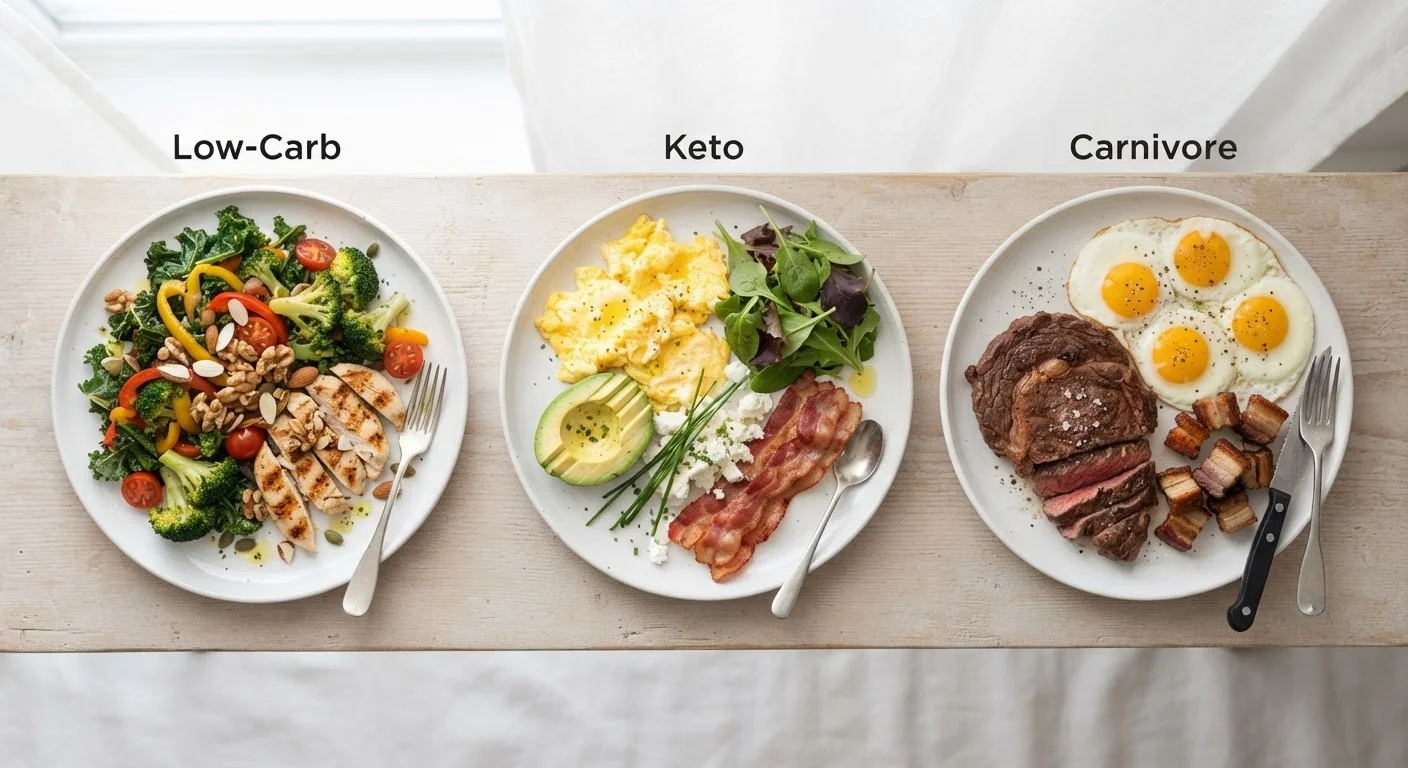
Low-carb diets are broadly defined by reducing carbohydrate intake below typical Western dietary levels. There is no universal carbohydrate threshold; most definitions place the range between 50 and 150 grams per day. This approach retains vegetables, dairy, proteins, and healthy fats while limiting grains, sugar, and starchy foods.
Ketogenic diets are more precisely defined. The goal is to restrict carbohydrates sufficiently — typically below 20–50 grams per day — to shift the body's primary fuel source from glucose to ketone bodies, a metabolic state called nutritional ketosis. Fat intake is high, protein is moderate, and most plant foods are limited. This metabolic shift is the defining feature, not carbohydrate reduction alone.
Carnivore diets eliminate all plant foods entirely. Adherents consume only animal products — primarily meat, fish, eggs, and some dairy. Carbohydrate content approaches zero. This approach is the most restrictive of the three and lacks the long-term population-level research available for the others. Anyone considering this pattern should consult a qualified healthcare provider first.
How They Compare Across Key Criteria
Placing these three approaches side by side reveals how quickly structural similarities give way to substantive differences in practicality, nutritional completeness, and evidence base.
| Low-Carb | Ketogenic | Carnivore | |
|---|---|---|---|
| Carbohydrate target | 50–150g per day | Under 20–50g per day | Near zero |
| Defining mechanism | Carb reduction | Nutritional ketosis | Animal-only elimination |
| Plant food inclusion | Yes — vegetables, nuts, berries | Limited — low-carb vegetables | None |
| Dietary fiber | Moderate to adequate | Low to moderate | Absent |
| Evidence base | Substantial, multi-year trials | Growing, some clinical use | Minimal controlled research |
| Adherence difficulty | Moderate | High — requires tracking | High — socially restrictive |
| Flexibility | High | Low to moderate | Very low |
| Micronutrient risk | Low with varied choices | Moderate — needs planning | Higher — no plant sources |
For a broader look at how these patterns relate to other established dietary frameworks, see our comparison of Mediterranean, DASH, and whole-food approaches.
What the Evidence Actually Shows
Low-carb diets have accumulated the most extensive research base. Multiple randomized controlled trials support short-to-medium-term benefits for weight management and blood sugar regulation, particularly in people with type 2 diabetes or insulin resistance. Long-term comparative data against other dietary patterns remains mixed.
Ketogenic diets have established clinical applications — most notably in pediatric epilepsy management, where evidence is robust. Research on ketogenic diets for weight loss, metabolic syndrome, and neurological conditions is growing but often limited by small sample sizes and high dropout rates in study populations, reflecting real-world adherence challenges.
Carnivore diets lack controlled, longitudinal clinical trials. Available data comes primarily from self-reported surveys and anecdotal case reports. While some individuals report symptomatic improvements — particularly those with inflammatory conditions — it is not possible to draw reliable population-level conclusions from this evidence base. The absence of dietary fiber raises concerns given established associations between fiber intake and gut microbiome health, cardiovascular risk, and colorectal cancer prevention.
Consider Baseline Health Before Starting
Anyone with kidney disease, liver conditions, cardiovascular concerns, or a history of disordered eating should seek professional guidance before adopting any very-low-carbohydrate or elimination diet. Pregnant or breastfeeding individuals and those managing diabetes on medication face additional considerations that require direct clinical oversight.
It's worth examining the broader claims made about these diets. Our article on nutrition myths and the evidence behind them addresses some of the most persistent misconceptions about carbohydrates and fat.
Sustainability, Adherence, and Trade-Offs
Dietary sustainability depends heavily on individual factors: food preferences, social context, metabolic response, and psychological relationship with food. Low-carb eating generally allows enough variety to be maintained over years. Ketogenic diets require careful tracking to maintain ketosis, and many people find strict fat-to-protein ratios difficult to sustain without significant meal planning. Carnivore diets, while structurally simple, impose social limitations and require deliberate attention to nutritional completeness.
All three approaches carry potential trade-offs. Transitioning to any very-low-carbohydrate diet can cause transient symptoms — often called the "keto flu" — including fatigue and headaches. Long-term adherence to carnivore diets raises questions about fiber absence and micronutrient sufficiency that current evidence cannot fully resolve.
For a candid look at what restriction-based diets involve in practice, see the trade-offs of restrictive eating patterns. Those curious about how structured approaches interact with more intuitive frameworks will find value in intuitive eating and structured diets compared.
This article is for general informational purposes only and does not constitute medical or dietary advice. Speak with a qualified healthcare professional before making significant changes to your eating pattern, particularly if you have an existing health condition.