

Key Takeaways
Dietary Fibre
Dietary fibre refers to the parts of plant foods that the human body cannot fully digest or absorb. Unlike fats, proteins, and carbohydrates, fibre passes relatively intact through the stomach and small intestine before reaching the colon. It plays a central role in digestive health, blood sugar regulation, cholesterol management, and sustained fullness.
Fibre is classified as either soluble (dissolves in water to form a gel-like substance) or insoluble (does not dissolve, adding bulk to stool). Many plant foods contain both types in varying proportions.
Two Types of Fibre, Two Distinct Jobs
Fibre is not a single compound — it's a broad family of plant-based carbohydrates that resist digestion. Understanding the two main categories helps explain why nutrition experts consistently emphasise variety in plant food intake rather than a single high-fibre source.
Soluble fibre dissolves in water to form a viscous gel inside the digestive tract. This gel slows stomach emptying, which moderates the rate at which glucose enters the bloodstream and helps reduce LDL (low-density lipoprotein) cholesterol absorption. Rich sources include oats, barley, legumes, chia seeds, apples, and citrus fruits.
Insoluble fibre does not dissolve. It acts more like a scrub brush, adding bulk and moisture to stool and accelerating its passage through the intestines. This reduces strain during bowel movements and supports regularity. Whole wheat flour, bran, nuts, and most vegetables are strong insoluble sources.
Most whole plant foods contain both fibre types in differing ratios — another reason a varied, plant-forward eating pattern tends to outperform any single 'superfood' approach.
~5%
U.S. adults meeting daily fibre recommendations
Research published in the American Journal of Lifestyle Medicine estimates that fewer than 1 in 20 American adults consistently meet recommended fibre intake levels.
25–38g
Recommended daily fibre intake for adults
The Academy of Nutrition and Dietetics recommends 25 g/day for adult women and 38 g/day for adult men, with needs generally decreasing slightly after age 50.
~10–15g
Average daily fibre intake in the U.S.
National dietary survey data consistently show average U.S. fibre consumption is roughly half or less of the recommended level, reflecting low intake of whole grains and legumes.
Why Fibre Matters Beyond Digestion
Fibre's benefits extend well beyond preventing constipation. Research consistently links higher fibre intake to a reduced risk of cardiovascular disease, type 2 diabetes, and certain colorectal cancers, according to findings published by organisations such as the American Heart Association and the Academy of Nutrition and Dietetics.
One of fibre's most studied roles is its effect on the gut microbiome. Fermentable fibres — particularly those found in legumes, garlic, onions, and whole grains — serve as prebiotics, feeding beneficial bacteria in the colon. These bacteria produce short-chain fatty acids (SCFAs), which help maintain the intestinal lining, regulate inflammation, and may even influence mood and cognitive function. For a deeper look at how diet intersects with gut bacteria, see our guide to gut health habits.
Fibre also contributes to satiety. Foods high in fibre tend to slow digestion and increase meal volume without adding significant calories, which can support healthy weight management over time as part of a balanced diet.
“Dietary fibre intake has been consistently associated with lower risks of cardiovascular disease, type 2 diabetes, and certain cancers — making it one of the most reliably health-protective components of the diet.”
— David Katz, Physician and researcher in preventive medicine, founding director of the Yale-Griffin Prevention Research Center
Practical Ways to Increase Daily Fibre Intake
The gap between average fibre consumption and recommended levels is significant for most U.S. adults — yet closing it doesn't require dramatic dietary overhauls. Small, consistent upgrades tend to be the most durable.
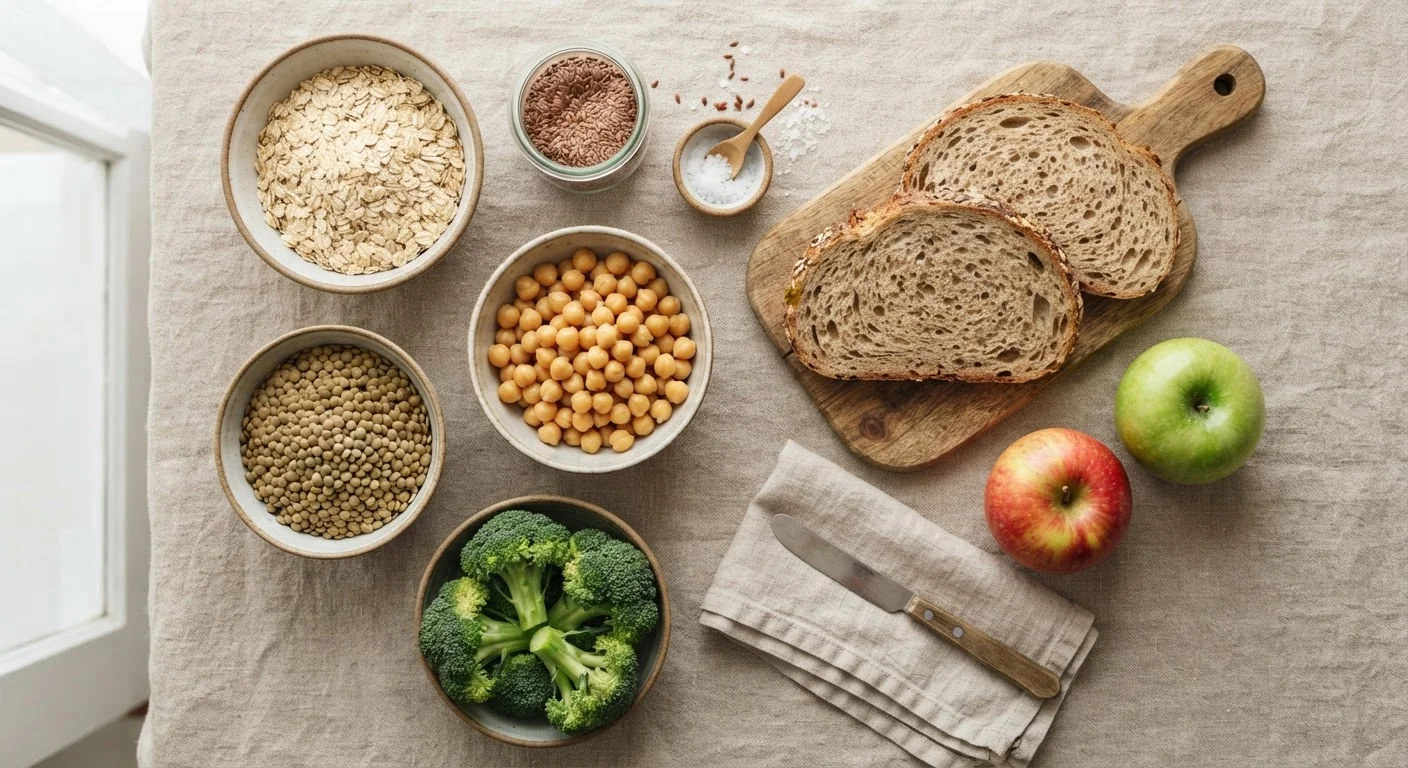
- Swap refined grains for whole grains: Choosing whole wheat bread, brown rice, or oats over their refined counterparts meaningfully increases both soluble and insoluble fibre per serving.
- Add legumes to existing meals: Stirring lentils into soups, adding chickpeas to salads, or using black beans as a base adds a concentrated fibre boost with minimal recipe changes.
- Eat fruit and vegetables with their skins on: The peel of apples, pears, potatoes, and cucumbers contains a notable proportion of the fruit or vegetable's total fibre.
- Snack on nuts and seeds: A small handful of almonds or a tablespoon of ground flaxseed contributes both fibre and healthy fats.
Increasing fibre gradually — rather than all at once — gives gut bacteria time to adapt. Pairing higher fibre intake with adequate water consumption is equally important; without hydration, insoluble fibre can have the opposite of its intended effect. The connection between dietary habits and how you feel day to day is explored further in our Food & Mood hub.
Increase Fibre Gradually to Avoid Discomfort
Adding large amounts of fibre to your diet overnight is a common reason people abandon the effort. Aim to increase intake by no more than 5 grams per week, and drink at least 6–8 cups of water daily. This gives your digestive system and gut microbiome time to adapt without significant bloating or cramping.
This article is for general informational and educational purposes only and does not constitute medical or dietary advice. Speak with a qualified healthcare professional or registered dietitian before making significant changes to your diet, particularly if you have an existing health condition.