

Key Takeaways
Start here
The Bidirectional Loop: What the Research Shows
Understand the mechanism
What Happens in Your Brain and Body
Locate yourself in the cycle
Identifying Your Entry Point Into the Cycle
Take action
Evidence-Based Strategies for Breaking the Loop
Know your limits
When to Seek Professional Support
The Bidirectional Loop: What the Research Shows
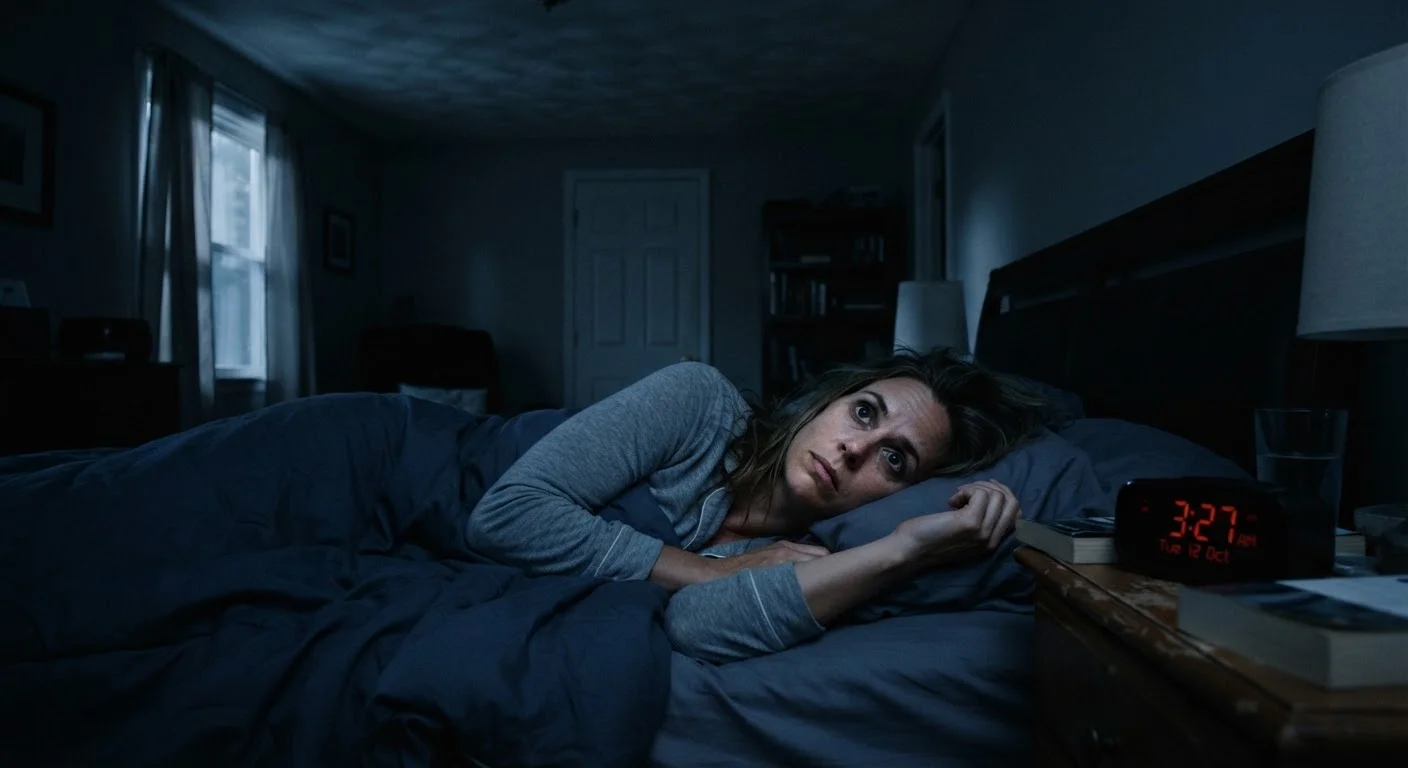
Sleep and stress don't simply coexist — they actively shape each other. A growing body of research characterizes their relationship as bidirectional: stress disrupts sleep quality, and disrupted sleep heightens the physiological and emotional response to stress the next day. Each feeds the other, making the cycle genuinely self-sustaining without deliberate intervention.
Studies using objective sleep measures consistently find that high psychological stress is associated with increased sleep onset latency (the time it takes to fall asleep), more frequent nighttime awakenings, and reduced time in restorative sleep stages. To understand why those stages matter, our guide to sleep stages explains what happens during each one. Conversely, experimental sleep restriction studies show that even modest sleep loss amplifies cortisol output and emotional reactivity the following day — meaning the loop tightens with each disrupted night.
HPA Axis
The hypothalamic-pituitary-adrenal axis is the body's main stress-response system. When activated, it triggers the release of cortisol and other hormones that prepare the body for a perceived threat.
Cortisol
A hormone released in response to stress that promotes alertness and energy. It follows a natural daily rhythm and can disrupt sleep when elevated at the wrong times.
Circadian Rhythm
The body's internal 24-hour biological clock that regulates sleep, wakefulness, hormone release, and other functions. It is strongly influenced by light exposure and timing of daily habits.
CBT-I
Cognitive Behavioral Therapy for Insomnia — a structured psychological approach that identifies and changes thought patterns and behaviors that interfere with sleep. It is widely considered a first-line treatment for chronic insomnia.
Stimulus Control
A behavioral technique that trains the brain to associate the bed only with sleep by avoiding other activities in bed. It is a core component of CBT-I.
Social Jetlag
The mismatch between a person's internal clock and their actual sleep schedule — most commonly caused by sleeping significantly later on weekends than weekdays.
What Happens in Your Brain and Body
The biological mechanism linking stress and sleep centers on the HPA axis (hypothalamic-pituitary-adrenal axis) — the body's core stress-response system. Under perceived threat or pressure, the HPA axis drives the release of cortisol, which promotes wakefulness and heightened alertness. This is adaptive in true emergencies but counterproductive when it activates in the late evening or during the night.
Cortisol follows a natural daily rhythm, peaking in the early morning and declining through the evening to allow sleep. Chronic stress disrupts this rhythm, keeping cortisol elevated at times when the body should be winding down. Meanwhile, sleep deprivation has been shown to sensitize the amygdala — the brain's threat-detection center — making it more reactive to emotional stimuli and less regulated by the prefrontal cortex, which normally provides rational context. The downstream effects extend beyond mood: poor sleep also affects cortisol, testosterone, and insulin regulation. Our article on sleep and men's hormones covers those connections in depth.
Start With Your Wake Time, Not Bedtime
If you want to anchor your circadian rhythm, set a consistent wake time first and hold it even after a poor night's sleep. This builds sleep pressure — the biological drive to sleep — more reliably than trying to force an earlier bedtime. Over one to two weeks, most people find falling asleep earlier becomes naturally easier.
Identifying Your Entry Point Into the Cycle
Because the loop is bidirectional, it rarely matters which came first. What matters is identifying where you currently sit. Ask yourself:
- Do you lie awake with racing thoughts? This suggests stress is the dominant driver — you're physiologically aroused at bedtime.
- Do you fall asleep easily but wake during the night or early morning? This pattern is common when cortisol dysregulation disrupts the latter half of the sleep cycle.
- Do you feel disproportionately overwhelmed on days after poor sleep? This indicates the sleep side of the loop is amplifying your stress experience.
- Is your sleep timing inconsistent? Variable schedules impair circadian anchoring, making both sleep and stress harder to regulate.
Naming your dominant pattern helps you prioritize which intervention to try first — though in practice, addressing both sides simultaneously tends to produce faster and more durable results.
Patterns Vary — and That's Normal
Not everyone experiences the stress-sleep loop the same way. Hormonal fluctuations, underlying health conditions, work schedules, and individual nervous system differences all shape how the cycle manifests. Recognizing your personal pattern is more useful than comparing yourself to a general template. If your pattern seems unusual or is significantly impairing your life, a sleep specialist can help clarify what's driving it.
Evidence-Based Strategies for Breaking the Loop
The following approaches have meaningful research support. None require expensive equipment or dramatic lifestyle overhauls.
Anchor your sleep timing
Going to bed and waking at consistent times — including weekends — strengthens circadian rhythm entrainment. This is one of the highest-evidence behavioral strategies for improving sleep quality and reducing daytime stress reactivity. Irregular timing, including social jetlag, is associated with poorer mental health outcomes independently of total sleep duration.
Use structured wind-down routines
A 20–30 minute pre-sleep routine that reduces cognitive and physiological arousal signals to the brain that sleep is approaching. Dim lighting, avoiding screens, light stretching, or slow breathing exercises all reduce sympathetic nervous system activity. Consistency matters more than the specific activities chosen.
Apply stimulus control
A core component of CBT-I, stimulus control involves associating the bed exclusively with sleep. This means avoiding work, phones, and extended wakefulness in bed. If you can't sleep after roughly 20 minutes, leaving the bed briefly and returning when drowsy reinforces the bed-sleep association over time.
Practice brief daily stress-reduction techniques
Short daily practices — including slow diaphragmatic breathing, progressive muscle relaxation, or mindfulness-based exercises — have evidence behind them for reducing HPA axis reactivity. Even brief consistent practice appears more effective than occasional longer sessions. The aim is lowering baseline arousal, not eliminating stress. For women, hormonal factors can further complicate this relationship — our article on sleep, stress, and the menstrual cycle addresses those dynamics. Diet also plays a supporting role; see foods associated with better sleep for dietary considerations.
When to Seek Professional Support
Self-directed strategies are a reasonable starting point, but they have limits. Consider consulting a healthcare professional if:
- Sleep difficulties have persisted for more than three to four weeks despite consistent effort
- Daytime functioning — work, relationships, safety — is meaningfully impaired
- You experience symptoms of anxiety or depression alongside sleep problems
- You or a sleep partner notice snoring, gasping, or breathing interruptions during sleep — these may signal sleep apnoea, a condition with significant downstream health implications explored in our article on untreated sleep apnoea
CBT-I is available through trained therapists, digital programs, and some primary care settings. It is recommended as a first-line treatment for chronic insomnia by several major clinical bodies. Medication may also be appropriate in specific circumstances — a qualified clinician can help determine what's right for your situation.
Sleep is also foundational to long-term disease prevention, not just daily wellbeing — our overview of sleep hygiene as disease prevention offers broader context.
This article is for general informational purposes only and does not constitute medical advice. If you have concerns about your sleep, stress levels, or mental health, please consult a qualified healthcare professional.