

Key Takeaways
Why What You Eat May Affect How You Sleep
Sleep and nutrition are more closely intertwined than many people realize. The brain relies on a steady supply of amino acids, vitamins, and minerals to synthesize the neurotransmitters and hormones that govern sleep onset, depth, and duration. Serotonin, melatonin, and gamma-aminobutyric acid (GABA) are among the key signaling molecules shaped — at least in part — by what we eat.
Research in this area is still maturing. Most studies are observational, conducted over short durations, or limited by small sample sizes. That means confident causal claims remain premature for many specific foods. What we can say with reasonable confidence is that certain dietary patterns and nutrient profiles are associated with better self-reported and objectively measured sleep. For a broader look at how lifestyle habits connect to restorative rest, see the complete framework for better sleep hygiene.
Below, we examine the foods most consistently discussed in the nutrition-sleep literature, the proposed mechanisms, and how strong the current evidence actually is.
Tart Cherries
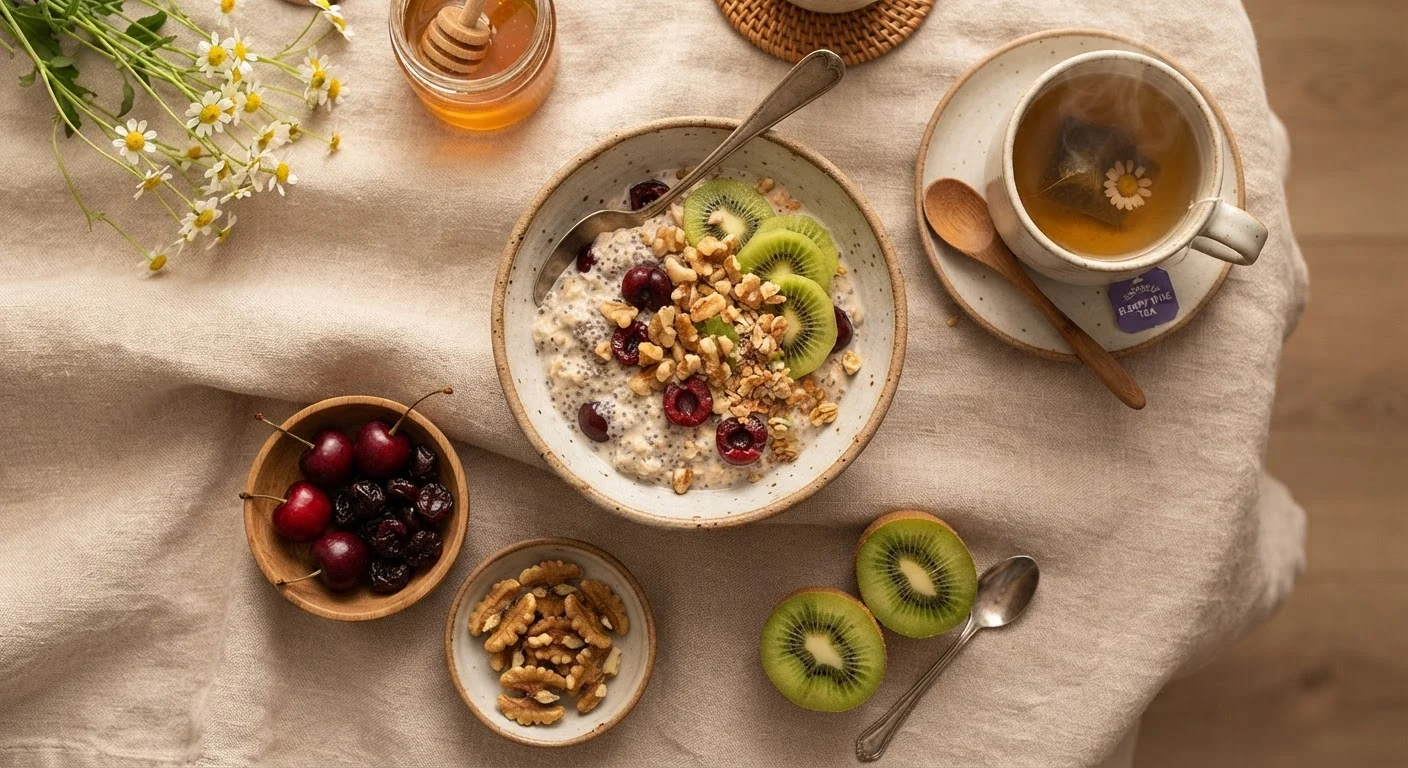
Tart cherries (and their juice) are among the most studied foods in the context of sleep. They are one of the few natural dietary sources of melatonin — the hormone that signals the brain to prepare for sleep — and also contain anthocyanins that may reduce inflammation linked to sleep disruption.
Small randomized trials have found that adults consuming tart cherry juice reported modest improvements in sleep duration and efficiency compared to a placebo drink. The evidence is promising but limited by study size and duration. Tart cherry products also tend to be high in natural sugars, so portion context matters within an overall balanced diet.
Tart cherries are one of the few whole foods that naturally contain measurable melatonin.
Kiwi Fruit
Kiwi has attracted scientific attention following a small pilot study in which adults who consumed two kiwi fruits one hour before bedtime nightly for four weeks reported falling asleep faster and sleeping longer. Kiwi is rich in vitamin C, folate, and serotonin precursors, which researchers hypothesize may support the serotonin-melatonin synthesis pathway.
The evidence base is currently limited to a handful of studies, mostly in specific populations. Replication in larger, more diverse groups is needed. Still, kiwi is nutritionally dense and low-risk, making it a reasonable addition to an evening routine for those curious to experiment.
Kiwi's serotonin precursors may support the hormonal cascade that prepares the body for sleep.
Fatty Fish
Salmon, mackerel, sardines, and other fatty fish supply two nutrients with plausible connections to sleep: omega-3 fatty acids and vitamin D. Both nutrients influence serotonin regulation in the brain, and low vitamin D levels have been associated — though not definitively proven to cause — shorter sleep duration and poorer sleep quality in observational research.
A study in older adults found that regular fatty fish consumption was associated with improved sleep and better daytime functioning. Current dietary guidance generally recommends two servings of fatty fish per week for cardiovascular and neurological health, and sleep support may be an additional benefit consistent with that pattern.
Fatty fish provides vitamin D and omega-3s — both linked to serotonin pathways that regulate sleep.
Nuts, Particularly Walnuts and Almonds
Walnuts are a notable plant-based source of melatonin and also provide alpha-linolenic acid (ALA), an omega-3 precursor. Almonds contribute magnesium, a mineral involved in regulating the nervous system and supporting muscle relaxation — processes relevant to sleep onset.
Magnesium deficiency has been linked to insomnia and disrupted sleep in several studies. While supplementation trials show mixed results, consuming magnesium through whole foods like nuts, seeds, and leafy greens is generally considered safe and consistent with a health-supporting diet. A small handful of nuts as an evening snack fits within most balanced eating approaches.
Magnesium from almonds and walnuts supports nervous system regulation involved in sleep onset.
Complex Carbohydrates and Whole Grains
Oats, barley, and other whole grains provide a steady glucose release that helps maintain stable blood sugar through the early sleep period — sharp overnight blood sugar dips can trigger wakefulness. Whole grains also supply B vitamins involved in tryptophan metabolism, supporting the serotonin-melatonin pathway.
Tryptophan, an essential amino acid found in many protein foods, competes with other amino acids to cross the blood-brain barrier. Pairing a tryptophan-containing food with a moderate carbohydrate source may improve tryptophan uptake by the brain — a mechanism some researchers point to as one reason a light evening snack can support sleep. The research is mechanistically plausible but not yet definitive in real-world dietary settings.
Pairing tryptophan-rich foods with complex carbohydrates may improve the amino acid's access to the brain.
Chamomile and Other Herbal Teas
Chamomile tea contains apigenin, a flavonoid that binds to benzodiazepine receptors in the brain — the same receptors targeted by some prescription sleep medications, though with far milder effect. Several small clinical trials have found chamomile extract associated with modest reductions in insomnia symptoms and improved sleep quality scores.
The warm, caffeine-free ritual of herbal tea before bed may itself contribute to relaxation through behavioral cues, making it difficult to isolate the pharmacological contribution of specific compounds. Passionflower and valerian teas have also been studied with similarly modest and mixed results. These are generally low-risk options, but people taking medications should check for potential interactions with a pharmacist or physician.
Chamomile's apigenin mildly activates brain receptors associated with relaxation and sleep readiness.
Putting It All Together
No single food will transform your sleep on its own. The research consistently shows that overall dietary quality — adequate micronutrients, balanced macronutrients, and minimal ultra-processed foods — correlates more robustly with sleep outcomes than any one ingredient. Mediterranean-style eating patterns, for instance, have been associated in several large observational studies with lower rates of insomnia symptoms and better sleep duration.
Consider Your Evening Eating Window
Finishing your last substantial meal two to three hours before bedtime gives digestion time to wind down and may reduce the likelihood of sleep disruption from gastric discomfort or acid reflux. A small, nutrient-targeted snack closer to bed — such as a few walnuts or a kiwi — is a different proposition from a full meal and generally better tolerated. Individual responses vary, so pay attention to how your own body responds.
Meal timing adds another layer. Eating large, high-fat, or high-sugar meals close to bedtime is associated with disrupted sleep architecture in some studies, though individual tolerance varies. A light, nutrient-dense evening snack that includes tryptophan-containing foods alongside a small amount of carbohydrate may be more supportive than going to bed either overfull or hungry.
Sleep problems can also reflect underlying health conditions, medication effects, or psychological factors that diet alone cannot resolve. If you're experiencing persistent difficulties, it's worth exploring the connection between sleep and stress, and speaking with a qualified healthcare provider for personalized guidance. For men concerned about broader hormonal impacts, sleep's effects on hormonal health are worth understanding as well.
This article is for general informational and educational purposes only and does not constitute medical advice. If you have concerns about sleep or nutrition, consult a qualified healthcare professional.