

Key Takeaways
Option A
Body Weight
The familiar, single-number metric most people use by default.
Best for: A quick, low-effort snapshot useful for detecting major changes over time, but limited in clinical detail.
Option B
Body Composition
A multi-dimensional measure that distinguishes fat mass from lean mass.
Best for: Anyone seeking a clearer picture of metabolic health, fitness progress, or the effects of diet and exercise on their physique.
If you want a fast, free daily check-in on general trends
Body Weight
A consistent weigh-in routine can flag large unintentional changes worth investigating, making it a practical but limited screening habit.
If you're tracking the results of a structured exercise or nutrition programme
Body Composition
Resistance training can increase muscle while reducing fat, leaving scale weight unchanged — composition measures capture that progress accurately.
If you're assessing cardiometabolic or hormonal health risk
Body Composition
Visceral fat and lean mass ratios are stronger predictors of metabolic disease and hormonal disruption than total weight alone.
If cost and accessibility are primary concerns
Body Weight
A standard scale requires no clinical access or cost, whereas validated composition tools like DEXA or hydrostatic weighing require specialist facilities.
Why the Scale Alone Can Mislead You
Step on a scale and you get one number: the combined mass of muscle, fat, bone, organs, and fluid in your body at that moment. That figure shifts with hydration, meal timing, and even glycogen stores in your muscles — none of which reflect actual changes in fat or lean tissue. For men monitoring their health across decades, relying on weight alone can obscure meaningful changes in body composition that carry real clinical implications.
Consider two men, both 185 lbs at 5'11". One carries 22% body fat with moderate muscle mass; the other carries 14% body fat with substantially more lean tissue. Their metabolic risk profiles, hormonal environments, and functional fitness levels are meaningfully different — yet the scale treats them as identical. This limitation is not a minor footnote; it fundamentally shapes how we should interpret weight-based data.
Research published in journals such as the American Journal of Clinical Nutrition has consistently shown that body fat percentage — particularly visceral fat stored around abdominal organs — is a stronger predictor of insulin resistance, cardiovascular risk, and inflammatory markers than body mass index (BMI) or raw weight. Understanding this distinction is the first step toward more informed health monitoring.
Body Composition: What It Measures and Why It Matters
Body composition refers to the proportions of fat mass and fat-free (lean) mass in the body. Lean mass encompasses skeletal muscle, bone mineral density, connective tissue, and organ tissue. Fat mass is further divided into essential fat — necessary for hormonal and neurological function — and storage fat, which includes both subcutaneous fat (beneath the skin) and visceral fat (surrounding abdominal organs).
For men specifically, research suggests that visceral adiposity is closely linked to declining testosterone levels, elevated estrogen conversion via aromatase enzymes in fat tissue, and increased systemic inflammation. This makes body composition data especially relevant for men navigating the hormonal shifts that accompany aging. Pairing composition insights with the type of exercise you choose matters too — see our evidence-based look at aerobic versus resistance training for men for guidance on how different modalities affect lean mass and fat distribution.
| Criterion | Body Weight | Body Composition |
|---|---|---|
| What it measures | Total mass of all tissues | Fat mass vs. lean mass ratio |
| Clinical relevance | Limited without context | Strong predictor of metabolic risk |
| Sensitivity to exercise | Can plateau or rise with muscle gain | Captures fat loss alongside muscle gain |
| Cost and accessibility | Free, available at home | Ranges from free to specialist cost |
| Hormonal insight | None | Visceral fat linked to testosterone and estrogen balance |
| Daily variability | High (fluid, food, glycogen) | Lower when assessed periodically |
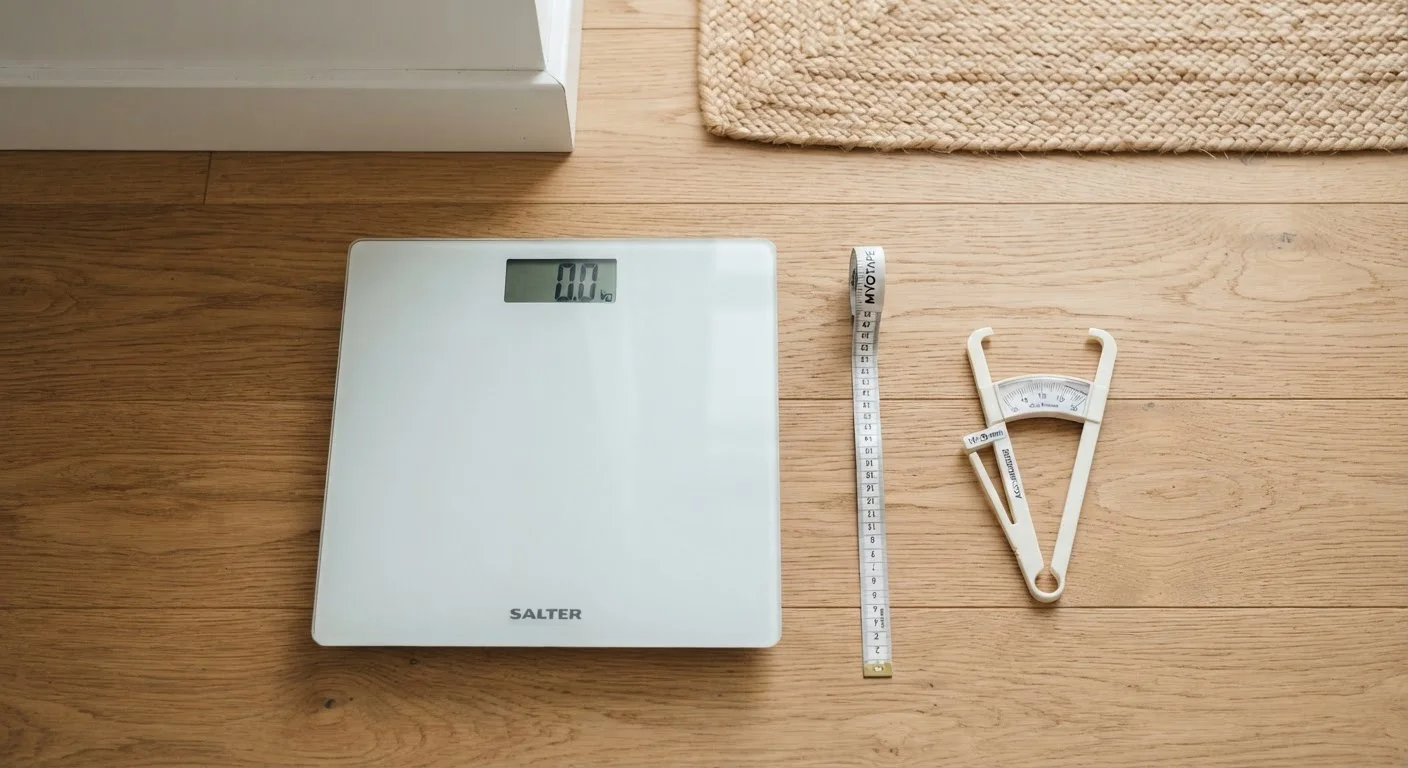
| Measurement tools | Standard bathroom scale | BIA, DEXA, calipers, waist tape |
Nutrition also plays a central role in shifting composition rather than just total weight. Understanding how to structure meals thoughtfully — explored in our guide on what a balanced plate actually looks like — supports both muscle retention and fat reduction more effectively than weight-focused restriction alone.
How Body Composition Is Assessed
Several methods exist for estimating body composition, each balancing accuracy, accessibility, and cost differently.
- Waist circumference and waist-to-height ratio: Simple tape-measure assessments that correlate meaningfully with visceral fat. A waist circumference above 40 inches in men is associated with elevated cardiometabolic risk, according to guidelines from organisations such as the National Institutes of Health.
- Bioelectrical impedance analysis (BIA): Consumer scales and handheld devices that send a small current through the body to estimate fat and lean mass. Convenient but sensitive to hydration status — results can vary widely day-to-day.
- Skinfold calipers: Trained clinicians measure subcutaneous fat at standardised body sites. Accuracy depends heavily on technician skill and the equation used.
- DEXA (Dual-Energy X-ray Absorptiometry): Considered a clinical gold standard for assessing fat mass, lean mass, and bone density across body regions. Requires specialist access and modest radiation exposure.
- Hydrostatic (underwater) weighing and air displacement plethysmography (Bod Pod): Research-grade methods with high accuracy but limited clinical availability.
A Note on BIA Consumer Devices
Bioelectrical impedance scales sold for home use can vary considerably in accuracy depending on the model, your hydration level, time of day, and recent exercise. While trends tracked consistently under the same conditions may be useful, individual readings should not be treated as precise clinical measurements. If composition data is being used to inform a health decision, discuss validated assessment methods with a clinician.
No single method is perfect for all individuals. Discuss with a healthcare provider which assessment approach is appropriate given your health history and goals.
Putting It Into Practice
The practical takeaway is not to abandon the scale entirely, but to contextualise it. Tracking weight trends over weeks rather than days reduces noise from fluid shifts. Pairing weight data with periodic waist circumference measurements gives a low-cost approximation of whether fat distribution is changing — arguably the most clinically actionable piece of information for most men.
Progress in body composition rarely announces itself on the scale. A man who begins resistance training may gain several pounds of lean mass over three months while losing a similar amount of fat — net weight change near zero, but a meaningfully healthier body. Without composition awareness, that individual might conclude the programme has failed. Being informed about how body composition data is collected and interpreted — much like understanding the limits of other health metrics, as explored in our guide to what sleep trackers can and cannot tell you — helps prevent misreading progress.
Sustaining the dietary habits that support lean mass while reducing excess fat storage involves more than calorie arithmetic. Our piece on why portion awareness often matters more than calorie counting offers a sustainable framework for most adults.
This article is for general informational and educational purposes only and does not constitute medical advice. Always consult a qualified healthcare professional before making changes to your diet, exercise routine, or health monitoring practices.