

Key Takeaways
Gut-Brain Axis
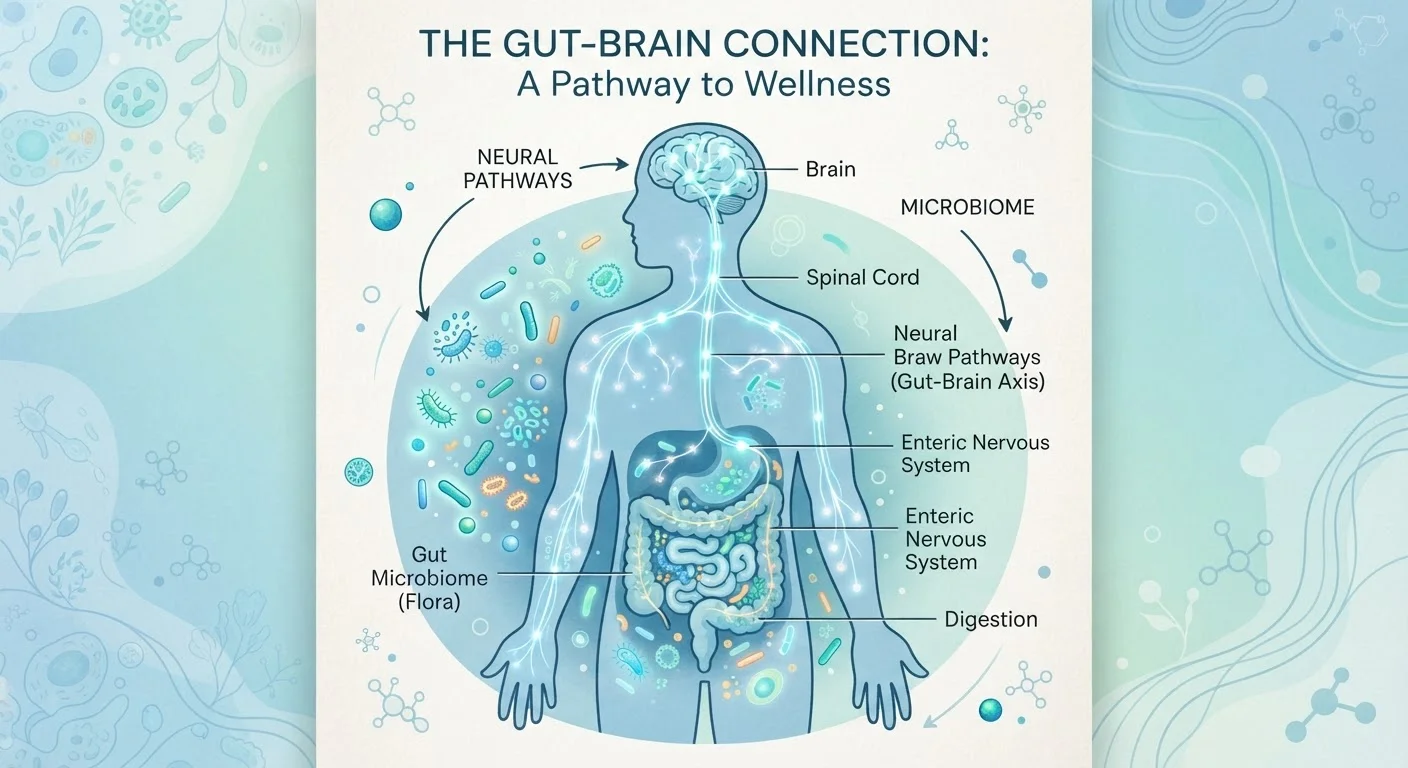
The gut-brain axis is the two-way communication network between your digestive system and your brain. It involves nerves, hormones, and immune signals that allow your gut and brain to influence each other continuously. The trillions of microorganisms living in your gut — collectively called the microbiome — play a central role in this exchange.
The vagus nerve is the primary anatomical pathway of the gut-brain axis, carrying signals bidirectionally between the enteric nervous system (the gut's own neural network) and the central nervous system.
How the Gut and Brain Talk to Each Other
The idea that digestion and emotion are connected is not new — but the mechanisms behind that connection are far more sophisticated than once understood. The gut-brain axis operates through at least four overlapping channels: the vagus nerve, the enteric nervous system, the immune system, and the bloodstream.
The vagus nerve acts as a superhighway, carrying signals in both directions between the brainstem and the digestive tract. Remarkably, the majority of those signals travel upward — from gut to brain — rather than the other way around. This means your digestive system is actively reporting to your brain all the time, not simply receiving instructions from it.
The enteric nervous system, sometimes called the "second brain," is an extensive network of roughly 500 million neurons embedded in the gut lining. It can process information and coordinate digestion largely independently of the central nervous system, though it remains in constant dialogue with the brain above.
Still an Evolving Area of Research
The gut-brain axis is one of the most actively studied frontiers in nutrition and neuroscience. While the bidirectional communication between gut and brain is well-established, many specific mechanisms — particularly those linking microbiome changes to mental health outcomes in humans — are still being investigated. Findings from animal studies do not always translate directly to human biology, and most human research remains observational. Approach headlines about "gut health cures" with appropriate skepticism.
The Microbiome's Role in Mood Regulation
Within this communication network, the gut microbiome — the dense community of bacteria, fungi, and other microorganisms living in your digestive tract — acts as a key intermediary. These microbes influence the axis in several ways that researchers are actively working to understand.
One of the most studied mechanisms involves neurotransmitter production. Gut bacteria contribute to the synthesis and regulation of chemical messengers including serotonin, dopamine precursors, and gamma-aminobutyric acid (GABA). The gut accounts for an estimated 90–95% of the body's total serotonin production, though this peripheral serotonin is primarily involved in regulating gut motility rather than mood directly. Its influence on mood occurs partly through vagal signaling.
Gut bacteria also affect systemic inflammation. A less diverse or disrupted microbiome — a state sometimes called dysbiosis — may contribute to low-grade inflammation that research has increasingly linked to mood disorders. This remains an area of active and ongoing scientific investigation, and causal relationships in humans are still being established.
~500 million
Neurons in the enteric nervous system
The gut's own neural network contains an estimated 500 million neurons, rivaling the complexity of the spinal cord, according to gastroenterology research literature.
90–95%
Of body's serotonin produced in the gut
Research estimates that the vast majority of the body's total serotonin is synthesized by gut enterochromaffin cells, with gut bacteria playing a regulatory role.
~38 trillion
Microbial cells in the human body
Current estimates suggest the human body contains roughly as many microbial cells as human cells, underscoring the biological significance of the microbiome.
For a deeper look at how dietary habits shape the microbial environment day to day, see our article on gut health habits and daily microbiome choices.
What Diet Has to Do With It
Because the microbiome is substantially shaped by what you eat, diet represents one of the most direct levers available for influencing the gut-brain axis. Research consistently shows that dietary diversity — particularly a high intake of fiber-rich plant foods — is associated with greater microbial diversity, which is generally considered a marker of a healthier gut ecosystem.
Diets high in ultra-processed foods, added sugars, and low in fiber tend to be associated with less microbial diversity and higher inflammatory markers, though it is important to note that most large-scale human studies in this area are observational. They can identify associations but cannot fully confirm that diet causes specific mental health outcomes.
The Mediterranean dietary pattern, for example, has attracted considerable research attention for its potential links to both gut health and mood. Our overview of the Mediterranean diet and mental wellbeing examines what the evidence currently supports — and where the science is still developing. More broadly, eating patterns that support mental clarity offers a beginner-friendly look at how daily food choices relate to focus and mood stability.
If you are considering incorporating more gut-supportive foods into your routine, our guide on fermented foods versus probiotic supplements provides a science-grounded comparison of these two popular approaches.
This article is for general informational and educational purposes only and is not a substitute for professional medical or dietary advice. Always consult a qualified healthcare provider before making significant changes to your diet or health routine.