

Nutrition & Diet

The Weekly Grocery Shop: A Nutrition-First Planning Checklist

Share
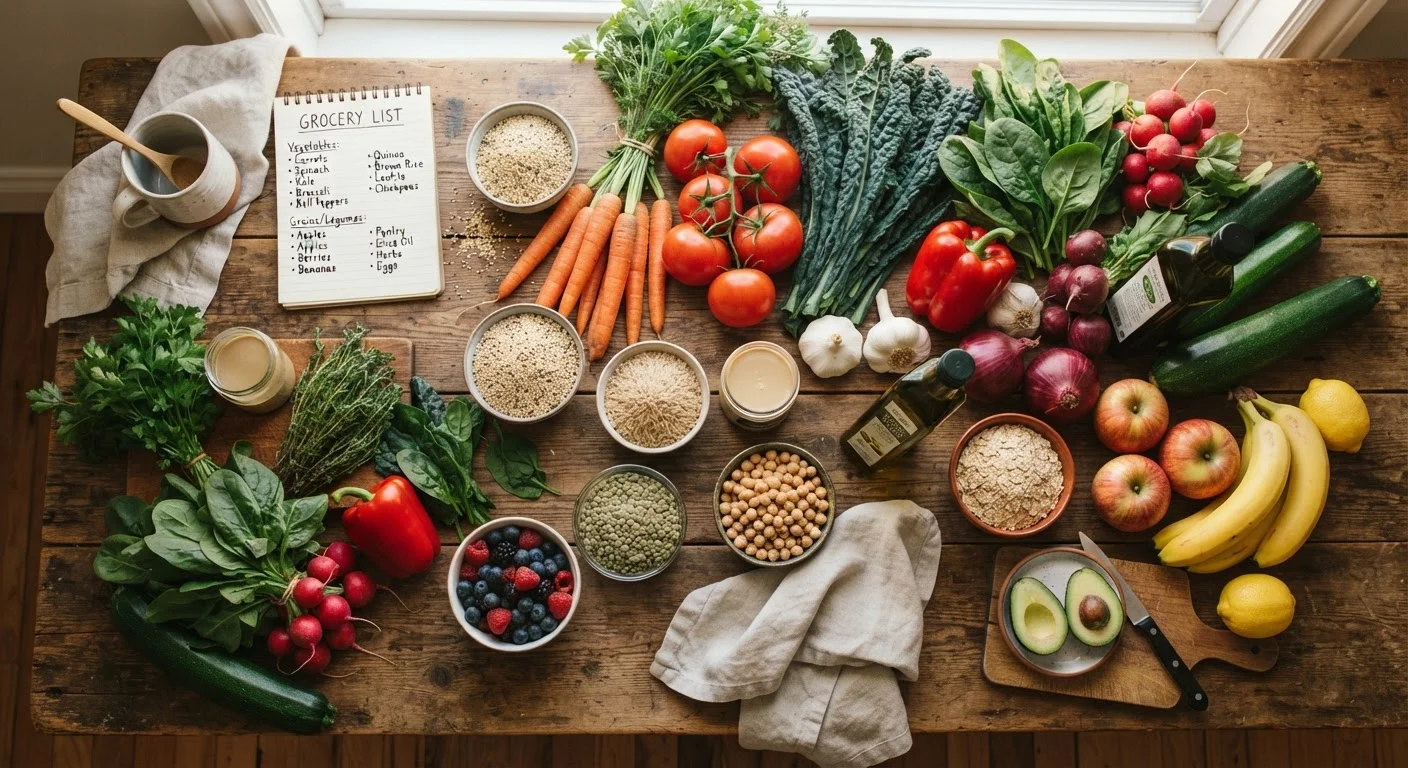
Overhead view of fresh produce, whole grains, and a grocery list on a wooden table

Key Takeaways

Planning your shop around food groups—not cravings—supports a more consistently balanced diet.
Auditing what you already have before shopping reduces food waste and unnecessary spending.
Variety across protein sources, produce colors, and whole grains broadens your nutrient intake.
A written or digital meal plan anchors your list and reduces impulsive, less nutritious purchases.
Batch-friendly staples make midweek cooking faster and help sustain healthy eating through busy days.
20–40 min

Summary

22 items · 20–40 minutes

Why a Nutrition-First Grocery Plan Works

Most grocery trips start with hunger, habit, or a half-remembered list. The result is often a cart full of repeat items, missed food groups, and produce that wilts before it's used. A nutrition-first planning approach flips that script: you begin with what your body needs, then build your list from there.

This isn't about rigid meal tracking or calorie counting. It's about applying a simple structure—covering key food groups, introducing variety, and buying with intention—so your kitchen supports the eating habits you're aiming to build. If you're also working on building healthier eating habits from the ground up, this checklist gives you a concrete weekly rhythm to support that process.

Use the checklist below each week before you shop. It takes 20–40 minutes and pays off in fewer wasted ingredients and more nutritionally complete meals throughout the week.

Required

Notepad or digital notes app

Record your meal plan and build your categorised shopping list before heading to the store.

Required

Kitchen inventory list

A quick written or photographed record of current fridge, freezer, and pantry contents to avoid duplicate purchases.

Optional

Food group reference guide

A simple visual or printed chart of major food groups and serving guidance to cross-check your list against.

Optional

Reusable grocery bags

Helps organise purchases by category (produce, dry goods, refrigerated) during the shop itself.

How to Use This Checklist

Work through each group in sequence. The Preparation phase happens at home before you write a single item. The Core Planning phase builds your list by food category. The Final Review phase is a quick sense-check before you head out or place your order.

Each item is tagged as must (non-negotiable for a balanced shop), should (strongly recommended), or nice to have (an enhancement when time allows). Focus on the must items if you're pressed for time.

Research consistently links dietary variety—especially across vegetables, legumes, and whole grains—with broader micronutrient coverage. This checklist is designed to prompt that variety without requiring nutrition expertise. For a deeper look at how your food choices connect to energy and emotional balance, explore the Food & Mood hub.

Preparation (Before You Write the List)

Audit your refrigerator, freezer, and pantry to identify what you already have and what needs to be used first. Must
Note any perishables approaching their use-by date and plan at least one meal around them before shopping. Must
Sketch a rough meal plan for the week—breakfast, lunch, dinner, and snacks—so your list reflects actual intended meals. Must
Check for any dietary needs or restrictions in your household that should shape this week's choices. Must
Identify one new vegetable, grain, or protein source to try this week to expand dietary variety. Nice to have

Vegetables & Fruit

Include at least three different colors of vegetables (e.g., leafy greens, orange or red, cruciferous white or purple) to support micronutrient diversity. Must
Add at least two servings of fruit, prioritising whole fruit over juice for fiber content. Must
Include at least one bag of frozen vegetables as a reliable backup when fresh produce runs low mid-week. Should
Plan quantities honestly based on your meal plan to reduce the likelihood of produce going to waste. Should

Protein Sources

Select protein sources from at least two categories—such as legumes, eggs, fish, poultry, or tofu—rather than relying on a single type all week. Must
Include at least one plant-based protein (lentils, chickpeas, beans, edamame, or tempeh) to support fiber and nutrient variety. Should
If including fish, plan for at least one oily variety (such as salmon, sardines, or mackerel) for omega-3 fatty acids. Should
Choose at least one batch-friendly protein option (e.g., a whole chicken, a large pack of lentils) that can be used across multiple meals. Nice to have

Whole Grains & Starchy Carbohydrates

Ensure at least one whole grain is on the list—options include oats, brown rice, wholemeal bread, quinoa, or wholewheat pasta. Must
Vary your grain choices week to week rather than defaulting to the same staple every time. Should
Include a whole food starchy carbohydrate such as sweet potatoes, regular potatoes, or butternut squash for versatility. Should

Dairy or Fortified Alternatives

Include a calcium source such as dairy milk, yogurt, cheese, or a calcium-fortified plant-based alternative. Must
Choose plain, unsweetened yogurt over flavored varieties when possible to limit added sugars. Should

Pantry & Healthy Fats

Confirm you have a cooking oil with a suitable fat profile—extra virgin olive oil is a well-researched option for everyday use. Must
Add a nut or seed option (e.g., walnuts, almonds, pumpkin seeds, ground flaxseed) for snacking or meal additions. Should
Check your herb and spice supplies so you can flavor meals without relying on high-sodium sauces. Nice to have

Final List Review

Confirm your list includes items from each food group category covered in this checklist before finalising. Must
Cross-reference quantities against your meal plan to avoid buying more than you'll realistically use. Must
Remove any impulsive additions that don't align with your nutrition goals for the week. Should

Putting the Plan into Practice

Once your list is built, a few habits make the shop itself more effective. Group your list by store section—produce, proteins, grains, dairy or alternatives, pantry—so you move efficiently and avoid backtracking into less planned areas of the store.

If budget is a consideration, whole food staples like dried legumes, frozen vegetables, oats, and eggs consistently offer strong nutritional value at lower cost. Our companion piece on healthy eating on a budget covers these principles in detail.

Finally, consider how this week's shop supports more than just physical nutrition. Consistent, varied meals—particularly those rich in omega-3 fatty acids, B vitamins, and fiber—are associated with steadier mood and cognitive function. If you want to take that further, building a mood-supportive eating routine from scratch offers practical next steps.

Quantities Are Not Prescriptions

The serving suggestions in this checklist are general planning prompts, not personalised dietary targets. Individual energy needs, health conditions, food allergies, and life stage (including pregnancy, older age, or chronic illness) all affect what a balanced diet looks like for you. If you have specific nutritional concerns, consult a registered dietitian for tailored guidance.

This article is for general informational and educational purposes only and does not constitute medical or dietary advice. Consult a qualified healthcare professional or registered dietitian for guidance specific to your health needs.

Nutrition & Diet Editorial Team is the collective byline for our editorial team and contributor network. Articles published under this byline or an editorial pen name are researched, written, and reviewed according to our editorial standards for clarity, consistency, and independence before publication.

View all articles by Nutrition & Diet Editorial Team →
Disclaimer: The content on this site is for informational purposes only and is not a substitute for professional advice. Always consult a qualified professional for guidance specific to your situation.