

Key Takeaways
Option A
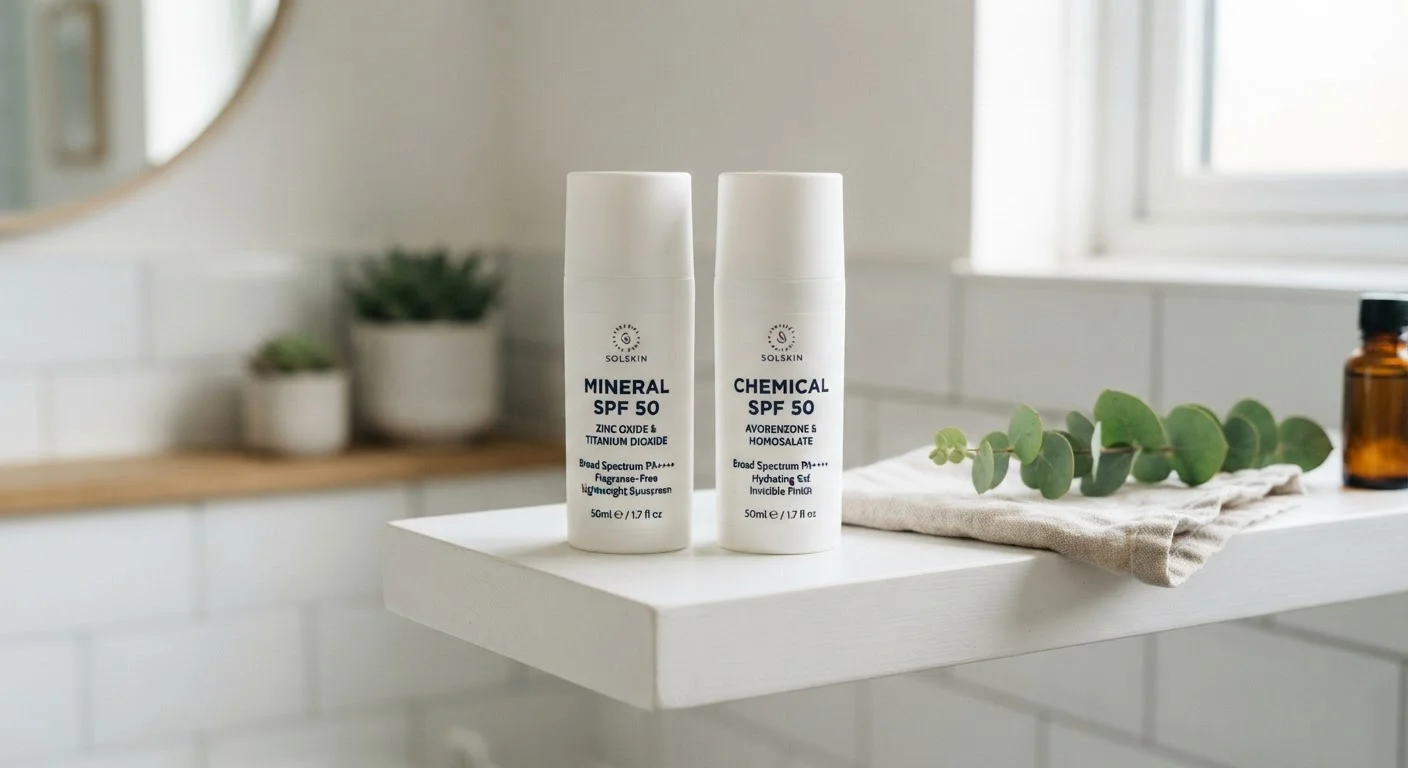
Chemical Sunscreen
The lightweight, invisible-finish UV absorber.
Best for: Best for everyday wear under makeup and for those who prefer a seamless, non-white finish on medium to darker skin tones.
Option B
Physical Sunscreen
The mineral-based, broad-spectrum UV reflector.
Best for: Best for sensitive, reactive, or acne-prone skin that benefits from gentle, sit-on-skin mineral protection with immediate efficacy.
If you have sensitive or reactive skin
Physical Sunscreen
Mineral filters like zinc oxide sit on top of the skin without penetrating, reducing the likelihood of irritation or allergic response in reactive skin types.
If you wear makeup daily or prefer a lightweight texture
Chemical Sunscreen
Chemical formulas absorb quickly into skin without residue, making them easier to layer under foundation and more cosmetically elegant for daily use.
If you have medium to deeper skin tones concerned about white cast
Chemical Sunscreen
Physical sunscreens, particularly those high in titanium dioxide, can leave a visible white or grey residue that is more pronounced on deeper complexions.
If you want protection that works immediately upon application
Physical Sunscreen
Mineral sunscreens are effective as soon as they are applied, whereas most chemical sunscreens are traditionally advised to be applied 15–20 minutes before sun exposure.
If you have acne-prone skin that reacts to heavy formulas
Physical Sunscreen
Zinc oxide has recognised soothing and anti-inflammatory properties, and mineral formulas are less likely to clog pores when properly formulated as non-comedogenic.
The Core Mechanism: Absorption vs. Reflection
The most fundamental difference between chemical and physical sunscreens lies in how they intercept ultraviolet (UV) radiation before it damages skin cells.
Chemical sunscreens contain organic (carbon-based) filter compounds — such as avobenzone, octinoxate, homosalate, or oxybenzone — that absorb UV photons and convert that energy into a small amount of heat, which then dissipates from the skin. Because this process requires the filters to penetrate the outer skin layers, chemical sunscreens need time to bind before full protection is achieved. Understanding how this interaction plays out at a deeper level connects directly to how the skin barrier functions and why ingredient penetration matters.
Physical sunscreens — also widely called mineral sunscreens — rely on inorganic minerals, primarily zinc oxide and titanium dioxide. These particles sit on top of the skin's surface and work by reflecting and scattering UV rays away before they reach deeper tissue. For a thorough side-by-side breakdown of mineral formulas specifically, see how mineral and chemical sunscreens compare in formulation science.
| Criterion | Chemical Sunscreen | Physical Sunscreen |
|---|---|---|
| Protection mechanism | Absorbs UV, converts to heat | Reflects and scatters UV rays |
| Active ingredients | Avobenzone, octinoxate, oxybenzone | Zinc oxide, titanium dioxide |
| Time to effectiveness | 15–20 minutes after application | Immediate upon application |
| Texture and finish | Lightweight, invisible on skin | Can leave white cast; tinted options available |
| Sensitive skin tolerance | May cause irritation in some | Generally well-tolerated |
| Broad-spectrum coverage | Possible; depends on formula | Zinc oxide offers full broad-spectrum |
| Wearability under makeup | Absorbs cleanly; easy to layer | Heavier texture; may affect makeup |
Skin Type Considerations: Who Benefits Most From Each
Neither sunscreen type is universally superior — the right choice depends significantly on individual skin characteristics.
Sensitive and reactive skin types often tolerate physical sunscreens more readily. Zinc oxide in particular has a long safety record and recognised anti-inflammatory properties. Because mineral filters do not penetrate, they are less likely to trigger contact reactions. If you're uncertain whether your skin is inherently sensitive or has become reactive due to environmental or product-related stress, it's worth understanding the difference — as explored in sensitive skin vs. sensitised skin.
Oily, acne-prone skin may benefit from lightweight chemical formulations that absorb cleanly, though some individuals find certain chemical filters aggravating. Physical formulas labelled non-comedogenic are generally a dependable choice for breakout-prone skin.
Deeper skin tones have historically faced a significant drawback with mineral sunscreens: the white cast left by titanium dioxide and zinc oxide. Advances in micronised and tinted mineral formulas have improved this, but many people with medium to dark complexions still find chemical sunscreens more cosmetically suitable.
1 in 5
Americans develop skin cancer by age 70
According to the Skin Cancer Foundation, consistent UV protection is one of the most effective preventive measures available.
~28%
Adults who use sunscreen regularly
CDC data has indicated that regular sunscreen use among US adults remains well below recommended levels, underscoring the need for accessible education.
People incorporating active exfoliation into their routine should be especially consistent with sun protection, as exfoliated skin can be more UV-sensitive — as covered in our guide to physical, chemical, and enzymatic exfoliation.
Applying Sunscreen Correctly: What Type Can't Change
Regardless of which type you use, application habits are what determine real-world protection. Both chemical and physical sunscreens require a sufficient amount — dermatological guidance generally references a generous, even layer across all exposed skin — and both require reapplication after approximately two hours of direct sun exposure, or sooner after swimming or sweating.
Daily SPF application is considered one of the most evidence-backed skincare habits for long-term skin health, helping to reduce cumulative UV damage that contributes to premature ageing and other concerns. The type of sunscreen matters less than whether it's actually used consistently and at an adequate amount.
This article is for informational purposes only and does not constitute medical or dermatological advice. For personalised guidance on sunscreen selection — especially for skin conditions, pregnancy, or children — consult a qualified healthcare or skincare professional.